Choosing when to visit Konya means balancing three things: weather, crowds, and the Mevlana Festival. The city sits high on the Central Anatolian plain, so the seasons are real and distinct, with hot dry summers, cold snowy winters, and brief, beautiful springs and autumns. The festival in December is the single most important date on the calendar, drawing pilgrims from around the world, and it can make a winter visit the most rewarding of all. This guide walks through the year season by season, so you can match your visit to what you want most: the festival’s spiritual intensity, the golden harvest light, or the quiet of the off-season.
The Four Seasons at a Glance
Konya’s climate is continental, which means the extremes are genuine. Summer days are hot and dry, regularly passing 30 degrees Celsius, while winter nights fall well below freezing, and snow is common. The transitions between the seasons are short and lovely.
Spring, in April and May, brings the plain to green life and the city’s gardens into bloom, with mild days and cool nights. Autumn, in September and October, offers the same mildness in reverse, with the harvest turning the fields gold.
The best all-round weather comes in May and September, and the cheapest travel comes in January and February. The most atmospheric comes in December, with the festival, whatever the thermometer says.
Spring: April and May
Spring is Konya at its most gentle. The cold of winter breaks, the plain turns green, and the orchards of the region blossom in waves of white and pink. The days are mild, the light is soft, and the city feels fresh after the winter.
The crowds are still modest in April and May, growing slowly toward the summer, and the prices remain reasonable. It is the best season for walking, with the museum gardens, the hill parks, and the countryside all at their finest.
The practical side is simple: pack layers, expect some rain, and bring a jacket for the evenings, which can still be cool. Spring is the season for travelers who want the city at its most beautiful without the festival crowds.
Summer: June to August
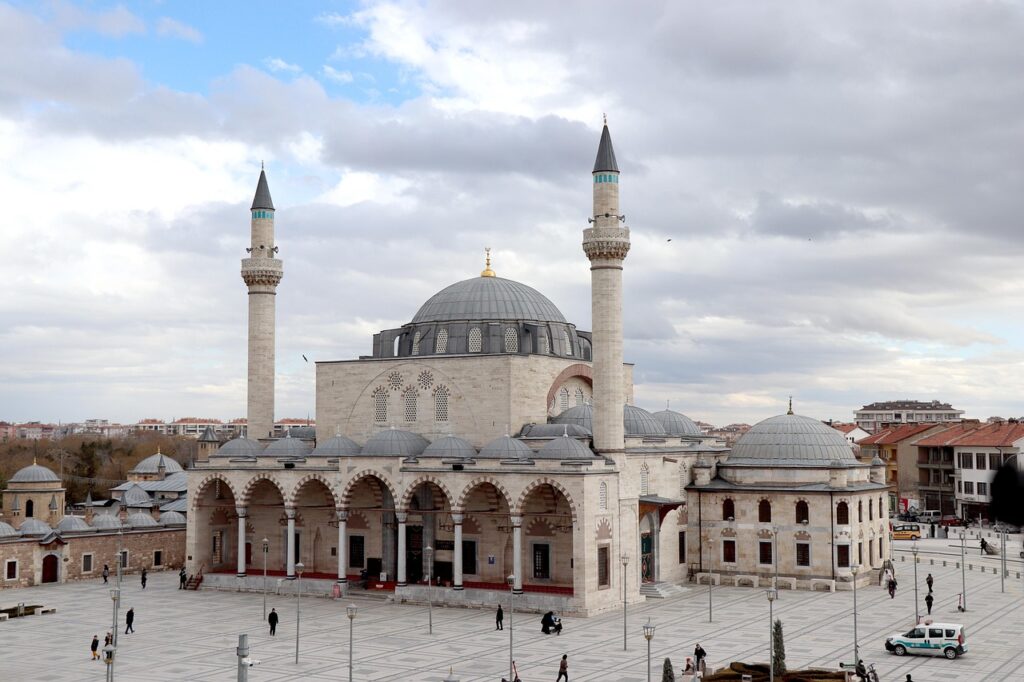
Summer in Konya is hot, dry, and long, with days that regularly pass 30 degrees Celsius and skies that stay brilliantly clear. The heat is easier to bear than on the humid coast, and the nights cool down enough to sleep.
The city adapts its rhythm to the season: early mornings, a long midday rest, and evenings that stretch late in the parks and tea gardens. Summer is the season of bici bici, the shaved ice treat, and of the golden wheat fields at harvest.
Crowds are modest by Turkish standards, and prices are moderate, though the domestic holiday season brings families at the weekends. June and September are the most comfortable months of the summer season.
Autumn: September and October
Autumn is Konya’s golden season, and for many travelers the best of the year. The heat of summer breaks, the harvest turns the plain to gold, and the light turns low and warm, flattering the old stone of the city.
September and October bring the mildest days of the year, with the crowds thinning after the summer and the prices easing. It is the perfect season for the day trips, with the countryside at its most photogenic and the lakes still warm for swimming.
The season ends with the first cold nights in November, when the city begins to turn toward winter and the festival. Autumn is the choice for travelers who want beautiful weather and no crowds at all.

Winter: November to March
Winter is Konya’s true season, and its most distinctive. The city sits a thousand meters high, and the cold is real: freezing days, snow, and nights well below zero. But the winter has its own beauty, from the snow on the green dome to the steam rising from the tea gardens.
The heart of the season is December, with the Mevlana Festival, but January and February offer the quietest, cheapest visit of the year, with the museums nearly empty and the prices at their lowest.
The cold is dry and clear, and the winter light is beautiful for photography. Pack properly, move slowly, and winter Konya gives you the city as its own people know it, wrapped in faith and warmth against the cold.
The Mevlana Festival in December
The Mevlana Festival is the single most important reason to choose your dates carefully. Held each December around the anniversary of Rumi’s death on December 17, it is the great gathering of the Mevlevi world, with sema ceremonies, concerts, and exhibitions drawing visitors from every continent.
The city transforms for the festival: the museum is lit, the streets fill with pilgrims, and the atmosphere is at once festive and deeply spiritual. The ceremonies, known as Seb-i Arus, the “night of union,” are the emotional heart of the event.
If you want the festival, plan far ahead: hotels sell out, prices rise, and ceremony tickets go quickly. It is cold and crowded, and it is also the most extraordinary time to be in Konya.

Crowds and Prices Through the Year
Understanding the rhythm of crowds and prices helps you choose your season. The peaks are the festival weeks in December and the spring and autumn weekends, when the weather is best and the city fills with domestic and international visitors.
The troughs are January and February, after the festival, when the city is at its quietest and cheapest, and the summer months, which are hot but never truly crowded. The best value for the best weather comes in late September and May.
Wherever you land, Konya is affordable by international standards, and the difference between the seasons, while real, is modest. The deciding factor should be the experience you want, not the price. The one exception is the festival fortnight in December, when demand pushes hotel prices well above the rest of the year, so book that window especially far ahead.
What to Pack for Each Season
Packing for Konya means packing for a specific season, since the climate does not compromise. Summer calls for light, modest clothing, sun protection, and a layer for the cool evenings; autumn for layers and a warm jacket for the mornings.
Winter demands the real equipment: thermal layers, a proper coat, hat, gloves, and boots with grip for the snow and ice. A scarf is useful in every season, for the cold in winter and for the mosques all year round.
Whatever the season, pack comfortable walking shoes, a refillable water bottle, and a headscarf for the religious sites. The city’s dress codes matter, and modest clothing, in light fabrics for summer and warm ones for winter, solves every problem.

Events Beyond the Festival
While the Mevlana Festival dominates the December calendar, Konya’s year holds other moments worth knowing. The religious calendar brings the holy month of Ramadan, when the city’s rhythm shifts, the evenings come alive, and the hospitality of the table is at its most visible.
The summer months bring concerts and family events in the parks, and the harvest season brings market days across the plain. The cultural centers stage sema performances and music through the year, smaller than the festival but no less moving.
For most visitors, these events are a bonus rather than a reason to plan around, but they add color to any season. Ask at your hotel what is on during your stay, and you will often find the city showing you something unexpected.
A Month-by-Month Quick Guide
For a fast overview: January and February bring the deep quiet of winter, with snow, low prices, and empty museums. March is a transition, cold but brightening, and April brings the first real spring, with the plain greening and the crowds still thin.
May is the first golden month, mild and beautiful, and June starts the summer heat, building through July and August, the hottest months, when the city slows and the evenings rule. September brings the harvest and the best weather of the year.
October holds the autumn gold, November turns cold, and December belongs to the festival. Month by month, the advice is simple: May and September for everything, December for the spiritual heart, and January for the bargain hunters.
The Best Time for Special Interests
Different travelers should choose different seasons. The spiritual seeker should come in December, for the festival at its full intensity; the photographer in January, for the snow and the clear winter light, or in September, for the harvest gold.
The food traveler should come in autumn, for the harvest and the seasonal dishes, or in summer, for bici bici and the long evenings. The budget traveler should come in January and February, when the city is cheapest and the museums are nearly empty.
The all-round traveler, wanting good weather and reasonable everything, should aim for May or September. Whatever your interest, Konya has a season made for it, and the city repays those who match the timing to the purpose.
Frequently asked questions
What is the best month to visit Konya?
May and September offer the best combination of mild weather, manageable crowds, and reasonable prices. December is best for the Mevlana Festival, and January and February are best for budget travelers.
Is Konya worth visiting in winter?
Yes. Winter has the most distinctive atmosphere, especially during the Mevlana Festival, and the snow on the green dome is iconic. It is cold, so pack properly, but the museums, tea gardens, and ceremonies make it one of the most memorable seasons.
When is the Mevlana Festival held?
The festival takes place each December, around the anniversary of Rumi’s death on December 17, with ceremonies running for about two weeks. It is the most important event on the Konya calendar, and booking well in advance is essential.

All Over Information
The All Over Information editorial team researches and writes practical English-language guides to Turkey. Facts are checked against official and local sources before publication, prices are published as dated ranges rather than quotes, and guides are revised when things change. We accept no sponsored posts, paid placements or paid links.
More guides like this

Best Local Restaurants in Konya
Konya is one of Turkey's great eating cities, though it rarely gets the credit.

Top 10 Things to Do in Konya
Konya is a city you come to for one famous sight and stay for a dozen more.

Hidden Gems of Konya Most Tourists Miss
Every visitor to Konya sees the Mevlana Museum, and most see the two famous Seljuk museums beside Alaeddin Hill. But the old…
A Solo Traveler’s Guide to Konya
Konya is an excellent destination for solo travelers, and in some ways it is better alone than in company.
Where to Stay in Konya: Neighborhood Guide
Konya is not a city you need to study before booking a hotel, but a few decisions matter.
History and Culture of Konya
Konya is a city where history is not a museum exhibit but a living presence.