Konya is a photographer’s city, though it takes a moment to see it. The famous sights give you the classic shots, the turquoise dome against the sky and the dervish in mid-spin, but the city’s real gifts are quieter: the low golden light on Seljuk stone, the glow of a thousand-year-old tile, and the vast flat plain that frames everything. This guide collects the best photography spots in and around Konya, with notes on the light, the angles, and the timing that turn a good photo into a great one. Bring a wide lens for the architecture and a patient eye for the atmosphere.
The Mevlana Museum Dome
The green-tiled dome of the Mevlana Museum is the most photographed subject in Konya, and for good reason: it is the symbol of the city, and its turquoise tiles catch the light like no other building in Turkey. The classic shot frames the dome against a clear sky.
The best time is early morning, when the eastern light makes the tiles glow and the crowds are still thin, or late afternoon, when the western light warms the colors. The view from the courtyard, through the gateway, is the iconic composition.
In winter, the dome against snow is one of the great images of Turkey, and during the December festival, the illuminated building at night is a photographer’s dream. Come back at different hours, because the dome never looks the same twice.
The Rose Garden and Courtyard
The courtyard and rose garden of the Mevlana Museum are a photographer’s paradise in miniature. The garden, with its fountains and faithful visitors, frames the dome beautifully, and the details, the carved stone, the calligraphy, the pilgrims in prayer, tell the story of the place.
The light in the courtyard is soft and diffuse, perfect for portraits and details, and the birds that circle the dome add life to wide shots. The garden is at its best in spring, when the roses bloom, and in the calm of early morning, when the first pilgrims arrive and the light is still gentle. A wide lens captures the whole composition of garden, fountain, and dome in a single frame.
Be respectful: this is a place of pilgrimage, and the quiet rituals of the visitors make the most moving photographs. Ask before photographing people, and keep the flash off inside.

Alaeddin Hill at Sunset
Alaeddin Hill offers the best vantage point in Konya, and sunset is its golden hour. From the hilltop, the whole city spreads below: the Mevlana dome, the forest of minarets, the bazaar, and the flat plain stretching to the horizon.
The late light paints the city in warm tones, and the Taurus Mountains, visible on clear days, catch the last rays long after the plain has darkened. The hilltop is also where the city’s own photographers come, which is always a good sign.
Arrive an hour before sunset, claim a spot on the eastern slope, and watch the light change the city. Bring a tripod if you want the classic long-exposure shots of the minarets against the dusk sky.
The Ince Minare Portal
The carved stone portal of the Ince Minare Museum is one of the great works of Seljuk art, and it rewards the photographer’s attention like few other subjects. The dense geometric patterns and calligraphy, carved a thousand years ago, are endlessly photogenic.
The challenge is the scale: the portal is large and the details are small, so bring a zoom or a macro lens for the close-ups. The morning light rakes across the carving, bringing out the depth of the relief, and the quiet courtyard frames it beautifully.
For a different take, photograph the portal’s details, the interlocking stars and the bands of inscription, rather than the whole building. The patterns are the real masterpiece, and they make stunning prints.

The Karatay Tiles
The Karatay Museum is the color highlight of Konya, and its turquoise and cobalt tiles demand to be photographed. The great dome, covered in glazed ceramic, glows with a light that seems to come from inside the building itself.
The interior is dark and intimate, so bring a fast lens or a tripod, and use the available light, which filters softly through the dome’s windows. The abstract patterns of the tiles make beautiful close-up shots that could pass for modern art.
The building is small, so take your time and let your eyes adjust. The tiles are the finest Seljuk work in the country, and the photographs you take here will be among the best of your trip.
The Aziziye Mosque Facade
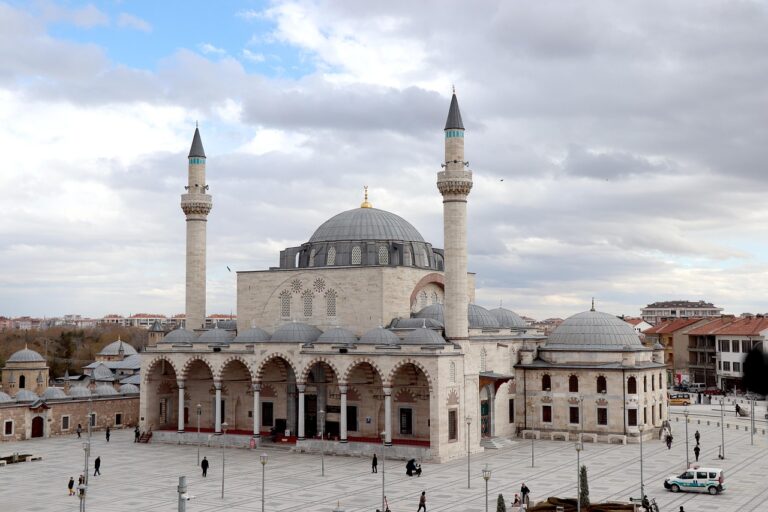
The Aziziye Mosque is the most photogenic facade in Konya, a baroque fantasy of carved stone that looks like nothing else in the city. Its twin staircases and ornate decoration make it a favorite of photographers, and it photographs well at every hour.
The morning light is clean and direct, but the real magic comes at dusk, when the floodlights bring out the texture of the carving against the darkening sky. The square in front offers the classic composition, with the mosque framed by the evening crowd.
The details are equally rewarding: the carved capitals, the calligraphy bands, and the ornate doorways all repay a close look. The Aziziye is proof that Konya’s Ottoman face is as photogenic as its Seljuk one.

The Bazaar Lanes
The bazaar of Konya is a photographer’s street-level treasure: narrow lanes, shafts of light, piles of spices, and the bustle of commerce. The color is intense, from the pyramids of spice to the glitter of the gold quarter.
The human scenes are the best subject: the shopkeepers at work, the tea sellers with their brass trays, and the shoppers at the stalls. The light is mixed and dramatic, with shafts of sun cutting through the covered lanes, and the shadows are your friend. A fast lens helps in the darker corners, and the smoke from the kebab grills and bakeries adds texture to the air.
Ask permission before photographing people closely, and respect the traders who decline. The bazaar rewards the slow, patient photographer who becomes part of the scene rather than apart from it.
The Konya Plain and Catalhoyuk
The Konya Plain is the landscape that defines the region, and it photographs like nowhere else in Turkey. The flat, vast wheat fields stretch to the horizon, and the light across them, at sunrise and sunset especially, is extraordinary.
Catalhoyuk, the Neolithic site on the plain, offers its own photographic rewards: the excavated mounds, the reconstructed houses, and the visitor center’s modern architecture. The site photographs best in the low light of early morning or late afternoon.
In summer, the golden harvest fields are the classic image; in spring, the green; in winter, the snow. The plain is the stage on which the city’s whole story has played, and it deserves a full memory card.

Sille Village
The village of Sille, ten minutes from the city, is a photographer’s day trip. Its stone houses, narrow lanes, and rocky valley have a timeless quality, and the old churches, including the rock-cut one, are unique subjects.
The late afternoon light is the magic hour in Sille, turning the stone walls gold against the darkening hills. The streams and tea gardens add the human scale, and the village is still enough that you can work without crowds.
Sille is close enough for a quick evening session, and it combines beautifully with a day of city photography. It is the hidden gem of Konya’s photographic map.
The Night Shot
When the sun goes down, Konya’s photography continues. The floodlit Mevlana Museum is the star of the evening, its dome and minarets glowing against the dark sky, and the illuminated Aziziye Mosque runs it a close second.
The squares and tea gardens offer warm, human scenes after dark, and the December festival adds the most spectacular night photography of the year, with the streets and courtyards dressed in light. A tripod and a slow shutter make all the difference.
The old city is safe and pleasant at night, and the photographers at the evening sights are part of the scene. The night shots you bring home will be the ones that make your friends ask for your itinerary.
Seasonal Light: Snow, Harvest, and Festival
Konya’s photography changes with the seasons, and each brings its own gift. Winter gives the classic image, the green dome under snow, and the clear, crystalline light of the high plateau. Summer brings the harvest, the golden fields, and the long evening light.
Spring softens everything, with the plain green and the gardens in bloom, and autumn brings a warm, low light that flatters the stone of the old city. The December festival adds the most dramatic season of all: the illuminated streets, the crowds, and the dervishes in motion.
Whatever the season, the advice is the same: shoot early and late, when the light is low and golden, and revisit the famous spots at different hours. Konya is a city that repays the patient photographer with images you will keep forever.
Frequently asked questions
What is the best time of day for photos in Konya?
The hour after sunrise and the hour before sunset give the most beautiful light, especially on the dome of the Mevlana Museum and the facades of the old city. The late-afternoon light in Sille village is also magical.
Can I photograph inside the Mevlana Museum?
Photography is restricted inside the tomb chamber, but the courtyards, the rose garden, and most of the exhibition halls can be photographed without flash. Always be respectful of the pilgrims and their privacy.
Where is the best viewpoint over Konya?
Alaeddin Hill, especially its eastern slope, offers the classic panorama of the city, with the Mevlana dome and the minarets. Come at sunset for the warmest light, and on clear days the Taurus Mountains complete the frame.

All Over Information
The All Over Information editorial team researches and writes practical English-language guides to Turkey. Facts are checked against official and local sources before publication, prices are published as dated ranges rather than quotes, and guides are revised when things change. We accept no sponsored posts, paid placements or paid links.
More guides like this

Konya Airport and Transport Guide
Getting around Konya is easy, and understanding the transport before you arrive saves time and confusion.
Best Local Restaurants in Konya
Konya is one of Turkey's great eating cities, though it rarely gets the credit.

A First-Timer’s Guide to Konya
Most people arrive in Konya with one thing in mind: the Whirling Dervishes and the tomb of Rumi, the 13th-century mystic known…

Shopping Guide: What to Buy in Konya
Shopping in Konya is a journey into the city's identity.
Nightlife Guide to Konya
Konya does not have a nightlife in the sense that Istanbul or the coastal resorts do, and that is exactly the point.
Konya in Summer: A Complete Travel Guide
Summer is the season of the open sky in Konya: long days, hot sun, and evenings that linger in the parks and…