Safranbolu is one of the great historic towns of Turkey — a perfectly preserved Ottoman city that is not a museum but a living place, where the houses of the 18th and 19th centuries are still homes, and the lanes of the old quarter are still walked by the town’s people. Its history is the story of a prosperous trading town on the caravan routes, whose wealth built the houses that UNESCO has protected as a world heritage site — and whose culture, from the saffron of its name to the crafts of its workshops, still lives in the town. This guide unpacks the history and culture of Safranbolu: how the town was built, what it became, and how the layers still visible in the lanes tell the story.
The Setting: A Town on the Trade Routes
Safranbolu sits in the western Black Sea region of Turkey, about 90 kilometers south of the coast, in a valley at the meeting of the mountains and the interior. The position explains its history: the town lay on the caravan routes that connected the Black Sea ports to the cities of central Anatolia, and for centuries the merchants, the goods, and the wealth of that trade passed through it.
The name itself carries the history: safran, for the saffron that was the region’s great product, and polis, the Greek word for a fortified town. The town grew as a trading and administrative center, and its prosperity built the city that survives today — a place where the wealth of the caravan era became the houses and the streets.
The Rise of the Ottoman Town
The town’s great age was the Ottoman period, and especially the 18th and 19th centuries. As a center on the trade routes, Safranbolu prospered, and the wealth of the merchants and the officials built the town that survives: the konaks (mansion houses) with their bay windows and their carved wooden ceilings, the caravanserai where the merchants stayed, the baths and the mosques, and the bazaar where the town’s commerce happened.
The Ottoman houses of Safranbolu are the town’s great inheritance. Built of timber and stone, with the distinctive cumba (bay windows) that let the families watch the lanes, they are among the finest examples of Ottoman domestic architecture in Turkey — and, remarkably, hundreds of them survive, many still lived in. The town’s prosperity meant that its houses were built well, and the same prosperity meant that they were maintained — the Ottoman town survived into the modern era because it was never abandoned or rebuilt.

The Crafts and the Commerce
The culture of the town was built on its crafts and its commerce. The merchants brought the wealth, and the craftsmen made the goods: the coppersmiths, the leatherworkers, the makers of the town’s famous lokum, and the other trades of the Ottoman economy. The caravanserai — the Cinci Han — housed the merchants and their caravans, and the bazaar around it was the town’s commercial heart.
The saffron was the thread of the town’s identity. The region grew the saffron that gave the town its name, and the precious spice was among the town’s great products. The saffron cultivation continues in the region today, small and precious, and the town’s name and its products still carry the connection to that history.
The Survival of the Town
The most remarkable thing about Safranbolu is its survival. When the trade routes shifted in the modern era and the town’s prosperity faded, the town was not rebuilt or demolished — it simply continued, its Ottoman houses kept by the families that lived in them. The town’s relative remoteness, and its continued life as a working center, meant that the historic quarter survived the modernizations that destroyed so many Ottoman towns elsewhere.
In 1994, the survival was recognized: Safranbolu was inscribed as a UNESCO World Heritage site, one of the best-preserved examples of Ottoman urban settlement in the world. The inscription was the beginning of a new chapter — the careful restoration and the management of the historic town, and the growth of the tourism that now shares the lanes with the town’s life.
The Culture of Safranbolu Today
The living culture of the town is a fusion of the layers:
- The Ottoman domestic life. The konaks, many still homes, keep the Ottoman house alive — the courtyards, the bay windows, and the family life of the old town.
- The crafts and the workshops. The coppersmiths and the artisans of the old quarter keep the town’s craft tradition working.
- The sweets and the saffron. The lokum of the confectioners and the saffron products carry the town’s food identity — the tastes of the trading town.
- The hospitality. The town’s welcome — the konaks, the tea gardens, and the greetings in the lanes — is the culture that the traveler experiences first.
- The living town. The families, the shops, and the daily life of the historic place continue around the visitors — the town is a home, not a museum.
Visiting the History: What to Look For
A walk through Safranbolu is a walk through the layers:
- The konaks — the Ottoman houses, many still lived in, with their bay windows and their wooden interiors.
- The house museums — the restored konaks that show the domestic world of the Ottoman era.
- The Cinci Han and the bazaar — the caravanserai and the market, the commercial heart of the trading town.
- The clock tower — the landmark of the town’s skyline.
- The mosque and the baths — the religious and the public life of the Ottoman town.
- The crafts and the sweets — the living culture of the town, from the workshops to the confectioners.
- The saffron — the thread of the town’s identity, from its name to its products.
The Architecture of the Konaks
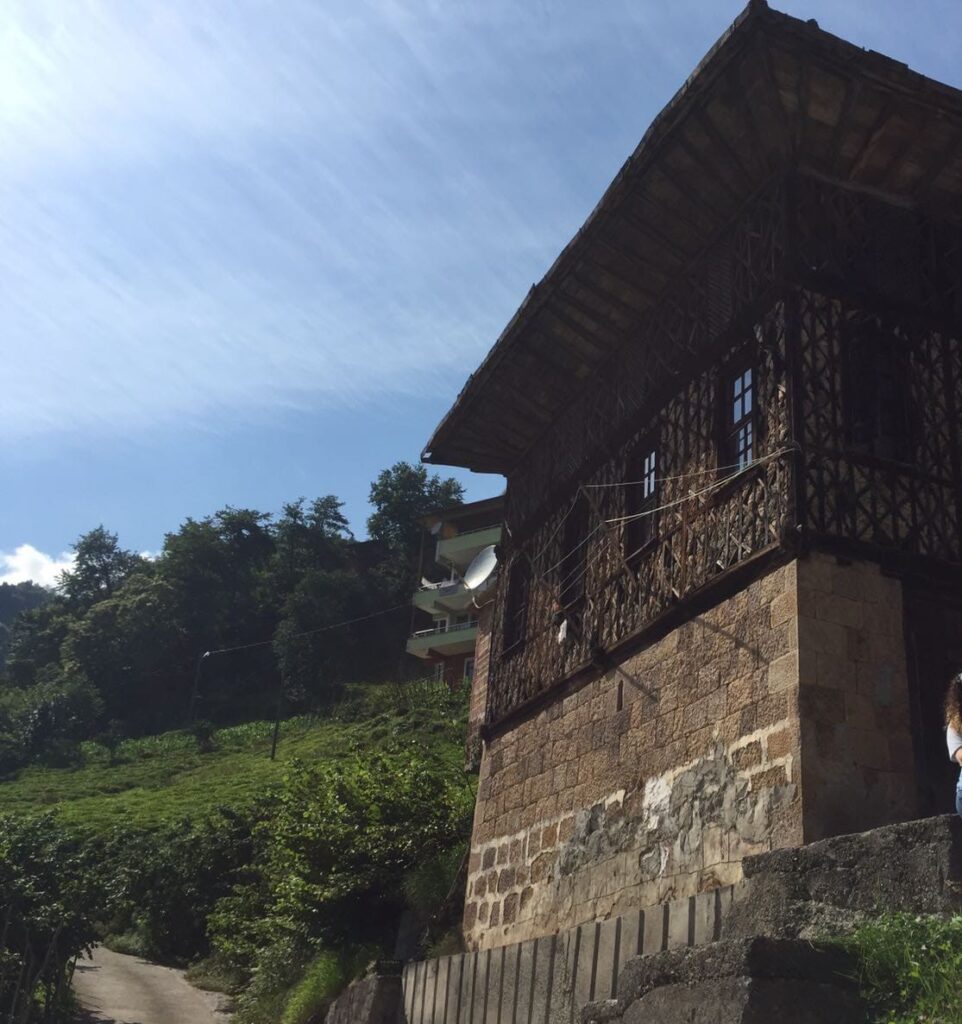
The konaks deserve their own note, because they are the town’s great inheritance and its signature. Built of timber frames filled with stone and mud, and faced with the whitewashed wood that gives the town its look, the houses of Safranbolu are masterpieces of Ottoman domestic design: the cumba (bay windows) that project over the lanes, letting the families watch the street and the light in; the carved wooden ceilings and the cupboards of the interiors; and the courtyards and the gardens that gave the houses their private world. The houses were built to the town’s climate and its life — warm in the winter, cool in the summer, and arranged around the family. The konaks that survive, and the ones restored as museums and guesthouses, show that world whole — and walking the lanes is walking among the finest surviving Ottoman houses in the world.
The Continuity of the Town
The final thing to understand about Safranbolu is the continuity of its culture. The town is not a preserved relic but a living place: the konaks are still homes, the lanes are still walked by the town’s people, the workshops still make the crafts, and the confectioners still make the lokum. The families of Safranbolu have lived in the Ottoman houses for generations, and the modern town has grown around the historic quarter without erasing it. The traveler who walks the lanes is walking through a culture that has continued — the Ottoman world not as a museum but as a home, with the life of the town still moving through the same streets and the same courtyards. That continuity is the town’s real story, and it is why Safranbolu feels not like a preserved site but like a living past.

The Takeaway
Safranbolu’s history is the story of a trading town whose wealth built a city of houses — and whose good fortune was to survive unchanged. The konaks and the lanes, the caravanserai and the bazaar, the crafts and the sweets, and the saffron of the town’s name are all part of that long story. To walk the town is to walk through the Ottoman world as it was lived — a place where the history is not a monument but a home, and where the past is not preserved but continued. That is why Safranbolu is one of the great places of Turkey.
Frequently asked questions
How old is Safranbolu?
The town’s history as a settlement reaches back to antiquity, and its great age was the Ottoman period — especially the 18th and 19th centuries, whose houses survive in the old town.
Why is Safranbolu a UNESCO World Heritage site?
It is one of the best-preserved Ottoman urban settlements in the world — hundreds of Ottoman houses survive, many still lived in, along with the caravanserai, the bazaar, and the public buildings.
What is the origin of the name Safranbolu?
From the saffron (safran) that was the region’s great product and the Greek word for a fortified town (polis) — a reminder of the trade that made the town.
What are the konaks?
The Ottoman mansion houses of the town, with their distinctive bay windows (cumba) and their carved wooden ceilings — among the finest Ottoman domestic architecture in Turkey.
Is Safranbolu a museum or a living town?
A living town — the Ottoman houses are still homes, and the daily life of the historic quarter continues around the visitors.
What is the Cinci Han?
The caravanserai of the town, built for the merchants and their caravans on the trade routes — the commercial heart of the trading town.

All Over Information
The All Over Information editorial team researches and writes practical English-language guides to Turkey. Facts are checked against official and local sources before publication, prices are published as dated ranges rather than quotes, and guides are revised when things change. We accept no sponsored posts, paid placements or paid links.
More guides like this
Photography Spots in Safranbolu You Can’t Miss
Safranbolu is one of the most photographed towns in Turkey, and the reason is visible from the first moment you see it:…
Top 10 Things to Do in Safranbolu
Safranbolu is a town where the best experiences are the simplest — walking the lanes, seeing the houses, and living the rhythm…

Safranbolu on a Budget: Money-Saving Travel Tips
Safranbolu is one of Turkey's great historic towns, and it is also one of the most affordable — the old town's lanes…
Shopping Guide: What to Buy in Safranbolu
Safranbolu is one of the best shopping towns in Turkey for the traveler who wants something genuine — not because it has…
Safranbolu in Summer: A Complete Travel Guide
Summer is Safranbolu at its fullest — the old town at its liveliest, the konaks full, the lanes busy with visitors, and…
Hidden Gems of Safranbolu Most Tourists Miss
Safranbolu is one of Turkey's great historic towns, and the crowds follow a well-worn circuit — the main lanes of Çukur, the…