Kadikoy is one of the best-connected points in Istanbul, and the neighborhood’s transport is part of why travelers choose to base themselves on the Asian side. The ferries fan out across the strait, the Marmaray tunnel runs under the Bosphorus, the Metrobus spans the city, and both of Istanbul’s airports connect with varying degrees of ease. This guide covers everything a visitor needs to move through Kadikoy and around Istanbul: the airports, the ferries, the rail, the buses, and the practical details that make the difference between a smooth trip and a frustrating one.
The Airports, Compared Honestly
Istanbul has two airports, and they are not created equal when it comes to Kadikoy. Sabiha Gökçen (SAW) on the Asian side is the natural airport for this neighborhood: the M4 metro line runs from the airport almost directly to Kadikoy, with a journey of about 45 minutes and no changes — the easiest airport connection the neighborhood has. Istanbul Airport (IST) on the European side is a longer story: roughly 90 minutes by public transport via the M11 metro, a change to the M7, and a final hop from Ayrılık Çeşmesi, or the Havabus shuttle, which runs a dedicated line from the airport to the Kadikoy ferry terminal. The honest advice: if you can choose your arrival airport and Kadikoy is your base, choose Sabiha Gökçen. If you are flying into IST, budget the extra time and plan the route before you land.
From Sabiha Gökçen to Kadikoy
The M4 metro from Sabiha Gökçen runs to the Kadıköy area with a single line and no transfers: board at the airport station and ride to the end of the line. The station nearest the neighborhood is the Kadıköy metro station, from which the center, the ferry terminal, and the Moda coast are a short walk or a minibus ride; the Ayrılık Çeşmesi station, one stop before, connects to the Marmaray for the European side. The whole journey is about 45 minutes and runs on the Istanbulkart, the city’s reloadable transit card. The alternative is a taxi, about half an hour depending on traffic, at the standard city rate. For the visitor, the metro is the answer: cheap, reliable, and no airport-transfer premium.
From Istanbul Airport to Kadikoy
The Istanbul Airport route requires patience and a plan. The M11 metro from the airport runs to Kağıthane on the European side; change to the M7 and ride to Ayrılık Çeşmesi, then take a bus or minibus the final few kilometers to Kadikoy — total journey roughly 90 minutes, with the card working through all the transfers. The other option is the Havabus airport shuttle: the dedicated Kadikoy line runs from the airport to the ferry terminal, about an hour and a half in reasonable traffic, with a single fare that undercuts the taxi by a wide margin. Taxis are the fast-but-expensive third option, and the airport’s taxi system is orderly — take the queue at the official rank or use the ride apps. The honest summary: Istanbul Airport to Kadikoy is a long trip, and the shuttle or the metro beats the taxi on value.
The Ferries: The Neighborhood’s Arteries
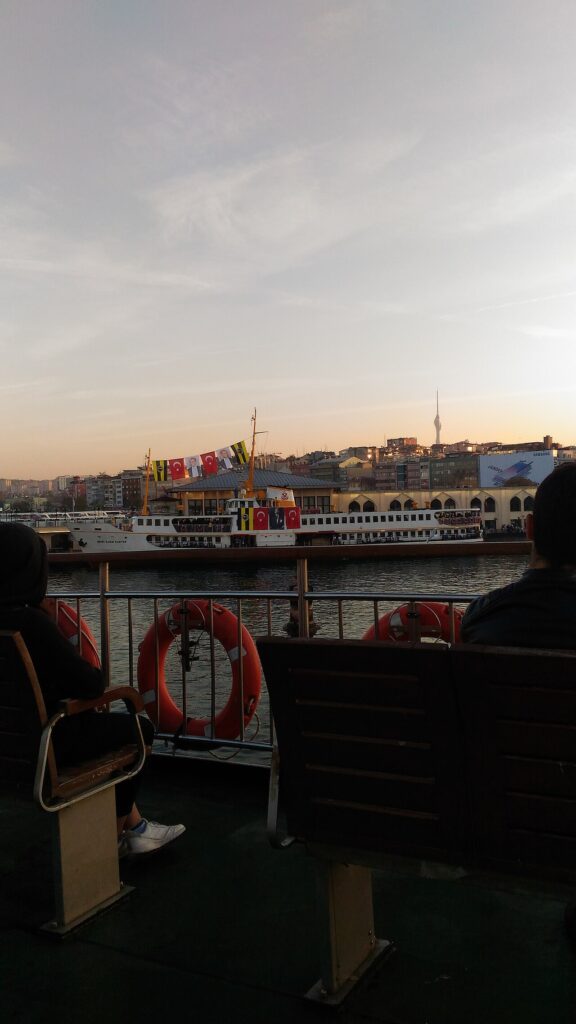
The ferry is the defining transport of Kadikoy, and the neighborhood’s terminal is one of the busiest in the city. The lines that matter: to Eminönü (for Sultanahmet and the old city, about 20 minutes), to Karaköy (at the foot of the Galata Bridge, 15 minutes), to Beşiktaş (15 minutes), and to Üsküdar (10 minutes, one stop up the Asian coast). The boats run from early morning to past midnight on the main lines — later on weekends, with reduced frequency in winter — and the fare is a single transit fare on the Istanbulkart, the same card that works on the metro and the buses. The ferries are also the neighborhood’s connection to the wider Bosphorus network: the island ferries to the Princes’ Islands leave from the Kadikoy pier, and the coastal lines run north along the strait.

Rail and the Marmaray
The Marmaray is the fast, weatherproof alternative to the ferries — the rail tunnel under the Bosphorus that links the Asian and European shores. The Ayrılık Çeşmesi station, a short bus or minibus ride from central Kadikoy, is the Asian-side gateway: the Marmaray from there runs to Sirkeci (for the old city), Üsküdar, and onward to the European side’s main line, and it connects to the M4 metro toward Sabiha Gökçen and the M7 toward the European side. For airport transfers and for the European-side sightseeing days, the Marmaray is the fastest rail option, at the cost of the ferries’ views. The Istanbulkart works throughout, and the transfer windows between modes are seamless.
The Buses, the Metrobus, and the Minibuses
The rest of the neighborhood’s transport is ground-level. The Metrobus — Istanbul’s dedicated bus-rapid-transit line — stops at the Söğütlüçeşme station a short ride from Kadikoy and spans the city, connecting the far ends of both shores on dedicated lanes that beat the traffic. The regular buses thread through the neighborhood’s streets and up the hills; the minibuses (dolmuş) — the shared vans that follow fixed routes and stop anywhere — are the local favorite for the Moda coast and the inland quarters, cheap and fast, paid by tapping the card or handing over a few lira. The minibus etiquette is simple: board, sit or stand, and tell the driver where you are going; they know the stops.

Getting Around Kadikoy Itself
Within the neighborhood, walking is the transport of choice: the center, the market, the Moda coast, and Yeldeğirmeni are all reachable on foot from the ferry terminal, and the flat waterfront makes the walks easy. For the hills and the longer hops, the minibuses and buses cover the routes, and the ride-share apps and the taxi rank at the terminal fill the gaps. The honest note: the hills inland are steep, the cobbles of the old quarters are uneven, and the summer heat makes the coastal walks a morning activity — plan accordingly. The Istanbulkart is the only ticket you need for all of it.
The Cards and the Practical Details
The Istanbulkart is the key to everything: buy it at the kiosks near the ferry terminal, the metro stations, or the major bus stops; load it with a modest amount; and tap it on the ferries, the metro, the Marmaray, the Metrobus, the buses, and the minibuses. It costs a small fee for the card itself and pays for itself within a few rides; the transfer windows mean a ferry-plus-bus journey costs less than two full fares. The schedules are the other practical matter: the ferries thin out after midnight and on winter evenings, and the island boats run less often — check the boards at the piers and know the last boat home. The apps: the city’s transit apps and Google Maps both handle the network well, and the ride apps work for the taxis. The airports again: for the flight home, add an hour to whatever the journey is supposed to take — Istanbul’s traffic is famous, and the security lines at the airports are real.

The Takeaway
Kadikoy’s transport is the neighborhood’s superpower: ferries that double as sightseeing, a rail tunnel that beats the weather, a Metrobus that beats the traffic, and airport connections that are the best on the Asian side. The visitor who masters the Istanbulkart and the ferry schedule has mastered the city — and the visitor who bases in Kadikoy has the best-connected neighborhood in Istanbul as the home port. The water, the rails, and the buses all converge here, and the neighborhood’s position as the Asian side’s transport hub is the quiet reason it has become the city’s most liveable district.
Frequently asked questions
Which airport is best for Kadikoy?
Sabiha Gökçen (SAW) — the M4 metro runs from the airport almost directly to Kadikoy in about 45 minutes with no changes.
How do I get from Istanbul Airport (IST) to Kadikoy?
The M11 metro to Kağıthane, change to the M7, and a final bus from Ayrılık Çeşmesi — about 90 minutes — or the Havabus shuttle, which runs a direct line to the Kadikoy terminal.
Do the ferries run all night?
Not quite — past midnight on the main lines, with reduced frequency later and in winter. Know the last boat home.
Is the Istanbulkart worth it for a short visit?
Yes. It is a small fee for the card, works on every mode of transport, and the transfer windows save real money.
How long is the ferry to Sultanahmet?
About 20 minutes to Eminönü, then a short walk or tram ride to the monuments.
Are the night buses an option?
Yes — the main lines run through the night at reduced frequency, and the ferries run past midnight on the busiest routes. For the genuinely late night, the taxis and the ride apps at the terminal are the reliable option.
Is the Metrobus worth using?
For the long cross-city routes, yes — it runs on dedicated lanes and beats the traffic. For Kadikoy’s own trips, the ferries and the minibuses are simpler.
How much should I load on the Istanbulkart?
A modest initial load covers several days of ferries, buses, and rail — the fares are low and the transfer windows mean each journey costs less than you expect. Top up at any kiosk or the card machines at the stations.

All Over Information
The All Over Information editorial team researches and writes practical English-language guides to Turkey. Facts are checked against official and local sources before publication, prices are published as dated ranges rather than quotes, and guides are revised when things change. We accept no sponsored posts, paid placements or paid links.
More guides like this

Best Time of Year to Visit Kadikoy
Every season in Kadikoy is someone's favorite, and that is the honest truth about the neighborhood's climate: it has no bad month,…


48 Hours in Kadikoy: The Perfect Itinerary
Kadikoy is the neighborhood that makes Istanbul feel like two cities in one. On the European side, the day is a parade…

History and Culture of Kadikoy
Kadikoy is older than Istanbul — or rather, older than the city that became Istanbul.
A Solo Traveler’s Guide to Kadikoy
Kadikoy may be the best neighborhood in Istanbul for the solo traveler, and the reasons are specific.

A First-Timer’s Guide to Kadikoy
Kadıköy is the neighborhood that surprises first-timers most. Most visitors spend their Istanbul trip on the European side — the old city,…