Kadikoy is a photographer’s neighborhood, and not in the way the old city is. Sultanahmet gives you monuments to photograph; Kadikoy gives you life — markets, water, street art, ferries, sunsets, and the particular light of the Asian shore looking back across the strait at the European city. The neighborhood is flat, walkable, and full of angles, and its best shots are the ones that require no queue and no ticket. This guide maps the essential photography spots of Kadikoy, from the classic panoramas to the details that reward a second look.
The Moda Seawall at Sunset: The Essential Shot
Every photographer’s Kadikoy starts here. The seawall of the Moda coast, looking southwest across the Marmara toward the old city, is the neighborhood’s signature view: the minarets and domes of the historic peninsula lining up against the water, the ferries crossing in every direction, and at sunset a sky that turns copper, rose, and violet behind the silhouettes. The light is the magic hour of the whole trip — the last twenty minutes before the sun drops behind the European shore. The classic compositions: the ferry passing in front of the skyline, the fishermen on the seawall with their rods cutting the frame, the silhouetted figures on the benches. Come early to claim a spot on busy evenings, bring a telephoto for the minarets, and stay after the sun goes down — the city lights flickering on across the water are a second show.

The Ferry: The Moving Viewpoint
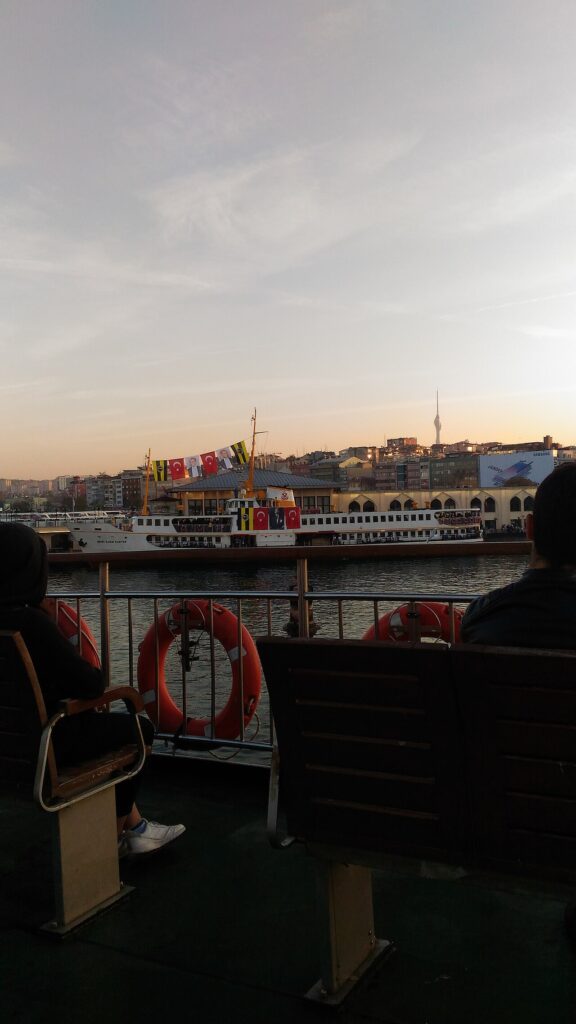
The ferries are the neighborhood’s great photographic gift — a rolling platform with the city as the backdrop. The crossing from the European side to Kadikoy gives you the approach shots: the old city receding, the Galata Tower rising, the Bosphorus Bridge sliding past. The upper open deck is the place to be — the wind, the spray, the gulls, and the light on the water. The classic ferry photograph is the one taken from the bow as the boat closes on the Kadikoy pier, the minarets of the Asian shore and the Haydarpaşa station’s towers filling the frame. And the sunset ferry — the boats are the ideal foreground for the sinking sun, the wake splitting the golden water. The ferries are also the best way to photograph the neighborhood itself: the crossing out gives you the coast as a whole, Moda’s promenade and the hills above it.

The Market: Street Photography at Its Best
The Salı Pazarı market is the neighborhood’s richest street-photography ground, and it rewards a slow pass with the camera at your side. The stalls are dense with material: the olive barrels in their brines, the cheese counters, the spice mountains in their reds and ochers, the fish stalls with their silver slabs, the porters with their handcarts, the faces of the sellers and the buyers. The light through the market’s translucent roofs is soft and even — forgiving light for people pictures. The etiquette is the same as anywhere: ask before a close portrait, and the stallholders, who are used to photographers, will often pose or hand you a sample to taste as a thank-you. The best hours are the morning, when the market is at its liveliest, and the frames are everywhere — this is the photography that makes the market the memory of the trip.
The Murals of Yeldeğirmeni: The Gallery of the Streets
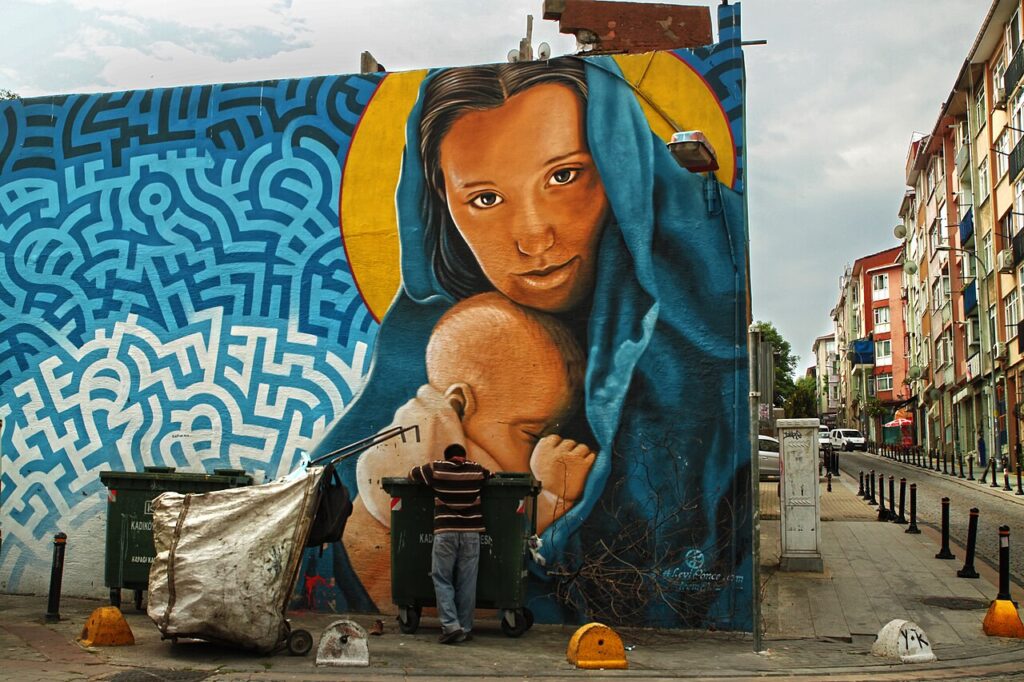
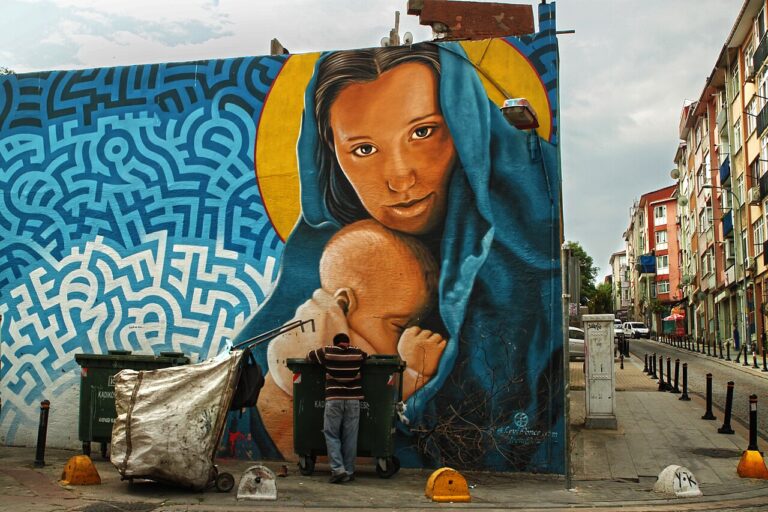
The old Jewish quarter behind the ferry terminal has become Kadikoy’s open-air gallery, and the murals of Yeldeğirmeni are the neighborhood’s most photogenic recent addition. The annual street-art festival has covered whole building facades in enormous works — surreal, political, playful, and technically brilliant — and the narrow streets between them form a walkable exhibition that changes every year. The photography is easy and endlessly productive: the murals alone, the murals against the neighborhood’s peeling paint and laundry lines, the human scale as people pass through the frames. The light matters — the north-facing walls are best in the morning, the south-facing in the afternoon — and the courtyards hide smaller works, stencils, and paste-ups that reward a thorough wander. This is the Kadikoy that the postcards do not yet show, and it is the most current photography in the neighborhood.
Haydarpaşa and the Waterfront Architecture
The great neoclassical bulk of Haydarpaşa Station dominates the Kadikoy waterfront, and it is a photographer’s subject in any light: the enormous columns, the clock tower, the symmetrical facade that has watched the Bosphorus since 1908. The front plaza gives you the grand full-frame view; the corners and the details — the stonework, the arches, the signage — reward a closer look; and the station in late-afternoon light, warm against the blue water, is one of the classic Istanbul frames. The surrounding waterfront extends the subject: the ferry terminal’s nautical clutter, the fishermen, the seagulls, the low sun making silhouettes of everything with a rod or a line. The waterfront architecture of Kadikoy — the old customs houses, the apartment blocks of the coast — fills the frames that the monuments of the old city cannot.
The Hills and the Rooftop Views
The hills that rise behind Kadikoy give the neighborhood its other dimension, and their viewpoints are the secret of the place. The streets above the coast — in the residential quarters of Moda and the hills behind the center — open onto views back down over the rooftops, the sea, and the old city on the far shore; the steps and the terraces of the upper streets are where the neighborhood’s photographers go for the elevated angle. The grand version is Çamlıca Hill, a short bus ride away, whose summit holds the panorama that takes in both sides of the Bosphorus, both bridges, and the whole sweep of the city — the definitive Istanbul vista, best shot at sunset with a telephoto to compress the layers. And the rooftops of the waterfront hotels and guesthouses, with their breakfast-room views over the sea, are the private version of the same obsession.
The Details and the Night
The last photography of Kadikoy is the photography of details, and the neighborhood is full of them: the faded paint of the old apartment buildings, the laundry lines over the backstreets, the coffee cups and the backgammon boards of the cafes, the cats — Kadikoy is a cat town, and the cats of the market and the coast are the most-photographed residents — the simit carts and the chestnut stands, the peeling movie posters, the doorways of Yeldeğirmeni. And then there is the night: after the crowds go home, the Moda coast turns dark and reflective, the city lights shimmer across the water, and the long exposures happen. The night photography of Kadikoy — the ferries as light trails, the minarets glowing, the reflection of the old city in the dark sea — is the neighborhood’s last secret, and the one its photographers keep for themselves.
The Photography Day, Planned
Sunrise, if you can manage it: the coast empty, the light low and long, the fishermen on the seawall. Morning: the market, the people pictures, the soft roof light. Midday: the murals of Yeldeğirmeni, the courtyards, the details. Late afternoon: Haydarpaşa in the warm light, the waterfront. Sunset: the Moda seawall, the essential shot. Night: the coast again, the lights, the long exposures. The camera kit is simple — a mid-range zoom covers the day, a telephoto for the minarets and the bridge, a tripod for the night — and the neighborhood provides the rest. Kadikoy does not need to be discovered with a map of viewpoints; it needs to be walked, with the camera ready and the eyes open, and the shots will find themselves.
Frequently asked questions
What is the best time for the sunset shots?
The last twenty minutes before the sun drops behind the European shore — roughly an hour before sunset in summer, earlier in winter. The city lights after dark are the second act.
Do I need a tripod?
For the night shots, yes — the coast after dark rewards long exposures. Everything else is hand-holdable in the neighborhood’s forgiving light.
Can I photograph the market freely?
Yes, and the stallholders are used to it. Ask before close portraits of individuals, and a taste of the merchandise is the traditional thank-you.
Where is the best elevated view?
The hills above Moda for the neighborhood-level angle, and Çamlıca Hill for the definitive two-continent panorama.
Is Kadikoy good for night photography?
Excellent — the coast is safe and well-lit, the city lights are across the water, and the ferries make light trails through the frame.
What lens should I bring?
A mid-range zoom covers most of the neighborhood; a telephoto reaches the minarets, the bridge, and the details of the waterfront; and a tripod is the tool for the night shots.
Are there photo restrictions at the market?
No — the market is public and the stallholders are used to cameras. The only etiquette is asking before close portraits, and the tasting offer is the traditional thank-you.
What is the quietest time for people-free shots?
The weekday mornings — the coast empties, the light is low and long, and the fishermen on the seawall give you the classic frames without the crowds.

All Over Information
The All Over Information editorial team researches and writes practical English-language guides to Turkey. Facts are checked against official and local sources before publication, prices are published as dated ranges rather than quotes, and guides are revised when things change. We accept no sponsored posts, paid placements or paid links.
More guides like this

48 Hours in Kadikoy: The Perfect Itinerary
Kadikoy is the neighborhood that makes Istanbul feel like two cities in one. On the European side, the day is a parade…

Family-Friendly Activities in Kadikoy
Kadikoy is the Istanbul neighborhood that families discover by accident and then never forget.
A Solo Traveler’s Guide to Kadikoy
Kadikoy may be the best neighborhood in Istanbul for the solo traveler, and the reasons are specific.

History and Culture of Kadikoy
Kadikoy is older than Istanbul — or rather, older than the city that became Istanbul.

Best Local Restaurants in Kadikoy
Kadikoy is the neighborhood where Istanbulis argue the best food in the city actually lives.
How to Get to Kadikoy from Istanbul
Kadikoy sits on the Asian shore of Istanbul, across the Bosphorus and the Marmara from the neighborhoods most visitors first see —…