Every spring, Istanbul paints itself in petals. Gardens, parks, and highway medians fill with tulips in every color, and the city looks like a festival ground. Most visitors enjoy the flowers without knowing that they are witnessing a revival of one of the most famous chapters of Ottoman history. The Tulip Era of the early eighteenth century was a brief golden age of art, pleasure, and palace culture, and its legacy still shapes how Turkey celebrates beauty, spring, and its own past. This guide shows you where that legacy lives today.
What the Tulip Era Was
The Ottoman Tulip Era, known in Turkish as the Lale Devri, lasted roughly from 1718 to 1730, during the reign of Sultan Ahmed III. It was a period of relative peace after decades of war, when the empire turned its attention from battlefields to gardens, poetry, and pleasure.
The name comes from the tulip, the flower that became the symbol of the age. Courtiers competed to grow the rarest varieties, and tulip bulbs sold for astonishing prices in the flower markets of Istanbul. The flower was not simply a decoration; it was an obsession of the ruling class.
The era is remembered as a time of elegance, when the palaces of the Bosphorus filled with music, the gardens bloomed with new species, and the sultan’s court set the tone for the whole city. It was a springtime of Ottoman culture that ended abruptly.
The era is also a lesson in how quickly luxury can be punished. When the Patrona Halil revolt swept Istanbul in 1730, the tulip gardens were destroyed and the age was closed overnight, a reminder that the golden moments of history are often the shortest.
A Brief Golden Age
Behind the flowers lay a real cultural program. The grand vizier Nevsehirli Damat Ibrahim Pasha encouraged translation, printing, and architecture, and the first Ottoman printing press began its work during these years.
Literature flourished, with poets competing for the sultan’s favor, and the famous poet Nedim captured the pleasure-loving spirit of the age in verses that are still read today. The Tulip Era was the empire’s answer to the European Enlightenment, an opening to new ideas.
The palaces along the Bosphorus, the gardens at Sadabad, and the festivals in the imperial grounds all expressed the same ideal: that the state, at peace, could devote itself to refinement. It was a short season of optimism before the storm.
Tulips in Istanbul Today
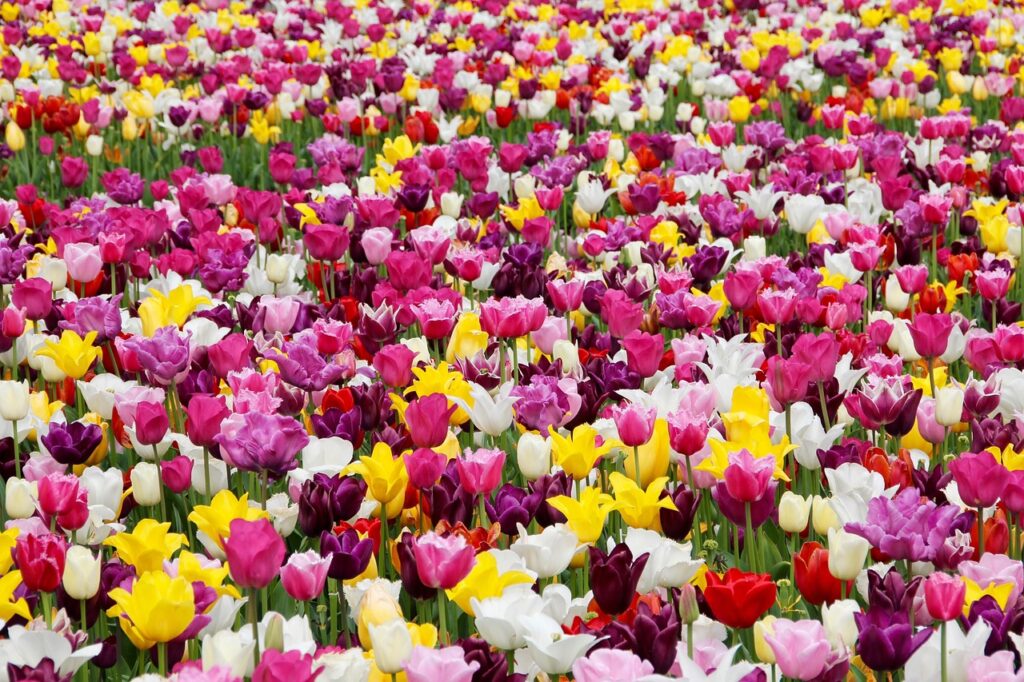
The most visible legacy of the Tulip Era is simply the tulip itself. In modern Istanbul, tulips are planted by the million across parks and roadsides every spring, reviving the flower’s association with the city.
The city administration has made the tulip a civic emblem, planting vast displays that turn the parks pink, red, and gold in April. Locals and visitors alike photograph the flower beds in Sultanahmet, Emirgan, and along the Bosphorus.
This is not a modern invention but a deliberate revival of an Ottoman tradition. Those who plant the tulips are drawing directly on the memory of the Tulip Era, when the city was famous across Europe for its flower culture. European travelers returned home with tales of Ottoman gardens, and the tulip itself first reached the Netherlands from Ottoman lands, giving the flower a European chapter that began in Istanbul.
The Emblem of the Tulip
The tulip has become a national symbol of Turkey in a quiet but powerful way. Its silhouette appears in textiles, tiles, jewelry, and logos across the country.
You will see the tulip motif in the decoration of mosques and palaces, on Ottoman tiles in museums, and on the products of modern designers who reach back to Ottoman motifs. The flower carries a double meaning: beauty and Ottoman heritage together.
The Turkish word for tulip, lale, also has a calligraphic resonance, since the letters can be arranged to spell the name of God. This added a spiritual dimension to the flower, which is one reason it was so beloved in Ottoman culture.
Architecture and Gardens of the Era
The Tulip Era left its mark on Ottoman architecture. The most famous monument of the period is the Fountain of Ahmed III, which stands at the gate of Topkapi Palace, its marble carved with poetry and flowers.
The era also created the pleasure palace of Sadabad at the head of the Golden Horn, with its gardens, pools, and cascades modeled on Persian and European examples. Although the original palace is gone, the name and the landscape tradition survive.
For modern visitors, the fountains and gardens of the period can still be admired. The Ottoman love of water, shade, and flowers, codified in the Tulip Era, remains one of the most charming features of historic Turkish landscapes. The cascades and water channels of Sadabad set a fashion that echoed across the empire, from the fountains of provincial towns to the courtyard pools of later palaces.
Literature, Art, and the Tulip
The Tulip Era was one of the great literary moments of Ottoman history. The poet Nedim, the voice of the age, wrote joyful verses about Istanbul, spring, and love, and his work is still memorized in Turkey.
In the visual arts, the era produced exquisite manuscript paintings, lacquer work, and calligraphy. Tulips appear in the borders of illuminated books and in the famous paintings of tulip gardens commissioned by the sultan.
This artistic heritage survives in museums and collections, where the delicate art of the Tulip Era is displayed as one of the high points of Ottoman refinement. For anyone interested in the culture of the empire, it is a doorway into a very particular, very beautiful moment.

The Istanbul Tulip Festival
The most direct modern link to the Tulip Era is the annual tulip festival in Istanbul, held every April. Parks and gardens across the city are planted with millions of bulbs in advance, and the display peaks in the middle of the month.
Emirgan Park, on the European shore of the Bosphorus, is the centerpiece, with its hillsides of color and its historic pavilions. The festival also includes concerts, exhibitions, and workshops that connect the flowers to Ottoman culture.
For visitors, the festival is the easiest way to experience the spirit of the Tulip Era: the city, at peace and at play, celebrating beauty for its own sake. If you can time your trip for April, you will see the legacy in full bloom.
Tulips in Turkish Daily Life
Beyond the festival, the tulip appears everywhere in Turkish daily life. You will find the flower on tea glasses, plates, carpets, and the carved decorations of buildings old and new.
Markets sell tulip-shaped souvenirs, and the motif has never gone out of style. In homes, the tulip is a favorite of gardeners, who plant the bulbs each autumn for the spring display. The flower has even appeared on Turkish banknotes and official emblems, quietly carrying the Ottoman legacy into the present.
This everyday presence means the legacy of the Tulip Era is not confined to museums. It is a living tradition that any traveler can observe simply by looking at the patterns on a teacup or the flowers in a park.

The Tulip in Turkish Identity
For modern Turkey, the tulip has come to represent the elegance and cultural confidence of the Ottoman past. Politicians, artists, and designers all reach for the flower when they want to evoke the empire’s golden moments.
The tulip also stands for the belief that Turkish culture values beauty, gardens, and hospitality. The Ottoman tradition of the flower, revived in festivals and civic planting, is presented as part of the national character.
For the visitor, this means the tulip is more than a pretty flower. It is a symbol with a story, and understanding that story adds a layer of meaning to everything from museum tiles to park benches.
How to Experience the Legacy
To experience the legacy of the Tulip Era, start in the spring. Visit Istanbul in April, walk the flower beds, and attend the tulip festival if your dates allow.
Then trace the tradition back: admire the tulip motifs on Iznik tiles in the mosques, see the illuminated manuscripts in the museums, and stop at the Fountain of Ahmed III before you enter Topkapi Palace. Each sight adds a chapter to the same story.
Finally, take the flower home with you. Tulip bulbs, tulip-motif ceramics, and tulip-shaped glassware are everywhere in the bazaars, and they carry the story of an empire that once stopped to admire the flowers. Buy a few bulbs, plant them in your own garden, and you will be continuing a tradition that began in the palaces of the Bosphorus.
Frequently asked questions
What was the Ottoman Tulip Era?
The Ottoman Tulip Era, or Lale Devri, was a period from roughly 1718 to 1730 during the reign of Sultan Ahmed III. After years of war, the empire enjoyed relative peace, and the court devoted itself to culture, poetry, and gardens. The tulip became the symbol of the age, and the era ended with the Patrona Halil revolt of 1730.
When is the best time to see tulips in Istanbul?
The best time is April, when the annual tulip festival takes place. Parks across the city, especially Emirgan Park, are planted with millions of tulip bulbs that bloom through the month. The displays usually peak around mid-April, so a visit in the second or third week gives you the fullest color.
Why did the Ottomans love the tulip so much?
The Ottomans loved the tulip for several reasons. Its beauty made it a status symbol among courtiers, who competed to grow rare varieties. Its name, lale, could be written in calligraphy to spell the name of God, giving it a spiritual meaning. And in the peaceful Tulip Era, the flower became the emblem of an age devoted to pleasure and refinement.

All Over Information
The All Over Information editorial team researches and writes practical English-language guides to Turkey. Facts are checked against official and local sources before publication, prices are published as dated ranges rather than quotes, and guides are revised when things change. We accept no sponsored posts, paid placements or paid links.
More guides like this
How the Ottoman Tile and Ceramic Tradition Shaped Turkish Identity
You cannot travel far in Turkey without noticing that tiles keep appearing. They cover the walls of imperial mosques, decorate tea houses,…

How the Hittite Empire Shaped Turkish Identity
Few ancient civilizations are as woven into modern Turkey's sense of itself as the Hittites.

How the Ottoman Empire Shaped Turkish Identity
No force shaped modern Turkish identity more directly than the Ottoman Empire.

The Legacy of the Turkish Republic Era in Modern Turkey
When you travel across Turkey today, you are moving through a landscape shaped as much by a century of republic as by…

The Legacy of the Silk Road Era in Modern Turkey
Long before highways and airlines, Anatolia was the crossroads of the world.

How the Trojan War Legends Shaped Turkish Identity
The most famous war in world literature was fought on Turkish soil. For three thousand years, the story of Troy has been…