High on the sheer face of a cliff in the Pontic mountains south of Trabzon, the monastery of Sumela has clung to the rock for more than sixteen centuries. Dedicated to the Virgin Mary and known in Greek as Panagia Soumela, it is one of the most dramatic religious sites on earth, a warren of chapels, kitchens, cells, and libraries stacked against a vertical wall of stone. Its story runs from a legendary founding in the fourth century through the Empire of Trebizond, the Ottoman centuries, abandonment in the twentieth century, and a painstaking modern restoration. This is the complete history of the monastery that appears to hang from the sky above the Altindere valley.
The Legend of the Founding
The monastery’s own tradition places its birth in 386, when two Athenian priests, Barnabas and Sophronius, are said to have followed a vision of the Virgin Mary into these mountains. According to the legend, an icon of Mary painted by the evangelist Luke had been hidden in a cave on the cliff, and the two monks found it and built a chapel around it.
The name Sumela is usually explained as a contraction of Sou Melas, the black mountain, a reference to the dark, forested peak above the site. Whether or not the founding story is literally true, it anchored the monastery in a deep tradition of pilgrimage and miracle that shaped every later century of its life.
What is certain is that by the Byzantine middle ages the site was a functioning monastery, and the cave chapel at its heart remained the focus of the community for more than a millennium. The legend also explains why pilgrims made the dangerous journey: the mountain was believed to be a place where heaven touched the earth, and the icon inside the cave was said to answer the prayers of those who climbed to it.
The Byzantine Centuries
The first solid historical records of Sumela appear in the era when the Byzantine Empire ruled the Black Sea coast, and the monastery grew as a center of prayer, copying, and learning. Emperors and local lords granted lands and privileges, and the community of monks expanded far beyond the original cave.
The heart of the complex remained the rock church, cut partly into the cliff, where the miracle-working icon of the Virgin was kept. Around it grew the service buildings of an active monastery: cells for the monks, a refectory, storerooms, and the workshops needed to support an isolated community on a mountain wall.
Life was hard and self-sufficient. Water had to be channeled from springs high above, gardens were carved wherever the slope allowed, and everything the monks could not grow or make themselves had to be carried up from the valley below.

The Age of the Komnenoi
The monastery’s greatest early patron was the Empire of Trebizond, the Byzantine successor state that ruled this coast after the Fourth Crusade. In the fourteenth century, Emperor Alexios III Komnenos took Sumela under his personal protection, granting lands, revenues, and privileges.
It was under his patronage in the 1360s that the monastery was substantially rebuilt and expanded, taking much of the form that survives today. The emperor is said to have climbed to the monastery himself, and his charters guaranteed its income and independence for generations to come.
This period made Sumela the most important monastery of the Pontic mountains, a place of pilgrimage that drew monks and worshippers from across the Black Sea world, and its reputation only grew as the centuries passed.
Under Ottoman Protection
When the Ottomans conquered Trebizond in 1461, the fate of Sumela might easily have been ruin. Instead, Sultan Mehmed II is traditionally said to have confirmed the monastery’s rights when he visited the region, and later sultans renewed its privileges.
The monastery therefore survived the conquest and continued its life as a Christian foundation under Muslim rule, paying taxes and keeping the peace. The sultans valued the stability of their Christian subjects, and protected shrines like Sumela were part of that order.
Pilgrimage continued to flow up the mountain, and the monastery’s wealth, built on lands, gifts, and the offerings of the faithful, allowed it to maintain and embellish its buildings century after century.
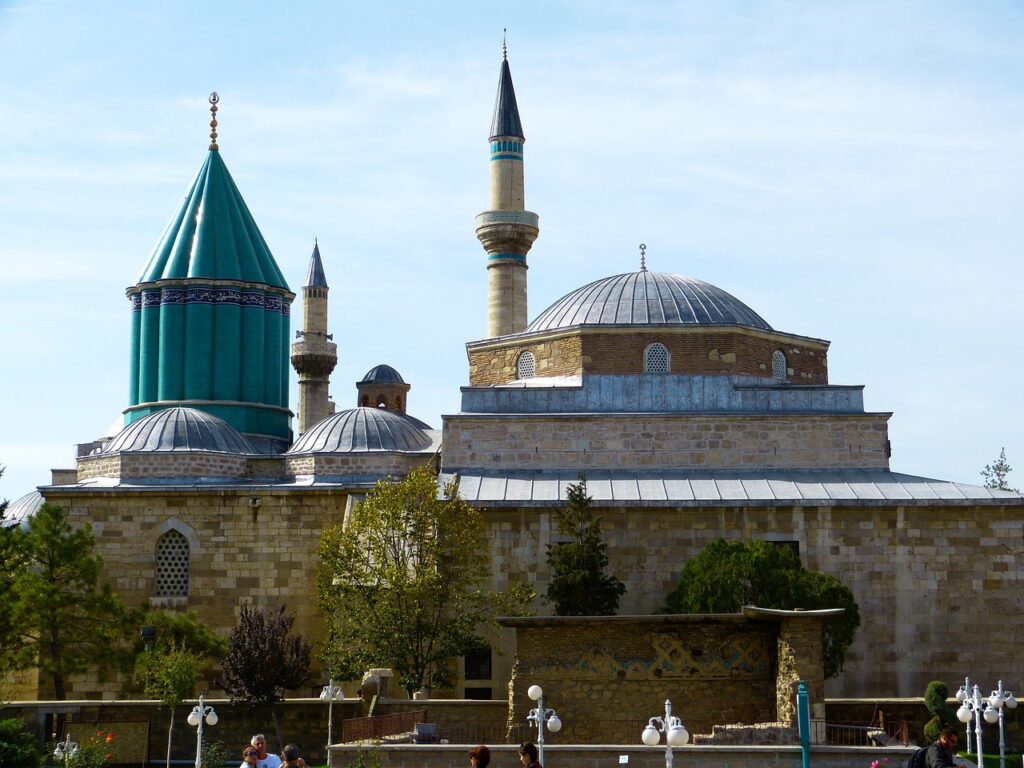
The Rebuilding of the Seventeenth and Eighteenth Centuries
By the seventeenth century the medieval structures were showing their age, and the community undertook major repairs, including an important restoration in 1682. The great rebuilding, however, came in the eighteenth century, when the monastery as it stands today largely took shape.
A major program of reconstruction around 1762 renewed the cliffside complex, adding the great kitchens, the library, the guesthouse, and the ranges of monastic cells whose walls and windows still define the site. The aqueduct that feeds the monastery was rebuilt and improved to carry water from the high springs.
The result was a self-contained stone city on the rock, capable of housing hundreds of monks and pilgrims, with storerooms, workshops, and a tradition of learning that made Sumela a center of Greek education in the mountains.
The Golden Age of the Nineteenth Century
The nineteenth century was the monastery’s most prosperous era. Under the patronage of the Greek merchants of the Black Sea trade, Sumela became wealthy, and its school, library, and workshops were famous across the region.
The interior of the rock church was covered with frescoes in the bright, narrative style of the period, and the facades facing the valley were decorated with painted panels and scenes. Monks, students, and pilgrims filled the corridors, and the monastery’s festivals drew crowds from the whole Pontic coast.
This was the Sumela that travelers described with wonder: a gleaming complex of walls and balconies stacked against the dark rock, its windows glowing at dusk above the forest, the most celebrated monastery of Anatolia.
The Great War and the Exodus
The First World War shattered the monastery’s world. Russian forces occupied the region between 1916 and 1918, and the monks carried their treasures, including the sacred icon, into the interior of Russia. They returned briefly after the war, but the peace that followed changed everything.
In 1923, under the population exchange between Greece and Turkey, the Greek Orthodox population of the Pontic coast, the community that had sustained Sumela for centuries, was resettled in Greece. The monks left the mountain for the last time, carrying the icon with them.
The monastery was not burned or destroyed, but it was empty. Deprived of its community, its income, and its worshippers, Sumela entered the silence that would last for decades.
The Fire and the Long Silence
In 1930 a fire swept through the abandoned buildings, destroying the wooden roofs, the library, and much of the interior woodwork. What remained was a shell of stone, open to the weather and to the decades of visitors who followed.
For half a century Sumela stood as a magnificent ruin, known to the few who made the journey but slowly crumbling. Vandals and treasure hunters carried away what the fire had spared, and the frescoes, exposed to rain and sun, began to flake from the walls.
Yet the site never lost its power. Photographs of the ruined monastery on its cliff appeared in the world’s magazines, and by the 1960s Sumela was one of the most evocative images of Turkey, a place people dreamed of before they could visit.

The Restoration
Serious restoration began in the 1980s, when the site passed into the care of Turkey’s cultural authorities. Engineers anchored the crumbling rock, rebuilt collapsed sections, and returned the monastery’s silhouette to the cliff.
The work continued for decades, and in 2010, after a major restoration, Sumela reopened to visitors, revealing restored frescoes and rebuilt chambers. It closed again between 2015 and 2019 for urgent rock-safety works, and after further reinforcement it reopened in 2021.
The restoration has been debated by specialists, who question how faithfully the rebuilt walls reflect the original, but for visitors the effect is unmistakable: the monastery is alive again, its galleries, kitchens, and painted church open to the world. Every stage of the work has had to answer the same question the medieval builders faced, namely how to anchor heavy stonework to a cliff that is constantly moving, freezing, and shedding rock.
Sumela in the Twenty-First Century
Today Sumela is a museum under the care of the Turkish state and one of the most visited sites on the Black Sea coast. From the valley floor, a road, shuttle buses, and a forest path bring thousands of travelers a day up to the foot of the cliff in the summer months.
The monastery remains a living place as well as a monument. Since 2010, an Orthodox service has been held in the rock church once a year on the feast of the Dormition of the Virgin, returning the building, for a few hours, to the purpose for which it was built.
For the visitor, Sumela is best understood as a miracle of persistence: a community that held on to a vertical cliff for sixteen centuries, survived empires and exiles, and emerged from the twentieth century battered but standing, still the most extraordinary monument on Turkey’s Black Sea coast.
Frequently asked questions
Who founded Sumela Monastery and when?
According to the monastery’s tradition, two Athenian monks, Barnabas and Sophronius, founded it in 386 after a vision of the Virgin Mary led them to a cave holding a sacred icon. The first solid historical records come later, but by the Byzantine era Sumela was an established monastery that grew into the most important religious house of the Pontic mountains.
Why was Sumela Monastery abandoned?
The monks left in 1923 as part of the population exchange between Greece and Turkey, when the Greek Orthodox community of the Black Sea coast was resettled in Greece. The monastery, which had depended on that community for monks, income, and pilgrims, was left empty, and a fire in 1930 completed its ruin.
Can you visit Sumela Monastery today?
Yes. After decades of restoration, including reinforcement of the unstable cliff, Sumela reopened to visitors in 2021. It operates as a museum with access by shuttle and a forest walk, and an Orthodox service is held in the rock church once a year, reviving the monastery’s ancient religious tradition.

All Over Information
The All Over Information editorial team researches and writes practical English-language guides to Turkey. Facts are checked against official and local sources before publication, prices are published as dated ranges rather than quotes, and guides are revised when things change. We accept no sponsored posts, paid placements or paid links.
More guides like this
Islamic Architecture of the Ottoman Empire
The Ottoman Empire ruled Anatolia and much of the world around it for over six centuries, and it left behind one of…
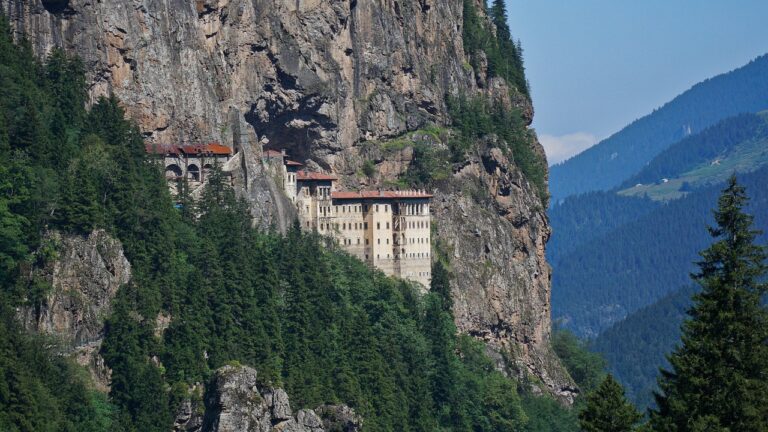
Best Time to Visit Sumela Monastery to Avoid Crowds
Sumela Monastery is one of the most popular sights on Turkey's Black Sea coast, and on a summer day the narrow paths…

Turkey’s Best Museums Beyond Istanbul
Istanbul has the museums everyone knows, from the great archaeological collections to the palaces and cisterns.

The Architecture of Spice Bazaar Explained
The Spice Bazaar is one of the finest surviving examples of Ottoman market architecture, a building that has done the same job,…

Turkish Architecture Through the Ages
Turkey is one of the world's great architectural museums, a country where ten thousand years of building history stand side by side.

Best Time to Visit Topkapi Palace to Avoid Crowds
Topkapi Palace is one of the most visited museums in the world, and its crowds are legendary: queues at the ticket gates,…