Turkey is one of the world’s great architectural museums, a country where ten thousand years of building history stand side by side. Neolithic shrines, Greek temples, Roman theaters, Byzantine churches, Seljuk caravanserais, Ottoman mosques, and modern skylines all share the same landscape. This article takes you on a tour through the ages of Turkish architecture, explaining what was built, why it mattered, and where you can still see it today.
The First Builders of Anatolia
The story begins deep in prehistory. At Gobekli Tepe in the southeast, enormous stone pillars carved with animal reliefs were raised into circular enclosures more than eleven thousand years ago, long before farming or writing, making it one of the oldest monumental architecture in the world. Nearby Catalhoyuk, a Neolithic town of mud-brick houses entered through roof openings, shows how settled life shaped the first domestic architecture.
As civilizations matured, the region became a crossroads of building traditions. The Hittites raised massive stone fortifications and carved rock sanctuaries in central Anatolia, while the Urartians built fortress cities around Lake Van. Each successive people added to the layering, and the architecture of Anatolia is therefore less a single style than a conversation among cultures, each reading and rebuilding the work of its predecessors.
The Greeks and the Aegean Coast
The Greek colonies of the Aegean coast introduced the architecture that would define the classical world. The cities of Ionia, such as Ephesus, Miletus, and Priene, were laid out with grid plans, public squares, and temples of marble, and their theater of Miletus and the great temple of Artemis at Ephesus ranked among the wonders of antiquity. The coastal cities grew rich on trade, and their wealth went into stone.
The most dramatic Greek sites survive on the Aegean and Mediterranean shores. The temple of Apollo at Didyma, with its forest of towering columns, and the acropolis of Pergamon, with its steep theater cut into the hillside, show the scale and ambition of the classical builders. The Greek achievement was the vocabulary of columns, pediments, and proportion that would echo through every later age of Western architecture.

The Roman Empire’s Monumental Cities
The Romans transformed Anatolia into one of the most urbanized regions of their empire. They built on the Greek foundations, adding their own engineering genius: vast aqueducts, stone-paved roads, monumental gates, bath complexes, and stadiums. The cities of the west, Ephesus, Aphrodisias, and Perge, were rebuilt in marble, and the library of Celsus at Ephesus is among the most beautiful surviving façades of the ancient world.
Rome’s architectural legacy is everywhere in Turkey. The theater at Aspendos is the best-preserved ancient theater in the world, and the arena at Side and the temples of the eastern cities show the empire’s reach. The Romans also built the infrastructure of empire, from the great bridges and roads to the harbors that connected the provinces. When you stand in a Roman city in Turkey, you are standing at the center of the ancient world, not its periphery.
The Byzantine Age and the Age of the Dome
When the empire’s capital moved to Constantinople, the architecture of the region took a new direction. Byzantine builders fused the Roman mastery of concrete and engineering with the new Christian liturgy, and the result was the church: a domed, centrally planned building flooded with light. The Hagia Sophia, completed in the sixth century, was the supreme achievement, a dome that seemed to float on light and remained the largest building in the world for a thousand years.
The Byzantine style spread through the empire. The churches of Istanbul, such as the Chora with its mosaics, the rock-cut churches of Cappadocia, and the monastic complexes of the Black Sea mountains all show the tradition’s range. Byzantine architecture also kept the ancient engineering skills alive, transmitting the knowledge of domes, arches, and vaults that the Ottomans would inherit and transform.

The Seljuk Age: Caravanserais and Madrassas
The arrival of the Seljuk Turks in the eleventh century brought a new chapter, and their architecture is one of the most distinctive in Turkish history. The Seljuks built monumental caravanserais along the trade routes, fortified stone inns with vast courtyards and vaulted halls that sheltered merchants and their caravans; great madrassas, or theological schools; and mosques with towering portals carved in intricate geometric and floral relief.
The Seljuk style is most visible in central and eastern Anatolia. The caravanserais of the Konya plain, the madrassas of Konya and Sivas, and the great portals of the buildings of Erzurum and Divrigi, whose mosque boasts some of the most extravagant stone carving in the Islamic world, all show the Seljuk love of geometry and ornament. The Seljuks also introduced the pointed arch and the muqarnas, the honeycomb decoration that would become a hallmark of Islamic architecture.
The Ottoman Synthesis
The Ottomans inherited the Byzantine and Seljuk traditions and forged them into something new. Ottoman architecture reached its classical form in the sixteenth century under the architect Sinan, who perfected the domed mosque: a central dome flanked by semi-domes, carried on massive piers, with slender minarets at the corners. The mosques of Istanbul, from the Suleymaniye to the Blue Mosque, are the supreme monuments of this synthesis.
The Ottoman achievement extended far beyond the mosque. The empire built palaces, bathhouses, covered markets, bridges, fountains, and entire cities, all in a consistent, elegant language of domes and arches. The imperial style spread to the provinces, from the mosques of the Balkans to the holy cities of Arabia, and it remained dominant for four centuries. Ottoman architecture is the architecture most people picture when they think of Turkey, and with good reason.

The Tulip Age and Western Influences
In the eighteenth century, the Ottoman world began to open to the West, and architecture responded. The so-called Tulip Age brought fountains and pleasure pavilions of light, decorative charm, and the nineteenth century saw the empire’s cities rebuilt in European styles: neoclassical, baroque, and eclectic. The Dolmabahce Palace, with its crystal and marble halls, embodies the new taste, a world away from the severe beauty of the classical mosques.
The change was not simply imitation. Ottoman builders adapted European forms to local materials and needs, creating hybrid styles found nowhere else, and the imperial style continued to evolve until the empire’s end. The late Ottoman city, with its wooden mansions, apartment buildings, and public monuments, is still the fabric of many Turkish towns today, and the era’s architecture repays a second look.
The Republic and the Modern Age
The Turkish Republic brought a new architectural identity. The early decades of the twentieth century saw state buildings in a simplified, monumental style, followed by the influence of European modernism in the mid-century, and by the bold experiments of recent decades. Today, Turkish cities mix tower blocks, shopping centers, and cultural buildings with the layers of the past, and contemporary architects have earned international recognition.
The modern era has also brought restoration to the center of Turkish architecture. The great monuments are continuously conserved, from the Hagia Sophia to the wooden mansions of Safranbolu, and adaptive reuse has turned old buildings into museums, hotels, and cultural centers. The contemporary challenge is to build new Turkey without losing the old, and the country’s best recent architecture shows how the two can coexist.

Reading the Layers: Architecture Today
For the traveler, the architecture of Turkey is best understood as a series of layers, each age building on the ones before. A single landscape may hold a Neolithic mound, a Roman road, a Byzantine church, and an Ottoman mosque within walking distance, and the great cities are palimpsests where every era is visible. Reading those layers, noticing the column reused in a later wall, the dome echoing an earlier one, turns sightseeing into archaeology.
Practical advice is simple: look up, look down, and look again. The architectural riches are not only in the famous monuments but in the doorways, courtyards, and rooftops of ordinary streets. Turkey’s buildings tell the story of ten thousand years of human ambition, and no visitor can exhaust them. The more you see, the more you will want to see, and the country’s architecture will reward your attention at every turn.
A few practical notes will enrich any architectural tour. Many sites are open throughout the year, but the great monuments are at their most atmospheric in the early morning, when the light is low and the crowds are thin, and at the mosques, visiting between prayer times allows unhurried viewing. Guided walks with local historians, many available through museums and cultural centers, add depth that guidebooks cannot match, and the country’s restoration sites often offer visitors a rare view of conservation in progress.
Civil Architecture and Everyday Building
The great monuments are only part of the story, because Turkey’s civil architecture is equally rich. The wooden mansions of Safranbolu, the stone houses of the southeast, the courtyard homes of Mardin, and the waterfront houses of Istanbul’s Bosphorus villages all show how generations adapted buildings to climate, family, and trade. These ordinary structures give the architectural history of Turkey a human scale that the monuments alone cannot convey.
A few practical notes will enrich any architectural tour. Many sites are open throughout the year, but the great monuments are at their most atmospheric in the early morning, when the light is low and the crowds are thin. Guided walks with local historians, many available through museums and cultural centers, add depth that guidebooks cannot match, and the country’s restoration sites often offer visitors a rare view of conservation in progress.
Frequently asked questions
What are the main periods of Turkish architecture?
The main periods are the prehistoric and Hittite eras, Greek and Roman antiquity, the Byzantine age, the Seljuk period, the Ottoman classical age, the Western-influenced nineteenth century, and the modern republic. Each left distinctive monuments, from Gobekli Tepe and Ephesus to the Hagia Sophia, Seljuk caravanserais, the mosques of Sinan, the palaces of the Tulip Age, and contemporary buildings.
Where is the best place to see Turkish architecture?
Istanbul is the richest single destination, with Byzantine, Ottoman, and modern architecture all in one city, but the country as a whole is a museum. Ephesus and Aphrodisias for antiquity, Cappadocia for rock-cut Byzantine churches, Konya and Sivas for the Seljuks, and Safranbolu for Ottoman civil architecture are all outstanding. A route connecting these sites gives the fullest picture of ten thousand years of building.
How has modern Turkey preserved its architectural heritage?
Turkey maintains an extensive restoration program, conserving monuments from the Neolithic to the Ottoman periods, and many historic buildings have been adapted for modern use as museums, hotels, and cultural centers. World heritage listings protect key sites, and urban renewal projects restore historic districts. The challenge of balancing development with conservation is ongoing, and restoration standards continue to improve.

All Over Information
The All Over Information editorial team researches and writes practical English-language guides to Turkey. Facts are checked against official and local sources before publication, prices are published as dated ranges rather than quotes, and guides are revised when things change. We accept no sponsored posts, paid placements or paid links.
More guides like this

Best Time to Visit Maiden’s Tower to Avoid Crowds
The Maiden's Tower is a small site with a big reputation, and its crowds are limited by the water: only the people…

Hagia Sophia Through the Centuries
Hagia Sophia has outlived every empire that built it, and its history is a procession of centuries, each leaving its mark on…

The Complete History of Galata Tower
Galata Tower has watched over Istanbul for nearly seven centuries, and its history is a compressed version of the city's own: born…

Why Ishak Pasha Palace Should Be on Your Turkey Bucket List
Most travelers know the Turkey of Istanbul, Cappadocia, and the Aegean coast, and rightly so.

Best Time to Visit Aspendos Theatre to Avoid Crowds
The theatre of Aspendos is one of the most popular excursion destinations on the Turkish Riviera, and on a busy summer day…
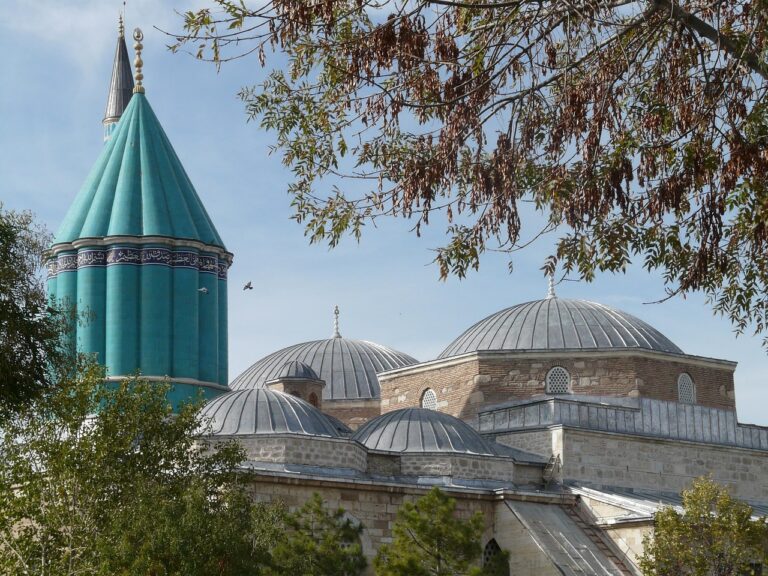
Visiting Mevlana Museum: Tickets, Hours, and Tips
The Mevlana Museum of Konya — the tomb of the great mystic Rumi — is one of the most visited museums of…