Pide is a bread with a history as long as the Turkish kitchen itself. Its ancestors were baked on the stones of Anatolia thousands of years ago, and its name comes from the ancient world of the eastern Mediterranean. This article traces the story of pide, from the first flatbreads of the region to the filled boats of the modern pideci, and explains how the golden bread became a national favorite.
The Ancient Bread of Anatolia
Bread is the oldest food of Anatolia, and the ancestors of pide were baked here thousands of years before the first cities of the region. The earliest bakers made flatbreads on hot stones, and the tradition has never died.
The wheat of Anatolia is among the oldest cultivated in the world, and the region’s bakers have worked with it for millennia. The simple breads of the first farmers were the distant ancestors of everything the Turkish oven bakes today.
When the first settlements grew into cities, the bakers followed, and the ovens of the ancient towns of Anatolia were the ancestors of the modern firin. The lineage of the pide begins in those earliest hearths. Archaeologists have found the charred remains of flatbreads in the ancient settlements of the region, and the tools of the early bakers are among the oldest kitchen equipment ever discovered. The breads were simple, but they carried the same grain that still fills the Turkish ovens, which makes the connection between those first loaves and the modern pide more direct than most people realize.
The Nomadic Baking Tradition
The Turkic peoples who entered Anatolia brought their own bread traditions, shaped by the nomadic life of the steppe. The nomads baked simple breads on griddles and in the embers of their campfires.
The nomadic breads were made to travel, flat and durable, and they were baked in the ashes or on curved iron plates. The habit of baking flat, quickly cooked bread was carried into Anatolia by the migrating Turks.
When the nomads settled, their breads met the ovens of the towns, and the two traditions began to merge. The meeting of the steppe griddle and the Anatolian oven is one of the origins of modern Turkish baking. The nomadic breads also influenced the way Turkish bread is eaten, because the flat, portable loaves encouraged the habit of tearing and sharing rather than slicing. That habit is still alive at every Turkish table, and the boat-shaped pide, made to be broken by hand, is one of its most perfect expressions.

The Ottoman Ovens
The Ottoman centuries saw the Turkish oven reach its full glory. The great stone ovens of the towns baked bread for the whole community, and the craft of the baker was one of the most respected trades.
The Ottoman firin was a social institution, where the household brought its dough and the neighborhood gathered. The ovens baked the daily bread, the festival breads, and the earliest forms of the filled breads.
The records of the Ottoman period show bread at the center of the imperial kitchen, and the bakers of the capital were organized and honored. The oven culture that produced pide was built in these centuries. The Ottoman bakers were also innovators, experimenting with enriched doughs, glazes, and new shapes, and their workshops became schools for the whole craft. The respect for the baker, the fire, and the stone that survives in the modern pideci is a direct inheritance from those centuries.
The Birth of the Boat Shape
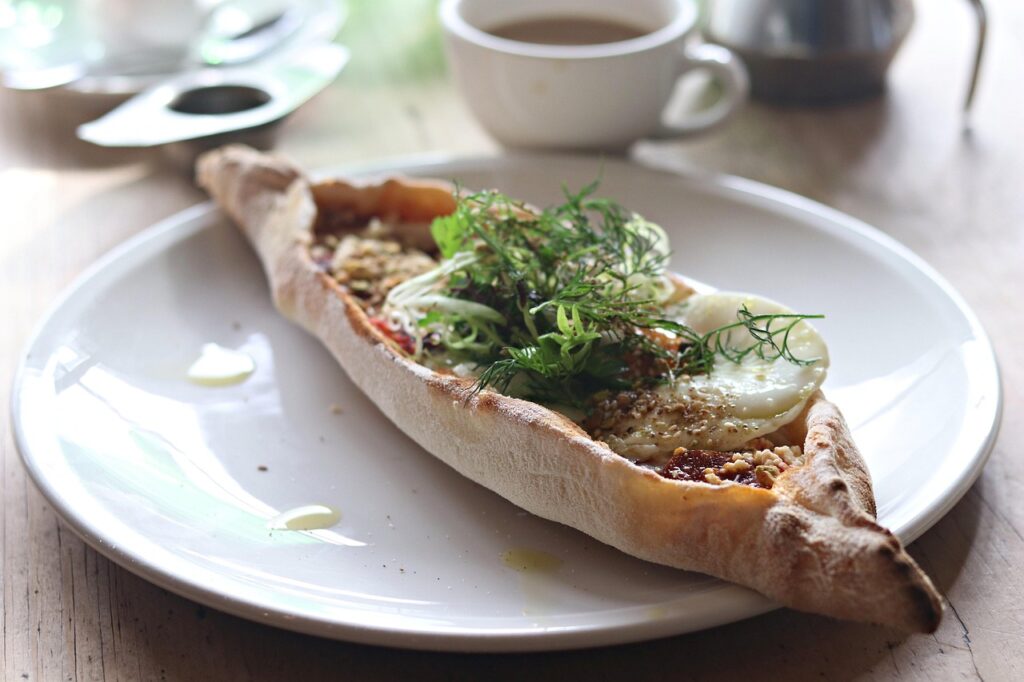
The filled breads of the Ottoman kitchen developed in many forms, and the boat shape emerged as the favorite of the pide family. The long oval with the pinched edges proved perfect for holding a filling.
The boat form is practical, because the raised edges keep the filling in place while the open center browns in the oven. The shape also divides naturally into portions, which suited the Turkish habit of sharing.
The boat shape spread through the provinces, and every region gave it its own proportions. The long canoes of the Black Sea and the rounder boats of the central cities all descend from the same form. The boat shape also solved a practical problem of the old ovens, because the long, narrow form cooked evenly on a stone that was hottest at its center. The shape of the pide is thus a piece of engineering as much as a piece of design, refined by generations of bakers who learned by watching the fire.
The Filled Breads of the Empire
The Ottoman Empire was a world of filled breads, and pide was one among many. The empire’s kitchens baked borek, the layered pastries, and the stuffed breads of the provinces, and the pide developed alongside them.
The wealth of the imperial cities supported a rich baking culture, and the fillings of the pide, cheese, meat, and vegetables, drew on the products of the empire’s farms. The dish belonged to the daily bread rather than to the palace, and that is part of its character.
The empire also carried the bread traditions across its territories, and the descendants of the Ottoman pide are baked from the Balkans to the Arab provinces. The boat-shaped bread is part of the empire’s inheritance. In the capital, the pide of the Ottoman bakers was prized by the palace and the public alike, and the bread bridged the gap between the imperial table and the street. This double life, at once humble and honored, is the character that pide still carries today.
The Pideci Emerges
The pideci, the shop devoted to pide, emerged as the cities of the late Ottoman and republican eras grew. The specialized bakers could serve the filled boats fresh at all hours.
The pideci shops brought the wood-fired oven into the heart of the neighborhood, and the smell of the baking pide became part of the streets. The shop was a place of work, of meeting, and of daily pleasure.
The rise of the pideci marks the moment when pide became a food of the street as well as of the home. The institution has outlived every change of the century, and it is as busy today as it ever was. The pideci also preserved the craft through apprenticeship, because the young bakers learned the rhythm of the dough and the fire at the counter of the shop. This chain of teaching, passing from master to apprentice through the same ovens, has kept the tradition alive without interruption.

Regional Pide in History
The history of pide is written in its regional styles. The long boats of the Black Sea coast, the bold versions of the east, and the classic boats of the central cities each grew from the local life of their regions.
The Black Sea pide took shape in the towns of the northern coast, where the rich dairy and the busy harbors shaped the local kitchen. The eastern versions were spiced by the palate of the southeast, and the central style followed the tastes of the capital.
These regional traditions developed over generations, and they survive today because they are baked every day. The history of pide is not only in books; it is in the ovens of every region.
Pide in the Republic
In the Turkish Republic, pide kept its place at the heart of the kitchen. The dish appears in the cookbooks of the new nation, and the pideci shops multiplied with the growing cities.
The twentieth century brought the filled pide to every corner of the country, and the dish became a national favorite. The regional styles began to meet, as the migrants carried the pide of their hometowns to the cities of the west.
The republic also gave pide its modern fame, as the Turkish kitchen won the attention of the world. The boat-shaped bread is now recognized far beyond the borders of Turkey.

The Modern Revival
The modern era has been a golden age for pide. The dish is served in restaurants of every kind, from the neighborhood pideci to the elegant dining rooms of the cities, and it is baked with new creativity.
The classic fillings have been joined by modern variations, but the traditional boats remain the heart of the dish. The wood-fired oven has also enjoyed a revival, as cooks and diners rediscover the flavor of the flame.
The modern pideci honors the old craft while serving the new century. The dish is more popular than ever, and the queues at the good shops are the proof.
A Tradition in the Making
The history of pide is not finished. The dish is still being shaped by every baker, every region, and every table that loves it, and the tradition grows with each new generation.
The ancient flatbreads, the nomadic griddles, the Ottoman ovens, and the modern pideci are all part of the same long story. The boat-shaped bread carries all of it in its golden crust.
When you break a hot pide at the table, you are sharing in a tradition that is thousands of years old and still alive. The history of pide is served fresh every day, and the story continues with every bite.
Frequently asked questions
How old is pide?
The ancestors of pide, the flatbreads baked on stones and griddles, go back thousands of years in Anatolia and Central Asia. The filled, boat-shaped pide developed over the Ottoman centuries, and the pideci shops emerged with the growth of the modern cities.
Where did pide originate?
Pide grew from the meeting of two ancient traditions: the flatbreads of Anatolia, baked in ovens since the earliest farming, and the simple breads of the Turkic nomads, baked on griddles. The Ottoman ovens brought the two together into the modern pide.
When did filled pide become popular?
The filled, boat-shaped pide developed during the Ottoman centuries, and the pideci shops that baked it fresh appeared as the cities grew. In the twentieth century, the dish spread across the whole country and became a national favorite.

All Over Information
The All Over Information editorial team researches and writes practical English-language guides to Turkey. Facts are checked against official and local sources before publication, prices are published as dated ranges rather than quotes, and guides are revised when things change. We accept no sponsored posts, paid placements or paid links.
More guides like this

Borek: A Taste of Turkish Culture
In Turkey, borek is not merely food. It is a language of hospitality, a marker of morning, a memory of grandmothers, and…

Turkish Pastries Vs. International Variations: What Makes It Turkish
Pastries exist everywhere, and the names often cross borders: baklava appears on menus from the Balkans to Brazil, and the filled doughs…

Where to Find the Best Sutlac (Rice Pudding) in Turkey
Sutlac is the quiet constant of Turkish dessert life, served everywhere from the grandest restaurant to the humblest lokanta, and finding a…
How to Make Authentic Simit at Home
Simit, the sesame-coated bread ring of the Turkish street, looks like the work of a specialist, but it is surprisingly achievable in…
The Ultimate Guide to Turkish Pilav
Pilav is the quiet backbone of the Turkish table. While the kebabs and the mezes get the attention, the bowl of perfectly…

Where to Find the Best Simit in Turkey
Simit is not a dish you need to hunt for in Turkey; it finds you. The sesame rings are sold from trays,…