Turkey takes its baklava seriously, and the traveler who takes it just as seriously will be richly rewarded. From the pistachio masters of Gaziantep to the historic sweet shops of Istanbul, the country offers a baklava pilgrimage like no other. This guide maps the sweet landscape of Turkey, tells you what to look for in each city, and helps you judge quality like a local, so every piece you taste is the best it can be.
The Baklava Trail
The baklava trail of Turkey begins in the southeast and radiates outward. Gaziantep is the undisputed capital, and most journeys of the sweet tooth start there.
From Antep, the trail follows the pistachio orchards of the region, moves north to the historic shops of Istanbul, and reaches the walnut versions of the west and the hazelnut sweets of the Black Sea coast.
Every city on the trail has its own character. Some are famous for their pistachios, others for their butter, and still others for the age and reputation of their shops.
The trail rewards slow travel. Baklava is made in the morning and eaten the same day, so the best way to taste it is to arrive early, ask questions, and eat fresh.
The trail also has a logic of seasons. The pistachio harvest comes in late summer, and autumn is the moment when the freshest nuts appear in the shops, while the great holiday seasons bring special trays and special enthusiasm.
Gaziantep First
Any serious baklava journey begins in Gaziantep. The city’s green pistachios, dry climate, and generations of master bakers have made it the standard-bearer of the dessert.
Antep baklava is protected by geographical indication, and the city’s sweet shops operate with the seriousness of a national institution. The masters train for years before they are trusted with the dough.
The baklava here is distinguished by its generosity. The pistachio filling is abundant, the butter is real, and the syrup is poured with disciplined restraint.
Come hungry and come early. The shops of Gaziantep are busiest in the morning, when the day’s trays emerge golden from the oven, and the queues tell you exactly where to go.
Take time to watch the making if you can. Many shops have open kitchens, and watching the usta roll, layer, and pour is a lesson in craft that no book can match. A little patience at the counter will be rewarded.
Istanbul’s Historic Shops
Istanbul is the easiest city in Turkey for baklava, and its historic sweet shops are a destination in their own right. Many have served the city for a century or more.
The old city, around Eminönü and the Grand Bazaar, is dense with famous shops, their windows stacked with gleaming trays. The competition keeps the quality high.
Istanbul baklava often uses Antep pistachios, shipped north from the southeast, and the best shops are transparent about their sources. Ask, and you will be told with pride.
The city also offers the full range of styles, from classic pistachio to walnut, hazelnut, and chocolate-laced modern versions. Istanbul is the place to compare the whole family.
For the best experience, visit in the mid-morning, when the morning trays are still warm and the crowds are manageable. By noon the queues form, and by the afternoon the choicest pieces are gone, so the early bird eats the sweetest baklava. Each shop has its specialties and its devotees, and asking a local which shop they prefer will start a friendly argument. Let the argument guide you, and taste enough to form your own verdict.
The Grand Bazaar and Beyond
The Grand Bazaar is a baklava experience as much as a shopping one. Vendors press samples into your hands, and the air smells of butter, pistachio, and syrup.
The trick in the bazaar is to choose carefully. The most famous shops are often the busiest, and the busy ones are busy for a reason, but it is worth comparing a few before you buy.
Beyond the bazaar, the city’s modern shopping districts host sophisticated sweet shops with seating and coffee. These are perfect for a relaxed afternoon of tasting.
Whether you buy from the bazaar or the boutiques, the rule is the same: ask how fresh the tray is, and eat the baklava the same day you buy it.
One warning about the bazaar: the samples are generous and the sales pressure is real. Decide your budget before you enter, taste widely, and buy from the shop whose baklava you actually preferred, not the one whose seller was loudest.

The Southeast’s Sweet Cities
Beyond Gaziantep, the southeast offers more sweet surprises. Şanlıurfa and Adana have their own baklava traditions, often slightly different in style and syrup.
The pistachio orchards of the region supply the whole country, and the local shops enjoy the freshest nuts. The result is baklava of intense, green flavor.
The southeast also loves its sweets in general, and baklava shares the table with other pastries and desserts. A sweet table in the region is a feast of layers.
The cities of the southeast are less polished than Gaziantep, but they are no less sincere. Follow the morning queues and you will eat well.
The southeast is also the best place to learn the language of pistachios. Ask the shopkeepers about the harvest, the grades, and the difference between nuts, and you will leave with a knowledge that makes every future baklava taste richer.
The Aegean’s Honey Styles
The Aegean coast has its own baklava personality, shaped by the region’s honey and its long history of trade. Here, honey is more likely to feature in the syrup.
The honey lends a floral depth that differs from the pure sugar syrup of the southeast, and the local bakers have defended the style for generations.
Izmir and the coastal towns also offer the full range of pastry sweets, from small layered treats to grand celebration trays, and the local bakeries are proud of their craft.
The Aegean style is a reminder that baklava is a national dessert with a thousand local voices. The honey versions are worth seeking out.
Honey baklava is also a reminder that Turkey regions are not uniform, and that a national dessert can taste completely different at each end of the country. The Aegean style is the proof that baklava is a conversation, not a monologue.

Anatolian Variations
Central Anatolia adds its own chapter to the baklava story. The region’s walnut orchards feed a tradition of walnut baklava that is deeper and earthier than the pistachio version.
The walnut style dominates in cities like Konya and Ankara, where the syrup is sometimes scented with a touch of clove or cinnamon. These spices echo the region’s history.
Anatolian baklava is often less sweet than the southeast’s version, letting the nuts carry the flavor. Locals will tell you this is the more honest style.
The differences are subtle, but they are the joy of the trail. Every region’s baklava tastes of its own orchards, its own climate, and its own habits.
The central Anatolian shops also serve baklava with local coffee traditions, and the combination is a small cultural education. Sit, sip, and watch the life of the shop unfold around you, and the baklava will taste even better for the context.
Modern Ateliers
Alongside the historic shops, a new generation of baklava makers is reinventing the craft. Modern ateliers in Istanbul and other big cities experiment with chocolate, cream, and new presentations.
Some of these creations are genuinely exciting, and the best of them honor the traditional technique while expanding its range. Chocolate-dipped baklava has become a beloved modern classic.
These shops are also more accessible to visitors, with tasting menus, coffee service, and beautiful packaging designed for travel.
The modern ateliers do not replace the traditional shops; they extend the tradition. Taste both, and you will see the dessert’s past and its future.
The ateliers are also a good place for travelers with dietary questions, since they are used to international customers and can explain ingredients clearly. Ask about nuts, butter, and syrup, and you will eat with confidence.

How to Judge Quality
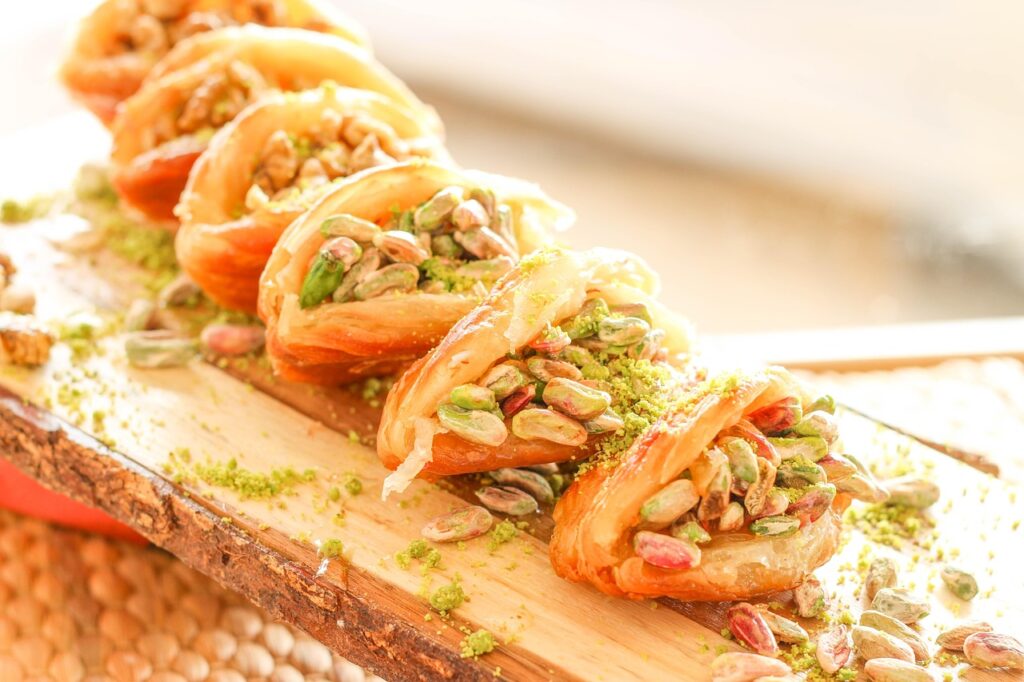
A good baklava announces itself by sight. The layers should be distinct, the top golden and glossy, and the nuts visible in the cross-section.
Take a piece and break it. It should crackle slightly, then give way to a tender, nutty center, not a soggy or rock-hard one.
Taste it slowly. The butter and nuts should come first, with sweetness supporting rather than overwhelming. A one-note sugar bomb is a warning sign.
Finally, trust the shop itself. Clean counters, fresh trays, and a queue of locals are the best quality markers in Turkish sweet shopping.
Above all, trust your own palate. Turkish baklava preferences are strong, but your taste is the only one that matters for your journey. The baklava you love is the best baklava for you, whatever the local argument says.
Bringing Baklava Home
Baklava travels well if you treat it with care. Buy it as fresh as possible, and ask for a sealed, sturdy box for the journey.
Keep the box upright and cool, away from direct sun, and eat the baklava within a few days of purchase. The golden rule of freshness applies at home too.
Turkish sweet shops are used to travelers and will pack your purchase for the flight. Ask for advice; they know their pastry better than anyone.
Back home, serve the baklava at room temperature with tea or coffee, and tell the story of where you found it. The memory and the sweetness will travel together.
The pleasure of baklava continues after the box is empty, because the memory of a perfect piece stays with you. Let the sweet lead you back to Turkey, where it will be waiting fresh at the same counter.
Frequently asked questions
Where is the best baklava in Turkey?
Most Turks will answer Gaziantep, the acknowledged capital of baklava, protected by geographical indication for its pistachio version. Istanbul also has excellent historic shops, and the walnut styles of central Anatolia and the honey styles of the Aegean are worth seeking out.
When is the best time to buy baklava?
Morning is best, when the day’s trays come fresh from the oven. Baklava is at its peak within hours of being made, so buy it the same day you plan to eat it, and ask the shop which tray is freshest.
How should I bring baklava home as a souvenir?
Buy it as fresh as possible and ask for a sealed, sturdy box. Keep it cool and upright during the journey, and eat it within a few days. The sweet shops are experienced with travelers and will pack your purchase for the flight.

All Over Information
The All Over Information editorial team researches and writes practical English-language guides to Turkey. Facts are checked against official and local sources before publication, prices are published as dated ranges rather than quotes, and guides are revised when things change. We accept no sponsored posts, paid placements or paid links.
More guides like this

The Ultimate Guide to Doner Kebab
Doner kebab is the most famous street food of Turkey and one of the great inventions of Turkish cooking: layers of seasoned…

Kebab Vs. International Variations: What Makes It Turkish
Walk down almost any street in Europe, the Middle East, or North America and you will find something calling itself kebab.

The History Behind Stuffed Grape Leaves (Dolma)
The stuffed grape leaf looks like a small, humble thing, but it carries a long history behind its green folds.

Where to Find the Best Turkish Tea (Cay) in Turkey
You can find a glass of çay almost anywhere in Turkey, from a village bakery to a five-star lobby, but the best…
Sutlac (Rice Pudding) Vs. International Variations: What Makes It Turkish
Rice pudding is one of the most widespread desserts on earth, made in some form by nearly every culture that grows rice.

The Ultimate Guide to Lahmacun
Lahmacun is the thin flatbread of Turkey that carries a topping of spiced minced meat, baked in a fierce oven until the…