In the villages of Turkey, the day is measured by bread. When the griddle heats and the first bazlama puffs into a golden pillow, the house is truly awake. This soft, round flatbread is far more than a food: it is a symbol of the land, the work of women’s hands, the first thing offered to guests, and the taste that Turks carry in their memory wherever they go. This article tells the cultural story of bazlama, the beloved bread of the Anatolian countryside.
The Bread of the Fields
Bazlama is the bread of the land itself, made from wheat that has grown in Turkish soil for thousands of years. Anatolia is one of the ancient homes of wheat, and the grain has shaped the region’s identity since the first farmers sowed it. Every village bread, including bazlama, is a celebration of that inheritance.
The bread is tied to the agricultural year. After the harvest, the new flour arrives in the village, and the first breads made from it are greeted with joy. Making bazlama from fresh flour, with its sweet, grassy aroma, is one of the small festivals of village life.
In the fields, bazlama has always been the practical companion of the farmer. It is flat, so it packs easily; it is soft, so it needs no knife; and it is filling, so a piece of bazlama with cheese or yogurt keeps a worker going until evening. The bread of the fields, eaten in the fields.
A Daily Village Ritual
In a traditional village household, making bazlama was a daily ritual. Early in the morning, the fire was lit, the flour was measured, and the dough was mixed by hand in a large wooden bowl. While the dough rested, the griddle was set over the flames and the table was laid with cheese, olives, and tea.
The rhythm of the ritual was unhurried. The cook rolled each piece of dough into a round, laid it on the hot surface, and watched it inflate like a small balloon. The finished breads were stacked on a cloth, and the stack grew taller as the morning went on.
The scent of fresh bazlama drifting through the house was the signal that the day had truly begun. Children ran to the kitchen, neighbors appeared at the door, and everyone knew that the first warm bread of the day would not last long.
The Women of the Griddle
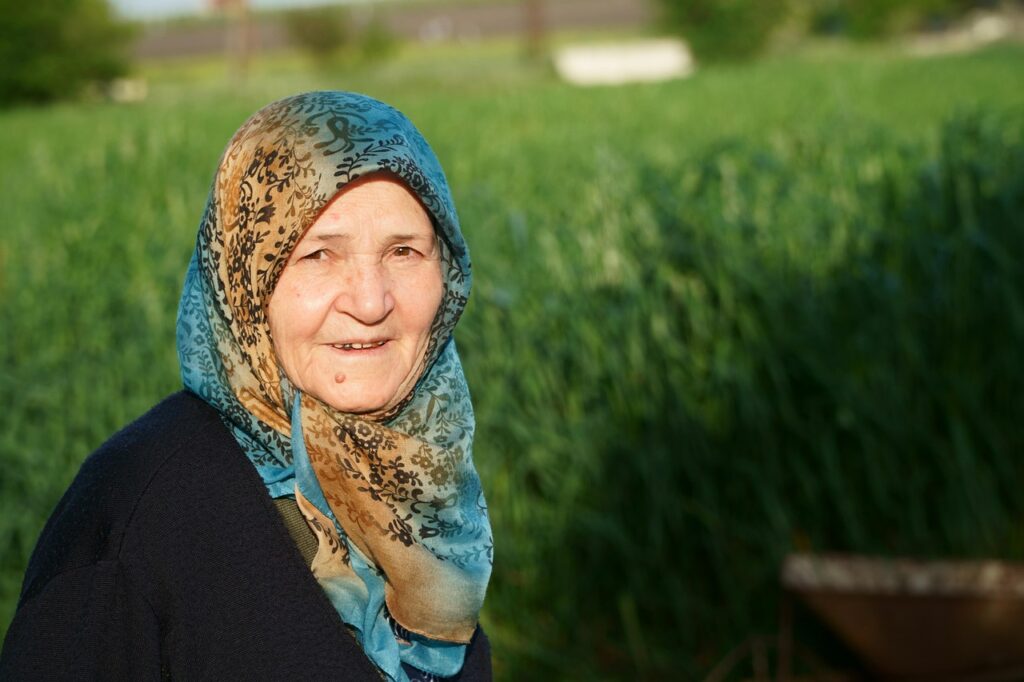
In the countryside, the making of bazlama has traditionally been the work of women, and their skill is a source of pride passed from mother to daughter. A good bread maker knows the dough by touch: its softness, its warmth, the exact moment it is ready for the griddle.
This knowledge is rarely written down. It lives in the hands, in the way the dough is kneaded and rolled, and in the eye that reads the color of the cooking bread. Young girls learn by standing beside their mothers, watching, touching, and eventually taking the wooden rolling pin themselves.
The griddle was also a place of community. When several women gathered to make bread for a wedding or a festival, the work became a social event, full of laughter, songs, and news. The bread that resulted carried the energy of that shared labor.
The Sac and the Fire
The traditional home of bazlama is the sac, the domed iron griddle that sits over the fire. The sac is a remarkable tool: a shallow, slightly curved metal dome, heated until it is very hot, onto which the dough is slapped. The bread cooks quickly on the curved surface, puffing and spotting with golden blisters.
Cooking on the sac is a dance of fire and timing. The cook must judge the heat by holding a hand near the metal, turn the dough at exactly the right moment, and build a stack of breads while the fire keeps its temper. It looks effortless, but it takes years to master.
In the modern village kitchen, the wood fire and the sac may give way to a gas flame and a flat pan, but the spirit of the ritual survives. The bread is still made fresh, still cooked on a hot surface, and still eaten warm, straight from the griddle.

Bazlama and Hospitality
Hospitality in the Turkish village begins with bread. When a guest arrives, the first duty of the house is to offer something to eat, and when the visitor stays for a meal, fresh bread is part of the welcome. If the guest arrives at an unexpected hour, the host may light the griddle and make bazlama on the spot.
This custom is ancient and deeply felt. Bread is called the blessing of the table, and to break bread with someone is to share trust. A guest who is offered warm bazlama with cheese and tea knows they are truly welcome, whatever the hour.
For travelers in rural Turkey, this hospitality can be overwhelming in the best way. The bread appears, still steaming, and the host insists on refilling the plate. Accepting it is the simplest way to honor the culture that made it.
The Seasonal Rhythm
Bazlama follows the seasons of the village. In spring, the bread is made lighter, with the first herbs of the meadows folded in. In summer, it is baked early in the morning so the house stays cool, and the bread is carried to the harvest fields. In autumn, it accompanies the grape and apple harvests, sweet and satisfying.
Winter is the season of the sac and the fire. The stove burns all day, the griddle is never cold, and bazlama is made to go with the hearty soups and stews of the cold months. The bread is also toasted by the fire and crumbled into dishes, nothing wasted.
Throughout the year, the bread marks the calendar of the village. Its presence at every meal, its scent at every gathering, makes it the quiet chronicle of rural life in Turkey.

Bread in Turkish Memory and Sayings
Bread occupies a sacred place in Turkish culture, and bazlama shares in that reverence. Turks say that bread is a blessing that must never be wasted, and old traditions hold that a piece of bread dropped on the ground should be picked up, kissed, and placed somewhere clean.
Sayings and proverbs are full of bread. People speak of earning their bread, of bread and salt shared as a bond of friendship, and of a table where bread is plentiful as a table of abundance. The soft, warm bazlama of the village embodies all these meanings.
This respect for bread shapes daily behavior. At the end of a meal, the last pieces are gathered for the birds, and crumbs are brushed into the garden. In a culture that honors bread so deeply, the griddle cake of the village is a small treasure.
Bazlama in the Cities
As Turkey urbanized, bazlama followed its people. Village migrants carried their bread habits to the cities, and soon the griddle appeared in urban breakfast houses, where bazlama is now a star of the famous Turkish breakfast. Served warm with cheese, honey, and jam, it has become a city favorite.
City bakeries also sell bazlama, though the industrial versions rarely match the village original. The best urban examples come from small shops and breakfast houses that still make the dough by hand and cook it to order, filling the street with the smell of griddled wheat.
The city versions are often thinner and softer than the village bread, adapted to café tables and modern tastes. But the nostalgia is intact: Turks in the city order bazlama because it tastes like their childhood, their village, their grandmother’s hands.

Around the Table
At the Turkish table, bazlama is the great connector. It is torn by hand and passed around, dipped into soups and yogurt, wrapped around cheese and herbs, and used to gather up the last of a stew. No knife is needed; the bread itself is the utensil.
The breakfast table is where bazlama shines brightest. Surrounded by cheese, olives, tomatoes, cucumbers, eggs, honey, and jam, the warm bread becomes the base for endless combinations. Each person builds their own little stack, and the conversation flows around the shared bread.
At dinner, bazlama accompanies grilled meats, kebabs, and vegetables, softening the meal and making it generous. The bread makes the table complete, and no Turkish table, in village or city, feels full without it.
The Bread That Travels
Bazlama is a bread that travels well, in both space and time. In the days before bread ovens, the griddle cake was the bread of the journey, made wherever a fire could be lit. Shepherds, soldiers, and merchants carried its memory across the region.
Today, the bread has traveled in another way, crossing borders with Turkish communities abroad. In Turkish shops and homes around the world, the same dough is mixed, the same griddle heated, and the same golden bread lifted from the fire. The village bread has become a global ambassador.
For the visitor to Turkey, bazlama is the easiest taste of that culture to bring home: the memory of a warm, puffed bread shared with strangers who became friends. That is what bazlama truly is, a taste of Turkish culture in its softest, warmest form.
Frequently asked questions
Why is bazlama so important in Turkish village culture?
Bazlama is the daily bread of the countryside, made fresh on a griddle and eaten at nearly every meal. It is tied to the wheat harvest, made by skilled women, and offered to guests as a sign of hospitality. In a culture that deeply respects bread, the soft griddle cake is a symbol of home and welcome.
How is traditional bazlama cooked?
Traditional bazlama is cooked on a sac, a domed iron griddle heated over a wood fire. The risen dough is rolled into thick rounds, slapped onto the hot surface, and cooked until it puffs and blisters. It is then stacked under a cloth to stay soft and eaten warm.
Does anyone still make bazlama by hand?
Yes. In villages across Anatolia, and in many city breakfast houses, bazlama is still made by hand from flour, water, yeast, and salt. Village women pass the technique from mother to daughter, and the bread is cooked fresh on hot griddles. The industrial versions exist, but the handmade bread remains the beloved original.

All Over Information
The All Over Information editorial team researches and writes practical English-language guides to Turkey. Facts are checked against official and local sources before publication, prices are published as dated ranges rather than quotes, and guides are revised when things change. We accept no sponsored posts, paid placements or paid links.
More guides like this

Stuffed Grape Leaves (Dolma): A Taste of Turkish Culture
Some dishes are meals, and some are conversations, and dolma belongs to the second kind.

Cig Kofte Vs. International Variations: What Makes It Turkish
Cig kofte does not exist in isolation. Around the world, cuisines have created raw or hand-worked meat dishes that look surprisingly similar:…

The Ultimate Guide to Kebab
If you are heading to Turkey, kebab will almost certainly find its way onto your plate, and that is a very good…
The Ultimate Guide to Hunkar Begendi
Hunkar begendi is one of the great classics of Ottoman cuisine, a regal dish of tender lamb stew served over a silky…
The Ultimate Guide to Manti (Turkish Dumplings)
Manti are the tiny folded dumplings of Turkish cuisine: little parcels of thin dough wrapped around a spiced meat filling, boiled and…

The History Behind Balik Ekmek (Fish Sandwich)
Balik ekmek is a young dish with an old foundation.