Bazlama is everywhere in Turkey, but the best examples are found where the tradition runs deepest: in villages, at roadside breakfast stops, and in the breakfast houses of the cities. The perfect bazlama is soft, warm, and slightly blistered, cooked minutes before you eat it. This guide points you to the places where that perfection lives, region by region, and tells you how to recognize the real thing when you find it.
The Village Bread Experience
The ultimate bazlama experience is in the villages, where the bread is still made by hand on the traditional griddle. In rural areas across Anatolia, families cook bazlama every morning, and guests are always welcome at the table. If you are invited to a village home, the fresh bread will almost certainly be part of the welcome.
Villages around Konya, Kayseri, Sivas, and Erzurum are especially rich in bread traditions, and the weekly rhythms of the village still turn around the griddle. For the traveler, staying in a rural guesthouse or joining a farm experience is the surest way to taste village bazlama at its source.
Ask about the bread wherever you sleep in the countryside. Locals are proud of their bazlama and will happily tell you who in the village makes the best, which is the closest thing to a Michelin guide that rural Turkey offers. Every village has its bread master, and their griddle is a local landmark worth finding.
Ankara and Central Anatolia
Central Anatolia is the heartland of Turkish wheat, and its cities take their bread seriously. Ankara‘s breakfast houses and traditional restaurants serve excellent bazlama, and the city’s weekend breakfast culture has made the bread a star of the table. Arrive early and ask for bread fresh from the griddle.
The small towns of the plateau, from Polatli to Aksaray, have simple lokantas and bakeries that bake bazlama in the morning and sell it until it runs out. The bread here is made from local wheat, and its flavor is nutty and honest, a direct product of the steppe. The plateau wheat gives the bread a gentle sweetness you will not find elsewhere.
The region is also home to many villages where the sac still reigns. If you drive the back roads of Central Anatolia in the morning, you may well smell fresh bazlama and follow the aroma to a village kitchen.

Istanbul
Istanbul has embraced bazlama through its love of the Turkish breakfast. Across the city, breakfast houses and cafes cook bazlama to order, and the puffed bread arrives at the table warm, to be torn and loaded with cheese, honey, and jam. The city’s breakfast culture has turned bazlama into a fashionable weekend treat.
Look for neighborhood breakfast places in Kadikoy, Besiktas, and the historical peninsula, where the griddle is visible from the street and the smell pulls you in. Many of these houses are run by families from Anatolia, and their bread follows the recipes of their home villages.
The city’s markets also sell fresh bazlama in the mornings, stacked in cloths at bakery stalls. Buying a warm piece and eating it on the street, with nothing more than a piece of cheese, is one of the simplest pleasures Istanbul offers. Pair it with a glass of tea and watch the city wake up around you.
The Black Sea Coast
The Black Sea region adds its own character to the bread family. Here, cornmeal and buckwheat join the wheat flour, producing darker, denser, and wonderfully earthy griddle breads. The mountain villages of Trabzon and Rize are the best places to taste these regional versions.
Black Sea bazlama is often enriched with local butter and served with the region’s famous cheese, and it accompanies the anchovy dishes and vegetable stews of the coast. In the highland pastures, where families move their animals for the summer, the griddle follows them, and the bread is baked over open fires.
For the traveler, the small lokantas of the coastal towns and the guesthouses of the highlands are the places to look. The bread will be different from the Anatolian plains version, but just as memorable.

Eastern Anatolia
In eastern Turkey, bazlama is often made richer, with butter, eggs, and sometimes a touch of sweetness, and it is served with honey, local cheese, and clotted cream for generous breakfasts. The cities of Erzurum, Kars, and Van all have proud bread traditions.
The region’s cold winters make the warm griddle bread especially precious, and the breakfast tables of the east are famous for their abundance. In Kars, the local dairy products pair beautifully with fresh bazlama, and in Van, the famous village breakfast is built around bread, cheese, and honey.
Eastern bazlama is usually thicker and more filling than the western version. Try it with the region’s honey and butter, and you will understand why the people of the east call their breakfast a feast.
The Aegean and Marmara
Along the Aegean, bazlama appears on the tables of village festivals, olive grove picnics, and the breakfast houses of Izmir and the coastal towns. The bread here tends to be lighter and thinner, baked with the region’s olive oil, and it pairs naturally with the local cheeses, tomatoes, and herbs.
In the Marmara region, the rural areas of Bursa and Balikesir have strong bread traditions, and village markets sell fresh bazlama on market days. The region’s famous cheese, fruit, and honey all find their perfect companion in a warm piece of griddle bread.
For a memorable experience, visit one of the many village festivals of the Aegean in summer, where bazlama is cooked on open griddles in the square. Watching the bread puff over the fire, surrounded by music and crowds, is pure Turkish joy.

The Highway Breakfast Stops
Some of the best bazlama in Turkey is served at the roadside breakfast stops that dot the highways of Anatolia. These simple roadside restaurants cater to truck drivers and travelers, and they serve enormous breakfast spreads with fresh bread baked on the premises.
The ritual is the same everywhere: you sit at a long table, a cloth of bread arrives, and the bazlama is torn and eaten with cheese, olives, eggs, and endless tea. The bread is cooked in full view, and the stop is as much about the bread as about the journey.
When driving through Turkey, choose the roadside breakfast places that are busy with trucks; the locals know exactly where the best bread is baked. A warm bazlama at a highway stop is one of the great unsung experiences of Turkish travel.
Markets and Village Bazaars
Weekly markets are treasure troves of fresh bread. Village women bring their bazlama to market, stacked in cloths, and sell it by weight to shoppers. The bread is made that morning, and the cloth keeps it soft and warm until the last piece is gone.
Look for the bread sellers at any local market, usually recognized by the tall stacks of round flatbreads. Buying a piece for a few coins, eating it warm in the market square, is an authentic taste of Turkish market culture.
These market breads also make perfect picnic provisions. Buy a piece of bazlama, some local cheese, tomatoes, and fruit, and you have the makings of a countryside picnic that no restaurant can improve.
Breakfast Houses and Cafes
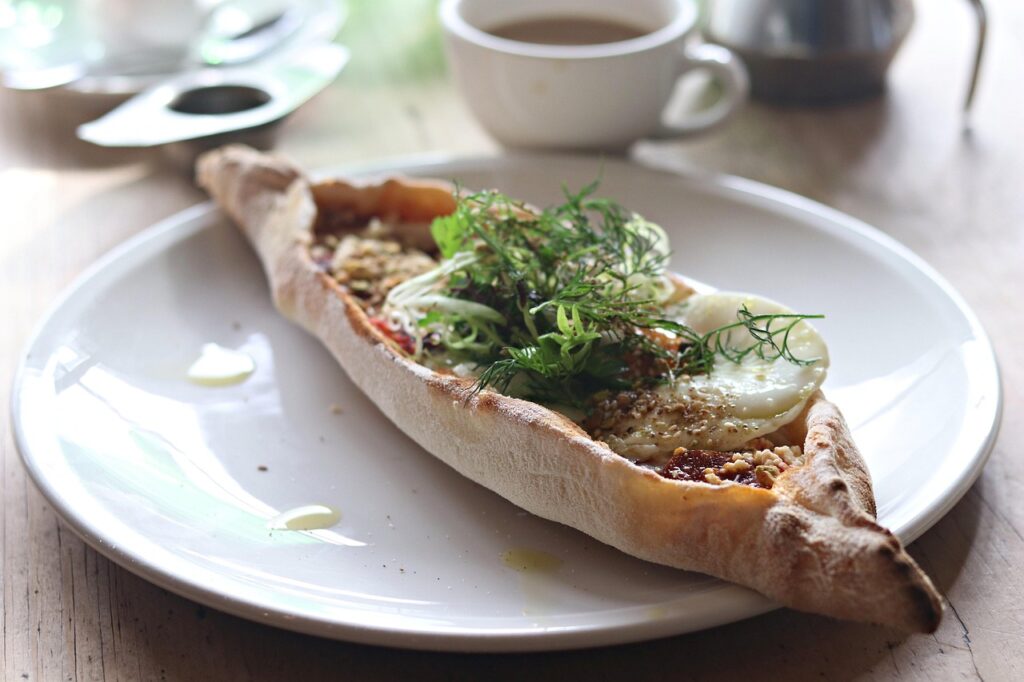
The breakfast house, or kahvalti salonu, is the urban home of modern bazlama. These establishments serve the full Turkish breakfast, and many bake their bread to order on a visible griddle. The bread arrives puffed, golden, and irresistible, and it is meant to be eaten immediately.
When choosing a breakfast house, look for one where the griddle is in view and the bread is made by hand. The best places are often small, family-run, and busy with locals, and their bazlama is worth the wait. A busy griddle is a good sign, because it means the bread is always being made fresh.
Order tea, ask for the breakfast spread, and let the bread be the centerpiece. In the breakfast houses of Turkey, bazlama has found its modern stage, and it performs beautifully every morning.
How to Buy and Enjoy Bazlama
When buying bazlama, look for bread that is soft to the touch and slightly warm, with golden spots from the griddle. Avoid bread that has dried out or been reheated from the day before. Ask when it was made, and choose the freshest stack in the shop.
Eat bazlama within hours of baking for the best texture, and revive any leftovers on a hot pan or griddle. Serve it with cheese, honey, butter, and tea, or use it to scoop up soups and stews. It also freezes well, so do not hesitate to buy extra.
Finally, do not be shy. Tear the bread with your hands, load it with whatever is on the table, and dip it into everything. That is how bazlama is meant to be eaten, and that is how you will enjoy it most.
Frequently asked questions
Where is the best bazlama in Turkey?
The best bazlama is found where it is made fresh by hand: in Anatolian villages, at rural breakfast houses, and at busy roadside stops on the highways. In cities, look for small family-run breakfast houses that bake the bread to order on a visible griddle. Freshness is the whole secret.
What should I eat with bazlama?
Bazlama is usually served with the Turkish breakfast: white cheese, olives, tomatoes, cucumbers, eggs, honey, and jam. It also accompanies soups, stews, and grilled meats, and it is excellent with butter, clotted cream, or local honey. It is a table bread, meant to be torn and shared.
Can I buy bazlama at Turkish markets?
Yes. Weekly markets across Turkey have bread sellers who bring fresh bazlama from village kitchens, stacked in cloths and sold by weight. The bread is made the same morning and often still warm. Arrive early, because the best pieces sell out quickly.

All Over Information
The All Over Information editorial team researches and writes practical English-language guides to Turkey. Facts are checked against official and local sources before publication, prices are published as dated ranges rather than quotes, and guides are revised when things change. We accept no sponsored posts, paid placements or paid links.
More guides like this

Where to Find the Best Stuffed Grape Leaves (Dolma) in Turkey
Dolma is the kind of dish that is everywhere and nowhere at once: it appears on the tables of meze houses and…
Turkey’s Fine Dining Scene in Istanbul
Istanbul's fine dining scene has blossomed in recent decades, turning the city into a destination for serious food lovers.

Where to Find the Best Turkish Meze Platters in Turkey
The best meze platters in Turkey are found in the cities where the tradition runs deepest, and the search is one of…

Doner Kebab Vs. International Variations: What Makes It Turkish
The vertical spit is one of the great ideas of world cooking, and it has produced a family of dishes that spans…

Turkish Pastries: A Taste of Turkish Culture
You can read a great deal about Turkey from its pastries.

How to Make Authentic Stuffed Grape Leaves (Dolma) at Home
Making dolma at home is a quiet, satisfying craft, and it needs no special equipment, only patience and a gentle hand.