Football in Turkey is not a pastime; it is a passion that runs through the whole society. The stadiums of Istanbul are among the loudest in the world, the rivalries between the great clubs are legendary, and the game is the subject of endless conversation in every cafe and workplace. This guide explains the essentials of Turkish football fan culture: the clubs, the match-day ritual, the chants, the identities, and how you can experience it as a visitor.
Football in Turkish Life
Football is the national game of Turkey, and it is taken with a seriousness that visitors find both impressive and bewildering. The sport is followed by people of every age and class, and the results of the weekend are the first topic of conversation on Monday morning. The game is everywhere: television, newspapers, streets, and family arguments.
The passion is visible in the numbers. The stadiums fill for every match, the television ratings are enormous, and the newspapers and websites devote pages to the game daily. Football is also the country’s biggest sport, with millions of registered players, and every neighborhood has its own pitch.
The culture around the game is its own world. There is the match, and then there is everything around the match: the preparation, the journey to the stadium, the singing, the arguing, and the endless analysis. For many Turks, football is not what happens on the pitch; it is the whole weekend.
The Big Three
Turkish football is dominated by the three great clubs of Istanbul: Galatasaray, Fenerbahçe, and Beşiktaş. Each has a vast following across the country, a long history, and its own district and identity. The three together define the shape of Turkish football and the loyalties of most fans.
Galatasaray is the club of the educated and the elite, founded in the nineteenth century at the elite Galatasaray school; Fenerbahçe is the club of the masses and the pride of the Asian side; and Beşiktaş is the club of the working people of its district, famous for the ferocity of its support. The identities overlap with class, geography, and history.
The three clubs dominate the league, the cups, and the national conversation, and their matches against each other, the derbies, are the biggest events in Turkish sport. A fourth club, Trabzonspor of the Black Sea, adds a provincial challenge to the Istanbul monopoly, and its fans are as passionate as any.
Match Day: The Ritual
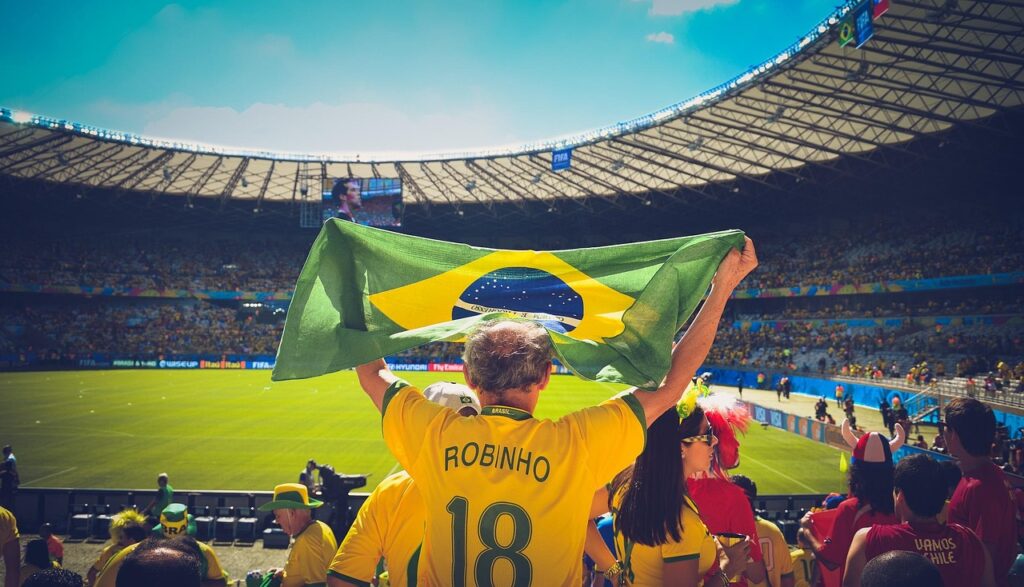
Match day in Turkey is a ritual with its own rhythm. The fans prepare for hours, gathering in the cafes and streets around the stadium, and the atmosphere builds through the afternoon. The colors of the club appear everywhere, from scarves to flags to painted faces, and the city takes on the club’s identity.
The journey to the stadium is part of the experience. The fans travel in groups, singing and chanting on the way, and the approaches to the ground are lined with sellers of scarves, shirts, and food. The gates open early, and the stands fill gradually, with the singing starting well before kickoff.
Inside, the ritual continues. The core support in the stands sings for the whole match, the whole stadium joins the big anthems, and the noise is continuous. The match is the center of the afternoon, but the ritual around it is what the fans live for.
The Chants and the Color
The sound of a Turkish stadium is built from chants, and the fans have a repertoire that fills the whole match. The songs are simple, rhythmic, and repeated at full volume, and the big anthems can shake the stands. The chants praise the club, mock the rivals, and drive the players.
The color is as important as the sound. Each club has its colors, and the stands are oceans of them: the red and yellow of Galatasaray, the yellow and navy of Fenerbahçe, the black and white of Beşiktaş. The flags, the banners, and the flares create a visual spectacle to match the noise.
The displays are organized. The main fan groups prepare choreographed banners and mosaics for the big matches, turning the stands into giant pictures. The tifos, as they are called, are a point of pride, and the clubs’ fans compete to produce the most spectacular displays.

Fans and Identity
For many Turks, the club is part of the self. The support is inherited from the family, tied to the district, and carried for life, and it is one of the first questions asked when Turks meet: which team do you support? The answer says something about a person’s background and character.
The identity is emotional and lifelong. The fans suffer with the club’s defeats and celebrate its victories as personal events, and the language of the game, full of love, loyalty, and betrayal, is the language of family. The club is a second family, and the stadium is its home.
The identity is also communal. The club connects its fans across generations and across the country, and the shared support creates a bond that strangers recognize instantly. In a country of many divisions, the football club is one of the strongest ties that hold communities together.
Ultras and the Organized Support
The organized fans, known as the ultras groups, are the engine of the stadium atmosphere. These groups occupy the stands behind the goals, sing and chant for the full ninety minutes, and organize the banners and the displays. Their devotion is complete, and their influence is felt by the clubs.
The ultras have their own culture: names, symbols, rituals, and rivalries. The groups of the big clubs are among the most famous in Europe, and their choreography and noise are respected across the continent. They are also a social world, with their own loyalties and conflicts.
The relationship between the ultras and the clubs is complicated. The groups push the clubs, organize the fans, and sometimes clash with the authorities, and the clubs have had to manage them carefully. For the visitor, the ultras are the heart of the atmosphere, and their singing is the sound of Turkish football.

The Rivalries
The rivalries between the big clubs are the deepest current in Turkish football. The derby between Galatasaray and Fenerbahçe is one of the most intense in the world, and the matches are played with a ferocity that is felt in the stands and the streets. The rivalry is historic, and it never rests.
The rivalries have their own geography and sociology. The clubs’ support overlaps with districts, classes, and histories, and the matches become contests of identity as much as sport. The fans’ songs, the banners, and the arguments all feed the rivalry, and it is part of the game’s appeal.
The rivalries are also, mostly, a form of play. The fans fight with words and songs far more than with fists, and the mutual mockery is part of the ritual. The respect between the clubs is real beneath the noise, and the rivalries make the game matter more.
The National Team
Beside the clubs stands the national team, which unites the country as the clubs divide it. When Turkey plays, the colors of the clubs are set aside for the red of the national shirt, and the whole country supports one side. The national matches are the biggest events of the football calendar.
The national team’s history has its peaks and its pains. The great campaigns, when Turkey reached the final stages of major tournaments, are national memories, and the near misses are national sorrows. The team’s fortunes are followed with an intensity that matches the club rivalries.
The national team also carries the country’s hopes beyond football. The matches against foreign rivals are played with extra passion, and the victories are celebrated as national achievements. For many Turks, the national team is the country itself, wearing the red shirt.
Football in the Cafes and Streets
Football lives far beyond the stadium. The cafes and the coffee houses are full of it, with the screens showing every match and the customers arguing every decision. The television in the corner of a Turkish cafe is almost always showing football, and the conversation never stops.
The streets have their own football culture. The neighborhood pitches are full of children and adults, the street matches are a national institution, and the game is played wherever there is space. The skills learned in the streets are the game’s foundation, and the passion begins there.
The media completes the picture. The newspapers, the websites, and the television programs are devoted to football daily, and the analysis of the game is a national genre. The game is followed so closely that the smallest detail of a transfer or a training session is national news.
Football Culture for Visitors
For a visitor, Turkish football is an experience not to be missed. Attending a match in Istanbul, especially a derby, is one of the most intense sporting experiences in the world, and the atmosphere of the stands is unforgettable. The matches are safe and well organized, and the tickets can be bought in advance.
If you cannot attend a match, the cafes are the place to be. Watching a game in a Turkish cafe, surrounded by the passion and the noise, is a cultural experience in itself, and the fans will welcome you into the argument. You do not need to know the teams to enjoy the atmosphere.
The advice for visitors is simple: choose a club, learn the chant, and join in. The fans will adopt you, the passion will carry you, and you will leave with a story. Turkish football is the country’s shared passion, and its culture is open to everyone.
Frequently asked questions
What are the big clubs in Turkey?
The three great clubs of Istanbul dominate Turkish football: Galatasaray, Fenerbahçe, and Beşiktaş. Each has a vast national following and its own identity, and their derby matches are among the most intense in world football. Trabzonspor, of the Black Sea, provides the main provincial challenge to the Istanbul clubs.
Is it safe for visitors to attend matches?
Yes. Turkish football is professionally organized, and the stadiums are safe and well managed, with stewards, security, and clear rules. The atmosphere can be intense, especially at derbies, but the fans are welcoming to visitors who respect the occasion. Buy tickets in advance, follow the stadium rules, and enjoy the experience.
What is the atmosphere like at a Turkish derby?
A Turkish derby is one of the loudest and most emotional events in sport. The stands are packed, the singing is continuous, and the banners and choreography are spectacular. The noise and the passion are overwhelming at first and unforgettable afterward. The match is a festival of identity, and the atmosphere is the real attraction.

All Over Information
The All Over Information editorial team researches and writes practical English-language guides to Turkey. Facts are checked against official and local sources before publication, prices are published as dated ranges rather than quotes, and guides are revised when things change. We accept no sponsored posts, paid placements or paid links.
More guides like this

Turkish Football Clubs and Their Rivalries
Football is the great passion of Turkey, and its rivalries are among the most intense in the world. The clubs of Istanbul…

A Deep Dive into Gender Roles in Modern Turkish Society
Gender roles in Turkey are one of the most discussed and least understood subjects in the country's public life. The debates are…

Understanding the Role of Tea in Daily Turkish Life
No symbol of daily Turkey is more universal than the tulip-shaped glass of tea. It arrives on your table within moments of…

A Deep Dive into Turkish Carpet Weaving Traditions
The Turkish carpet is one of the world's great crafts, and its history is a journey from the frozen burial mounds of…

Ottoman Calligraphy Traditions Explained for Foreigners
If you have visited a Turkish mosque, museum, or market, you have already seen Ottoman calligraphy: the flowing Arabic letters on walls,…

How Turkish Body Language Differs from the West
Words are only half of any conversation, and in Turkey the silent half carries real weight.