Fatih is the most photographed district in Istanbul — the historic peninsula with the city’s greatest monuments, its most dramatic skylines, and its deepest layers of history, all of it dense, walkable, and built for the camera. The icons are the famous subjects, the skyline is the panorama, and the working streets and the old quarters are the hidden frames. It is also the district that rewards the early light and the patient eye, when the crowds thin and the old city shows its real face. This guide maps the essential photography spots of Fatih, from the classic panoramas to the details that reward a second look.
The Sultanahmet Skyline: The Essential Shot
Every photographer’s Fatih begins with the skyline — the silhouette of the Hagia Sophia and the Blue Mosque against the sky, the most famous image of the city. The classic frames are the ones from the south: the view from the Sea of Marmara, or from the hills and the rooftops to the south of the square, the two great domes and the six minarets lining up. The light is the magic: the sunrise behind the domes, the golden hour on the stone, the floodlit icons at night. The ferries give the water-level frames — the skyline growing ahead across the Marmara — and the rooftop terraces of the district give the elevated ones. The skyline is the shot that every visitor tries and the one that repays the early start and the right angle.
The Blue Mosque and the Hagia Sophia: The Icons in Detail
The two great buildings across the square are the district’s core subjects, and they photograph in every light. The Blue Mosque — the cascading domes, the six minarets, the courtyard with its fountains and its arches — is the classic composition, best in the low light of the morning and the evening; the interior, with its sea of blue tiles and its forest of columns, is the low-light challenge and the reward. The Hagia Sophia — the great brick mass with its dome, its buttresses, its minarets — photographs differently from every side: the western facade in the morning, the eastern in the afternoon, the interior with its galleries and its mosaics. The square between them, with the obelisks of the hippodrome, is the framing for the human scale — the visitors, the pigeons, the life.

The Süleymaniye and Its Terraces: The Panorama
The Süleymaniye Mosque on its hill is the district’s great elevated subject — and its terraces are the panorama. From the courtyard and the terraces, the whole of the old city spreads below: the Golden Horn, the Bosphorus, the minarets of the district, the modern city beyond — the classic Istanbul vista, and the one that the residents themselves most love. The mosque itself photographs in the golden light, its dome and its four minarets against the sky; the terraces photograph at sunset, when the city below catches the last light. The Süleymaniye is the district’s elevated reward, and the panorama from its terraces is the shot that the crowds at the icons never take.
The Bazaars: The Covered Light
The Grand Bazaar and the Spice Bazaar are the district’s indoor photography: the covered streets with their vaulted roofs, the light falling through the arches, the colors of the lamps and the spices and the goods. The Grand Bazaar — the lanes, the crowds, the glow of the shops — is the street photography of the covered city, best in the mornings before the crush; the Spice Bazaar — the pyramids of color, the faces of the sellers, the tasting — is the sensory frame. The bazaars photograph at any hour, and the covered light is the forgiving light — the soft, even illumination that makes the colors sing.

The Walls and the Old Quarters: The Depth
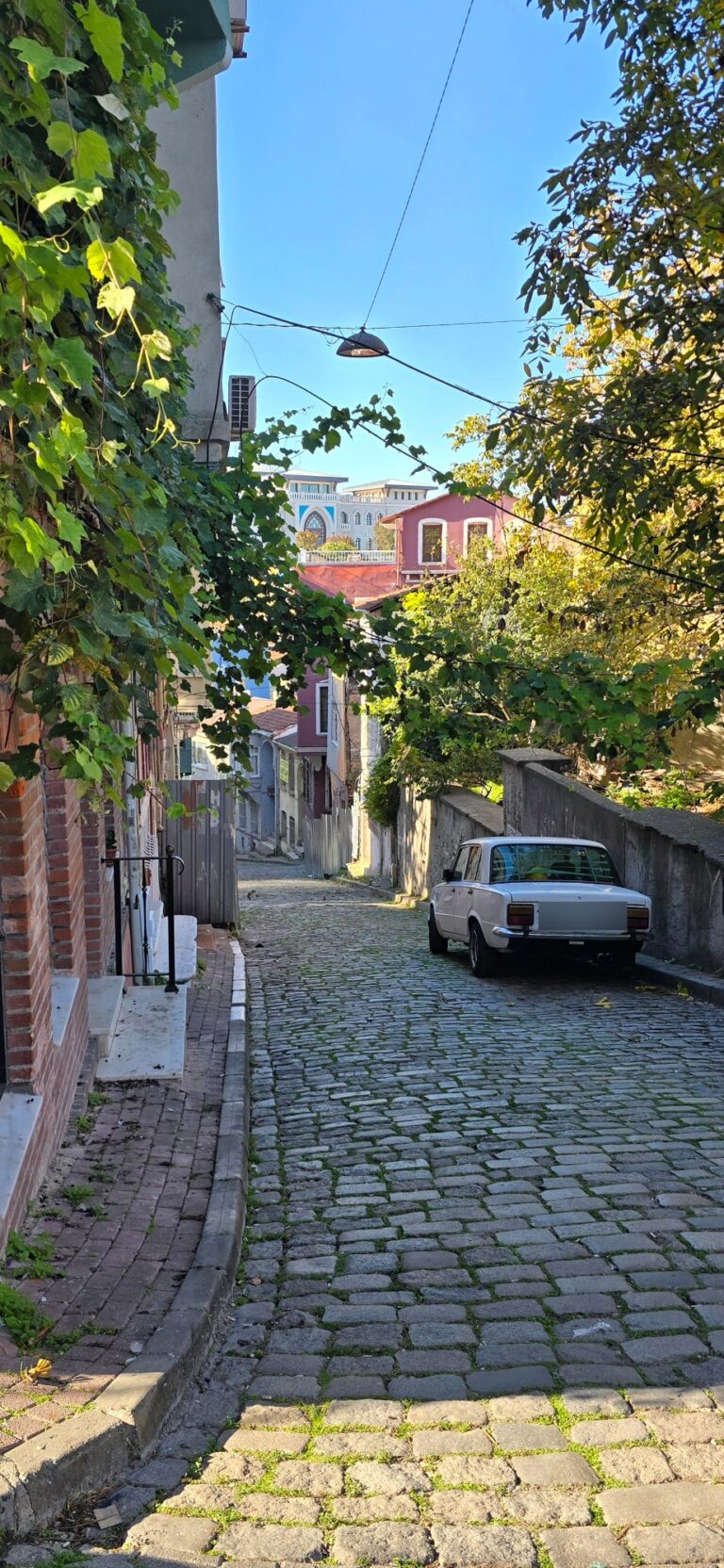
The district’s depth photographs in the walls and the quarters. The Theodosian walls — the towers and the gates running through the western edge — are the dramatic subject: the ancient fortifications against the modern city, the stones of fifteen centuries, the walk along them at the golden hour. The old quarters of Balat and Fener — the pastel houses, the crooked lanes, the churches and the synagogues, the laundry lines — are the color story of the district, the most photogenic streets in the city, best in the long light of the late afternoon. And the Valens aqueduct, striding over the working streets, is the Roman layer in the frame — the arches against the sky, the life beneath them.
The Working Streets: The Daily Life
The working district is the street-photography ground that the icons cannot give: the market streets with their produce and their sellers, the bakers with their morning trays, the teahouses with their backgammon and their tulip glasses, the cats of the old city, the faces of the working day. The light is the coastal light — soft in the morning, golden in the evening — and the life is the daily life of the peninsula, the subject that the tourist frames have lost. The photography here is the photography of the city’s working heart — the market, the teahouse, the street — and the frames are everywhere for the walker with the camera ready.

The Night: The Floodlit City
The last photography of Fatih is the night. The floodlit icons — the Hagia Sophia and the Blue Mosque glowing against the dark sky — are the classic night frames, best from the square and the terraces; the bazaar streets under their lights are the atmospheric ones; and the skyline from the water, the floodlit domes and minarets reflected, is the long-exposure prize. The night is the district at its most dramatic — the calls to prayer done, the crowds gone, the old city lit — and the tripod shots from the terraces and the waterfront are the photographs that the day cannot give.
The Photography Day, Planned
Sunrise: the skyline from the water or the hills, the icons in the first light. Morning: the Blue Mosque and the Hagia Sophia in the low light, the bazaars before the crush. Midday: the working streets, the market life. Late afternoon: the Süleymaniye terraces, the golden panorama, then Balat and Fener in the long light. Sunset: the walls, the last light on the stones. Night: the floodlit icons, the tripod, the long exposures. The camera kit is simple — a wide lens for the skyline and the interiors, a mid-range for the streets, a tripod for the night — and the district provides the rest. Fatih does not need a map of viewpoints; it needs to be walked, with the camera ready, and the shots will find themselves.

The Equipment Note
The right kit makes the difference between the snapshots and the pictures, and the district’s photography asks for little beyond the basics. The body and the lens: any camera with a wide-to-standard zoom covers the district — the 24–70 range handles the interiors, the streets, and the skyline; a fast prime for the low light of the interiors and the evening is the one luxury worth carrying. The tripod: for the night shots — the floodlit icons, the long exposures of the terraces, the light trails of the tram — a small travel tripod is essential, and the district’s flat squares and terraces give it plenty of level ground. The filters: a polarizer for the water and the sky reflections, and nothing else — the district’s light is forgiving, and the glass of the mosques and the domes rewards the simple approach. The respect: the mosques are working places of worship — no flash inside, quiet movement, the shoes off at the door — and the crowds of the district ask for patience at the railing shots. And the backup: the memory cards and the batteries, because the district will make you shoot more than you planned — the icons, the lanes, the light, the life of the old city, all of it waiting for the lens.
Frequently asked questions
What is the best time for the skyline shots?
The sunrise, from the water or the hills — the icons in the first light — and the floodlit night version, from the terraces.
Do I need a tripod?
For the night shots — the floodlit icons, the long exposures — yes. The day is hand-holdable in the district’s forgiving light.
Can I photograph inside the mosques?
The interiors are working places of worship — no flash, quiet respect — and the light through the windows is the photographer’s reward. The exteriors and the courtyards are freely photographed.
Where is the best elevated view?
The Süleymaniye’s terraces — the panorama over the old city, the Golden Horn, and the Bosphorus.
Is Fatih good for night photography?
Excellent — the floodlit icons, the lit bazaar streets, and the skyline from the water, all from the safe, well-policed district.

All Over Information
The All Over Information editorial team researches and writes practical English-language guides to Turkey. Facts are checked against official and local sources before publication, prices are published as dated ranges rather than quotes, and guides are revised when things change. We accept no sponsored posts, paid placements or paid links.
More guides like this
Fatih in Winter: What to Expect
Fatih in winter is the old city at its most atmospheric — and its most manageable.

Family-Friendly Activities in Fatih
Fatih is the district where families meet the city's greatest wonders — and where the old city, for all its crowds, gives…

Top 10 Things to Do in Fatih
Fatih is the district that contains the heart of Istanbul — the historic peninsula with the city's greatest monuments, its most famous…
Fatih in Summer: A Complete Travel Guide
Summer is when Fatih shows the city's heart at its most crowded and its most alive.
Fatih on a Budget: Money-Saving Travel Tips
Fatih is the district of the city's greatest monuments — and one of the easiest parts of Istanbul to visit on a…
A Solo Traveler’s Guide to Fatih
Fatih is the district where the solo traveler's Istanbul begins — the historic peninsula with the city's greatest monuments, its most famous…