The extended family is the most powerful institution in Turkish life, a vast system that shapes everything from daily meals to national economics. Its roots reach deep into the Ottoman past, and its branches still shelter the modern Republic. This deep dive explores the family in full: its historical foundations, its internal structure, its economic logic, and its remarkable resilience in a changing world.
Historical Foundations
The Turkish extended family has deep historical roots. The nomadic Turkic peoples of Central Asia organized their societies around the kin group, and the Ottoman Empire built its social order on the household, with extended families living and working together. These foundations shaped expectations that still echo in Turkish homes today.
Ottoman society formalized the family’s role. The household was a unit of production and protection, and its honor was a matter of public record. Religious law reinforced the family’s authority, and the inheritance, marriage, and hospitality customs of the empire all centered on the kin group.
The Republic of Turkey modernized law and society, but the family’s centrality survived the transformation. The constitution and civil code guarantee the family, and daily life has never stopped treating it as the primary unit. The family is the one Ottoman institution that modernization strengthened rather than weakened.
The Architecture of the Kin Group
The Turkish extended family has a layered structure that is easy to map. At the center stands the grandparents, the eldest generation, whose home is the family’s spiritual headquarters. Around them cluster their adult children and their families, followed by the wider circles of aunts, uncles, cousins, and in-laws.
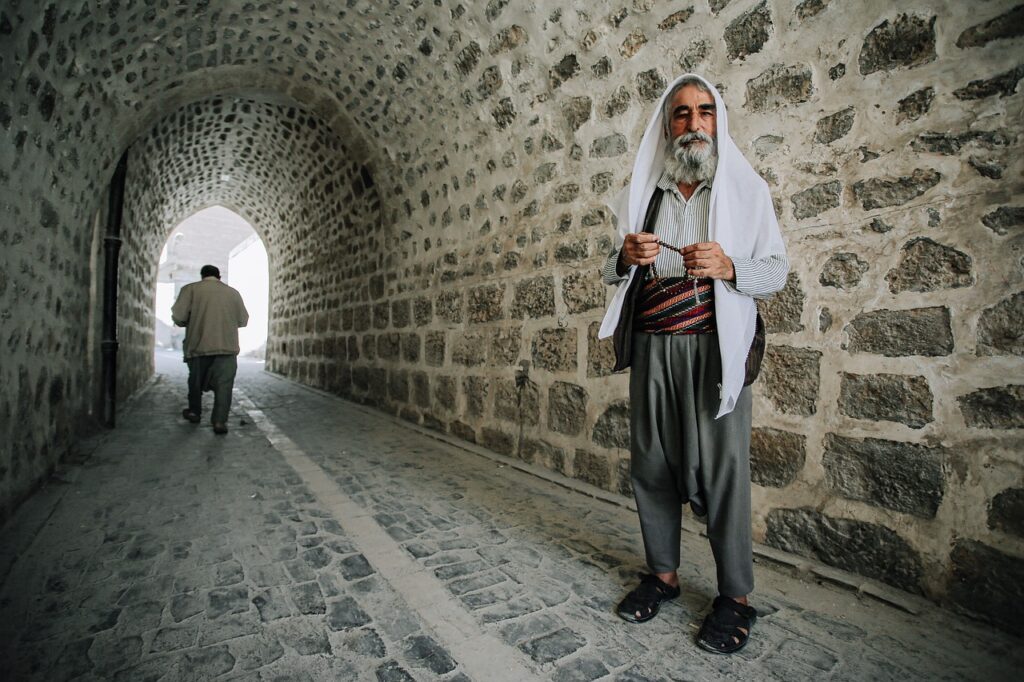
The structure is hierarchical in a gentle way. Authority flows from the oldest to the youngest, with the eldest son traditionally holding the senior position among the siblings. Respect flows upward, and care flows downward: the young honor the old, and the old bless and guide the young.
The kin group extends horizontally as well as vertically. Marriages bring new families into the web, and the in-laws, the gelin and damat, are integrated with elaborate ceremony. The result is a network that can include dozens of households, all connected by blood, marriage, and obligation.

Authority and Decision-Making
Decisions in Turkish families are rarely made alone. Major choices such as marriage, education, and property are discussed with the extended family, and the grandparents’ opinion carries particular weight. The patriarch, traditionally the eldest man, may give the final word, though the matriarch’s influence is often equally decisive behind the scenes.
The process is consultative rather than authoritarian. Family members gather, opinions are exchanged, and consensus is sought with patience. Open conflict is avoided, because the family values harmony above victory, and decisions are often delayed until a workable agreement emerges.
This style of decision-making shapes Turkish public life too. Businesses, politics, and communities all show the same preference for consultation and consensus. For the visitor, understanding that the family decides together explains why Turks ask so many questions and involve so many people in their plans.
The Family as an Economic Unit
The Turkish extended family operates as a formidable economic unit. Resources are pooled for major purchases, weddings are funded collectively, and the support of the young and the care of the old are family responsibilities. The tradition of wedding gold is a visible form of this shared economy.
The economic logic is mutual insurance. A family member’s success benefits everyone, and a family member’s hardship is everyone’s problem. The extended family finances education, launches businesses, and cushions unemployment, functioning as a private welfare system that predates the modern state.
This cooperation explains Turkish economic behavior. The generous giving at weddings and holidays, the family businesses that dominate commerce, and the careful saving for family goals all reflect the family’s economic role. Money in Turkey is never purely personal; it is family wealth in motion.
Child-Rearing as a Family Project
Children are raised by the extended family in Turkey, and the project is taken with joyful seriousness. Grandparents provide daily care and moral training, aunts and uncles enrich the child’s world, and the cousins are a ready-made community of play. The child’s world is wide, warm, and deeply supervised.
The family’s investment in children is total. Education is treated as a family priority, with relatives celebrating every milestone from the first day of school to graduation. The children’s achievements reflect on the whole family, and their success is the family’s shared pride.
This collective rearing produces distinctive results. Turkish children are confident with adults, comfortable in groups, and deeply loyal to their families. They learn early that they belong to something larger than themselves, and that belonging becomes the anchor of their lives.
The Family Table
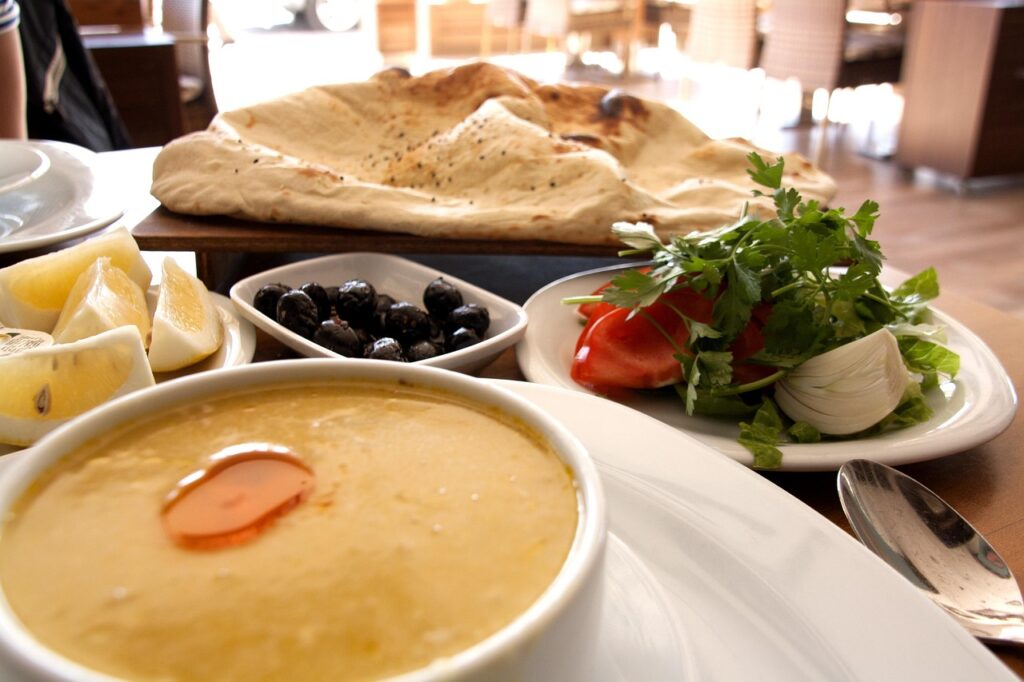
The family table is the sacred center of Turkish family life. Daily meals bring the household together, and the extended gatherings around the table are the family’s great ritual. The table is loaded with food, the elders are served first, and conversation flows as long as the tea.
The table’s rules are the family’s rules made visible. The best portions go to the guests and the elders, the young are expected to listen and learn, and no one leaves the table hungry. The meal is not a break from family life; it is family life at its most concentrated.
For the visitor, the table is the doorway into the family. Sharing a meal with a Turkish family is an act of acceptance, and the warmth of the table is the warmth of the whole institution. Sit down, eat generously, and you will understand the family from the inside.

Marriage and Alliance
Marriage in Turkey is the great act of family alliance. The wedding joins two extended families, and the ceremony is the public celebration of that joining. The traditional process moves from formal request to betrothal to wedding, with both families involved at every step.
The alliance is permanent and practical. The two families exchange support, hospitality, and influence, and the couple’s children belong to both kin groups. The wedding’s gold and gifts are the visible cement of the alliance, and the families continue to meet and celebrate together for generations.
The marriage system keeps the extended family network growing. Every wedding adds a new branch to the family tree, and the network of relatives widens with each generation. The Turkish wedding is not the end of a courtship; it is the founding of a new alliance within the family’s world.
The Care of Elders
The care of elders is the family’s most sacred duty in Turkey. Aging parents are cared for at home, usually by their adult children, and institutional care is rare and often seen as a failure of family obligation. The elders remain in their homes, surrounded by their descendants, until the end of their lives.
The care is practical and affectionate. Adult children manage their parents’ needs, the grandchildren provide joy and company, and the family gathers around the elders at every opportunity. The elders in turn contribute wisdom, childcare, and the family’s memory, remaining central to the household.
This reciprocal care is the family’s deepest promise. The young are cared for by the old, and the old are cared for by the young, in a cycle that binds the generations together. The promise is honored with a devotion that visitors often find deeply moving.
The Family in the Modern World
The modern world has tested the Turkish extended family, and the family has adapted brilliantly. Urban migration has scattered relatives, but technology keeps them connected, and the holidays reunite the scattered kin. The grandparents’ home remains the fixed point of the family’s orbit.
Modern roles have shifted. Women’s careers have rebalanced the household, young couples increasingly form independent households, and the traditional hierarchies have softened. Yet the core values of loyalty, respect, and family priority remain intact, and the family’s power to shape life endures.
The Turkish extended family is not a relic being overtaken by modernity; it is a modern institution that has absorbed modernity into its rhythms. For the visitor, this resilience is the story of Turkey itself, and understanding the family is understanding how the country has held together through every change.
The Rituals of Family Life
Family life in Turkey is carried on the rhythm of shared ritual. The bayram holidays bring the whole kin group to the grandparents’ table, with children making their rounds of relatives to receive their holiday money and sweets. Births, naming ceremonies, and circumcision celebrations gather the family, and funerals are attended by the entire network as a duty of honor.
The rituals are precise in their warmth. The eldest are greeted first and served first, the guests of honor are treated with the family’s best, and the tea never stops flowing. These ceremonies are not optional occasions; they are the family’s calendar, and attending them is both an obligation and a pleasure.
For the visitor, the rituals are the family’s public face. The gatherings you witness or join are the family renewing its bonds through ceremony, and the warmth of the rituals is the warmth of the institution itself. Participate with respect, and the family will welcome you into its world.
Regional Variations of the Family
The Turkish family takes different shapes across the country’s regions. The eastern and southeastern provinces preserve the most traditional patterns, with larger households, stronger patriarchal authority, and more formal customs. The western provinces, shaped by urban life, show smaller, more independent family units with looser hierarchies.
The coastal regions blend the two worlds, and the cities draw families from every corner of the country into new mixtures of tradition and modernity.
These variations enrich the family system without weakening it. The core values of loyalty, respect, and mutual care hold across every region, and the differences are variations on a single theme. For the traveler, the regional flavors of family life add color to every part of Turkey you visit.
Frequently asked questions
Why is the extended family so important in Turkey?
The extended family is the foundation of Turkish society, providing emotional support, economic cooperation, and social identity. It cares for children and elders, funds weddings and education, and shapes decisions. Its roots reach back through Ottoman history, and it remains the primary institution of Turkish life today.
How has modern life changed the Turkish family?
Urban migration has scattered relatives and women’s careers have rebalanced roles, but the family’s core survives. Technology keeps distant relatives in daily contact, and holidays reunite the scattered kin. The values of loyalty, respect for elders, and family priority remain the family’s moral foundation.
What is the role of grandparents in Turkish families?
Grandparents are the family’s heart and authority. They provide childcare, transmit traditions, and hold the family’s memory, and their homes are the gathering places of the kin group. Their blessing carries weight at weddings and decisions, and they are cared for by their children in old age.

All Over Information
The All Over Information editorial team researches and writes practical English-language guides to Turkey. Facts are checked against official and local sources before publication, prices are published as dated ranges rather than quotes, and guides are revised when things change. We accept no sponsored posts, paid placements or paid links.
More guides like this

Ebru Marbling Art Explained for Foreigners
You have probably seen ebru even if you do not know its name: those swirling, cloud-like patterns on paper, often in blue,…

Turkish Barbershop Culture Explained for Foreigners
If you are visiting Turkey, the neighborhood barbershop is an experience you should not miss, even if you usually avoid barbers.

How Turkish Teenagers Spend Their Free Time
If you travel to Turkey and find yourself in a park, a shopping street, or a seaside promenade on a weekend afternoon,…

Turkish Ceramic and Tile Art Explained for Foreigners
Every visitor to Turkey meets its ceramics: in the blue tiles of the mosques, in the painted plates of the bazaars, and…

Understanding Turkish Family Values
If you spend any time in Turkey, you will notice that family is everywhere.

Turkish Wedding Traditions Explained
A Turkish wedding is a festival that can last for days, drawing in families, neighbors, and whole neighborhoods.