The Spice Bazaar is one of the most popular destinations in Istanbul, and at its busiest moments its narrow galleries are packed shoulder to shoulder. The good news is that the crowds follow patterns you can predict and avoid. The market has a daily rhythm, a weekly rhythm, and a seasonal rhythm, and the traveler who understands them can enjoy its colors and scents in genuine comfort. Whether you want to photograph the empty vaults, taste the sweets without jostling, or simply take your time at the stalls, the timing of your visit makes all the difference. Here is how to choose the best time to visit the Spice Bazaar.
The Daily Rhythm of the Market
The Spice Bazaar is a creature of habit, and its days follow a shape you can learn in an afternoon. The market opens in the morning, builds steadily as the ferries and the trams deliver their passengers, peaks in the middle of the day, and eases off again in the late afternoon.
The two quiet windows are the beginning and the end of the day. In the first hour after opening, the stalls are still being set up, the aisles are empty, and the merchants are relaxed; in the final hour before closing, the tour groups have moved on and the market winds down at a gentler pace.
The middle of the day belongs to the crowds. From late morning through early afternoon, the lanes are at their fullest, and the famous stalls, the ones photographed in every travel guide, are surrounded by a permanent scrum of visitors.
The Early Morning Advantage
If there is one golden rule for visiting the Spice Bazaar, it is to arrive early. In the first hour of the morning, before the tour buses and the ferries deliver their passengers, the market shows a different face: quiet, unhurried, and genuinely atmospheric.
The early morning is also the merchants’ hour. The stallholders are arranging their displays, weighing the day’s first portions, and making tea, and they have time to talk, to offer samples, and to tell you about their goods in a way that the midday rush makes impossible.
The photography is at its best too. The soft morning light falls through the vaults, the aisles are empty enough for a clean shot, and the market’s famous colors glow without the interruption of the crowds. An early start rewards every kind of visitor.
Midday: The Peak of the Crowd
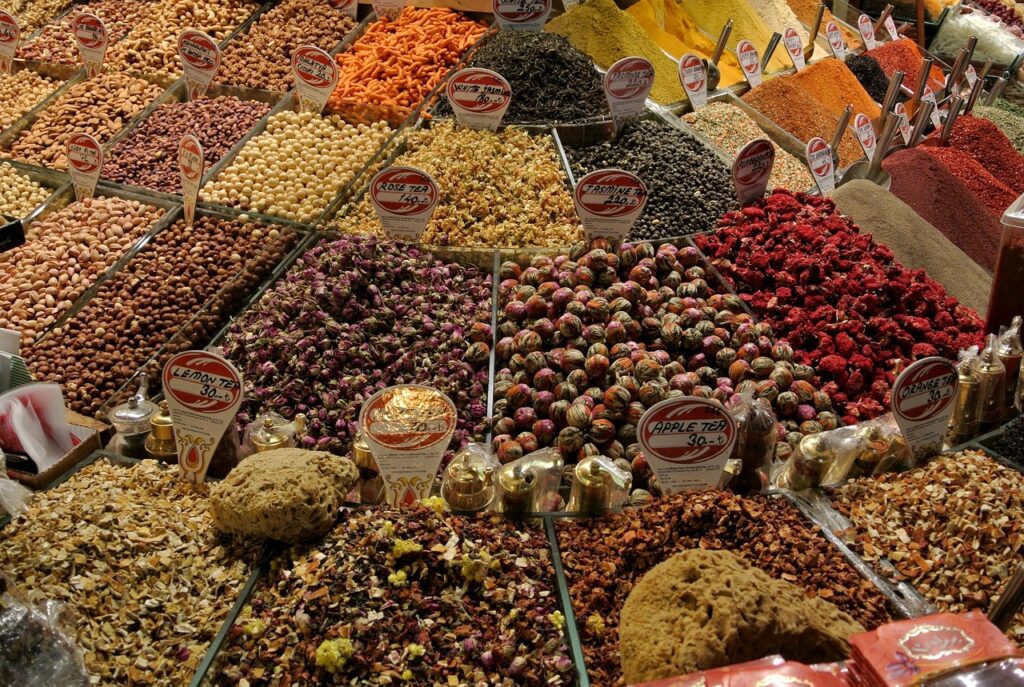
The middle of the day is the busiest period in the Spice Bazaar, and it is worth knowing exactly when it happens so you can plan around it. From roughly late morning until mid-afternoon, the market fills with tour groups, cruise passengers, and day-trippers.
The reasons are predictable. The Spice Bazaar sits on the tourist circuit of the old city, and most itineraries reach Eminönü in the late morning, after the mosques and before the afternoon sights. The ferries also peak at midday, disgorging their passengers directly onto the waterfront.
If you find yourself in the market at this hour, adapt rather than despair. Use the crowds as a cue to taste and to browse, follow the less famous sections of the building, and save the photographs and the quiet conversations for another hour.
Late Afternoon and the Closing Hours
The late afternoon brings a second chance at a calm visit. As the day trips wind down and the tour groups move toward their buses, the Spice Bazaar empties noticeably, and the final hours of trading have a relaxed, neighborhood feel.
The merchants are tired but genial in the late afternoon, and the mood is mellow. The day’s most enthusiastic customers have come and gone, and the stallholders are happy to chat, to negotiate without urgency, and to let you take your time over the last samples of the day.
The light is a bonus. In the late afternoon, the sun slants through the waterfront streets and into the market’s entrances, casting long shadows and warming the colors, so that the final hour is also one of the most beautiful hours of the day.

Weekdays Versus the Weekend
The weekly rhythm of the Spice Bazaar is gentler than the Grand Bazaar’s, because the market is open every day, including Sundays. But the days are not equal, and the weekends bring their own crowds to the waterfront.
Saturday is the busiest day of the week. The market draws both the tourists and the Istanbul families who come to Eminönü for their weekend shopping, and the combination can make the galleries feel as full as any high season day.
The weekdays are calmer, and the middle of the week is the quietest of all. A Tuesday, Wednesday, or Thursday visit, especially in the early morning or late afternoon, offers the best balance of a lively market and manageable crowds.
The Seasons and the Weather
Istanbul’s seasons shape the Spice Bazaar as surely as its hours. Spring and autumn, the great travel seasons, bring the largest crowds, with the school holidays of Europe and the cruise calendars adding their own peaks to the mild weather months.
Summer is a special case. The heat drives visitors toward the covered market, which stays cool and comfortable under its vaults, so the bazaar can be more crowded in high summer than the season might suggest. The early morning is the best defense.
Winter is the quiet season, and for crowd-averse travelers it is the best of all. The lanes are emptier, the pace is slower, and the market’s warm lights and fragrant steam make it a cozy refuge from the cold streets, an experience that many visitors miss entirely.
Cruise Ships and Tour Groups
The single greatest influence on the Spice Bazaar’s crowds is the cruise ship. Istanbul is a major port of call, and when the ships are in, their passengers flood the waterfront, and the market fills within hours of the gangways coming down.
The cruise rhythm is worth understanding. The ships arrive in the morning and usually depart by the evening, so their passengers are thickest in the market in the late morning and early afternoon. The first hour of the morning, before the ships dock, is often remarkably quiet.
The seasons of cruising are also the seasons of crowds. The ships run heavily from spring through autumn, with the peak in summer, while the winter months see little cruise traffic at all. In winter, you will have the market almost to yourself.
The Ferry Rhythm: Arriving with the Water
The ferries of Eminönü are another engine of the market’s crowds, and their timetable is written on the ebb and flow of the day. The boats that serve the Bosphorus and the Marmara disgorge their passengers at the docks directly beside the bazaar.
The morning rush is the heaviest. The commuters, the shoppers, and the tourists pour off the ferries through the morning hours, and each boat arrival sends a fresh wave through the market’s gates. Between the waves, however, the galleries breathe, and the gaps are your opportunity.
The rhythm works in your favor in reverse. If you time your visit for the quiet between the ferry arrivals, or for the hours after the commuter rush has ended, you will find the market far more relaxed than its reputation suggests, and the waterfront itself a pleasure to wander.
The Religious Calendar and Local Rhythms
The religious calendar adds its own pattern to the Spice Bazaar’s year. The market itself stays open during the main Islamic holidays, but the neighborhood changes around it, and the crowds take on a different character as the city celebrates.
In the weeks before the festivals, the market fills with local shoppers buying sweets and provisions for the celebrations, and the atmosphere becomes festive and domestic. It is a wonderful time to visit if you want to see the bazaar as the neighborhood sees it.
During the holidays themselves, the mosque beside the market draws great crowds, and the waterfront is thronged with worshippers and families. The market remains open, but the experience is different, so plan your visit according to the atmosphere you prefer.
A Practical Plan for a Quiet Visit
Put the pieces together and the ideal visit takes shape. Aim for a weekday, ideally Tuesday, Wednesday, or Thursday, in the quiet season, and arrive in the first hour after opening, when the market is at its calmest and most photogenic.
Structure your time in two windows. Use the early morning for the photographs, the tasting, and the unhurried shopping, then let the market fill around you as the day advances. If you return in the late afternoon, you will find the second quiet window and the best evening light.
Above all, stay flexible and watch the rhythms. The Spice Bazaar is a living place, and its crowds are never fully predictable, but the traveler who arrives early, chooses weekdays, and adapts to the day will find the market at its best: busy enough to be alive, and calm enough to be a pleasure.
Frequently asked questions
What is the quietest time to visit the Spice Bazaar?
The quietest time is the first hour after opening on a weekday. The market is still settling in, the aisles are empty, and the merchants are relaxed. The late afternoon, before closing, is the second best window for a calm visit.
Is the Spice Bazaar open on Sundays?
Yes, the Spice Bazaar is open every day, including Sundays, unlike the Grand Bazaar, which closes on Sundays. Saturday is the busiest day of the week, so plan your visit for a weekday if you want to avoid the crowds.
When is the Spice Bazaar busiest?
The market is busiest in the middle of the day, especially in the late morning and early afternoon, when tour groups and cruise passengers arrive together. The summer months and the spring and autumn travel seasons are the busiest times of the year.

All Over Information
The All Over Information editorial team researches and writes practical English-language guides to Turkey. Facts are checked against official and local sources before publication, prices are published as dated ranges rather than quotes, and guides are revised when things change. We accept no sponsored posts, paid placements or paid links.
More guides like this
Why Selimiye Mosque Should Be on Your Turkey Bucket List
Most travelers to Turkey fill their lists with Istanbul and the coast and never reach Edirne.

Best Time to Visit Anitkabir to Avoid Crowds
Anıtkabir — the mausoleum of Atatürk — is the most visited monument of Ankara, and the crowds of the national memorial can…

Why Mevlana Museum Should Be on Your Turkey Bucket List
The Mevlana Museum of Konya — the tomb of the great mystic Rumi — is one of the most beloved monuments of…

Mimar Sinan: Ottoman Turkey’s Master Architect
No single person shaped the skyline of Turkey more than Mimar Sinan, the chief architect of the Ottoman Empire in its golden…

Visiting Chora Church: Tickets, Hours, and Tips
The Chora Church — the Kariye — is one of the great monuments of Istanbul, and the visit to its mosaics and…

Why Aspendos Theatre Should Be on Your Turkey Bucket List
Every country has its must-see ruins, but few ruins anywhere in the world do what the theatre of Aspendos does: they make…