Priene is one of the most beautiful and rewarding ancient sites in Turkey, and also one of the most demanding. It sits high on the slopes of Mount Mycale, above the plain of the Maeander, and visiting it means a climb. But the effort is repaid with the best preserved Greek city plan in the world and views that stretch across the whole valley. This guide covers everything you need: getting there, tickets and hours, what to expect from the walk, and how to make the most of your visit.
Getting to Priene
Priene lies in the province of Aydin, on the southern slope of Mount Mycale, above the village of Gullubahce. The site is signposted from the main roads, and the final approach climbs through olive groves and pine woods.
By car, the site is about an hour and a half from Kusadasi and roughly an hour from Soke. The road up the mountain is winding but well maintained, and parking is available at the site entrance.
Public transport is limited. Minibuses from Soke serve the villages below the mountain, but from there you face a long walk or a taxi. Most visitors arrive by car or with an organized tour of the ancient cities.
Visit early in the morning or late in the afternoon. The light is best, the heat is less, and the site is at its most atmospheric in the long shadows.
The Approach: A City Above the Plain
The approach to Priene is part of the experience. As you climb the mountain road, the city appears suddenly above you, its terraces rising against the rock of Mount Mycale.
The site is entered through what remains of the ancient city walls, and the path leads up into the grid of the old streets. The sense of entering a city rather than a ruin is stronger here than anywhere in Turkey.
Take a moment at the entrance to look back. The plain of the Maeander spreads below you, green and wide, and you understand at once why the Greeks chose this extraordinary position.
Follow the route uphill first, visiting the temple of Athena while you are fresh, and save the lower city for the descent. The views improve with every step, and the return is easy.
Tickets and Entry
Entry to Priene is by ticket, purchased at the small office at the site entrance. The price changes from year to year, and the office may not always have English signage, so carry small change and be patient.
Ask at the ticket office about the combined tickets that cover the ancient cities of the region. If you are visiting Priene with Miletus and Didyma, a combined arrangement can save you money and time.
There is no need to book in advance. The site is rarely crowded, and the entry process takes only a minute.
Finally, allow time simply to sit. Priene is a place of extraordinary calm, and the best moments of the visit are the ones you do not plan: sitting in the theatre, looking out over the plain, and feeling the centuries pass.
Opening Hours and Time Needed
The site is open daily, with hours that vary by season. In summer the gates open early and close in the evening; in winter the hours are shorter. If you arrive within the opening window you will be fine, but check locally if you are visiting at the edges of the season.
Allow two to three hours for the site. The ruins are compact, but the climb and the views deserve time, and the houses and the council house repay a slow visit.
If you plan to climb to the temple of Athena and explore the upper terraces, add another hour. Priene is a site to be walked slowly.
The seasons change Priene more than they change most sites. In spring, the mountain is green, the slopes are covered with wildflowers, and the plain below is a patchwork of young crops. The views are at their most colorful, and the air is cool.
The Climb: What to Expect
The site of Priene climbs the mountain in terraces, and the walk is the defining feature of the visit. The streets are ancient stone, worn smooth by two thousand years of feet, and the slope is steady.
You will climb from the lower city, past the houses and the market area, to the temple of Athena on its terrace above. The climb is not extreme, but it is continuous, and it will take your breath in the summer heat.
Take your time and pause often. Every stop gives you a better view, and the site rewards the visitor who lets the climb be part of the experience rather than an obstacle to it.
In summer, the site is hot and the climb is hard work, but the mornings are magnificent, with the light rising over the plain and the site nearly empty. The late afternoon brings a second window of golden light.
What to See: The Council House
The first great sight on your route is the bouleuterion, the council house of Priene. It is one of the best preserved ancient government buildings in the world.
The council house is a square building with tiers of stone seats arranged around a central floor. You can walk in and sit in the seats where the councillors of Priene debated the affairs of their city.
The acoustics are remarkable. Speak from the center of the floor and your voice carries clearly to the top rows, a demonstration of the skill of the ancient builders that still works today.
In autumn, the colors of the valley turn warm, and the crowds of summer are gone. Winter brings rain and cold wind on the exposed terraces, but the clear days are spectacular, with snow sometimes visible on the higher peaks of the region.

What to See: The Temple of Athena
The temple of Athena Polias stands on the highest terrace of the city, in the position of honor. It was designed by Pytheos, the architect of the Mausoleum of Halicarnassus, and it was considered a masterpiece of the Ionic order.
Only the platform and the bases of the columns survive, but the site is one of the most beautiful in Turkey. The ruined temple looks out over the plain of the Maeander, with the mountains rising behind it.
The temple is also famous for its connection with Alexander the Great, who offered to pay for its completion. The story, recorded in an inscription found at the site, is one of the most famous in Greek archaeology.
The views from Priene are one of the great rewards of the visit, and they deserve planning. The best panorama is from the terrace of the temple of Athena, where the whole Maeander plain opens out below you.
What to See: The Theatre and the Streets
The theatre of Priene is smaller than the great theatres of Miletus and Ephesus, but it is beautifully preserved and beautifully placed. Its seats look out over the plain, and on a clear day you can see across the whole valley.
The grid of the ancient streets is the real treasure of the site. The streets cross at right angles, lined with the walls of the ancient houses, and walking them you see the plan of the city exactly as the Greeks designed it.
The houses themselves are among the best preserved in the Greek world, with their courtyards, their rooms, and their cisterns still readable. You can wander through them and imagine the lives of the citizens.
On a clear day you can trace the course of the river across the valley, spot the sea in the distance, and even make out the shapes of the other ancient cities of the region. The view from Priene is one of the finest in western Turkey.

What to Bring and Wear
Priene is an exposed site, and the climb adds to the demands of the visit. Bring water, more than you think you need, and carry it in a bag that leaves your hands free.
Comfortable shoes with good grip are essential. The ancient stone streets are smooth and sometimes slippery, and the climb is easier with proper footwear.
A hat and sun protection are essential in the summer months. The upper terraces have no shade, and the sun on the open stone is relentless.
The late afternoon light is the most beautiful. The plain turns golden, the shadows of the mountains stretch across the valley, and the ruined temple glows in the evening sun. If you can time your visit to end at the temple terrace at sunset, you will not regret it.
Facilities and Comfort
Facilities at Priene are basic. There is a small refreshment point near the entrance, but you should not rely on it, and there is no restaurant on the site.
The nearest services are in the villages below the mountain and in the town of Soke. Consider bringing a picnic, and plan your visit so that you have food and water with you.
The toilets at the site are simple. Go prepared for a site that is wonderfully wild and wonderfully uncommercialized.
Frequently asked questions
How hard is the walk at Priene?
The walk is steady but not extreme. The site climbs the mountain in terraces, and the route from the entrance to the temple of Athena involves continuous gentle climbing over ancient stone streets. Most visitors manage it comfortably with stops, but the heat of summer makes it harder, so take water and go slowly.
How long do I need at Priene?
Allow two to three hours for a comfortable visit. The ruins are compact, but the climb, the views, and the remarkable preservation of the houses and council house all deserve time. If you want to explore the upper terraces and linger in the theatre, plan for a little longer.
Can I combine Priene with Miletus in one day?
Yes, easily. The two sites are about half an hour apart, and they are usually visited together with Didyma to make a full day of the ancient cities of the region. A common plan starts at Priene in the morning, reaches Miletus at midday, and finishes at the temple of Didyma in the afternoon.

All Over Information
The All Over Information editorial team researches and writes practical English-language guides to Turkey. Facts are checked against official and local sources before publication, prices are published as dated ranges rather than quotes, and guides are revised when things change. We accept no sponsored posts, paid placements or paid links.
More guides like this

Best Time to Visit Xanthos to Avoid Crowds
Xanthos is one of the quietest of Turkey's great ancient sites, a hilltop of ruins on the Lycian coast that most travelers…
Best Time to Visit Pamukkale Travertines to Avoid Crowds
Pamukkale is one of Turkey's most visited attractions, and its terraces can feel crowded on summer days. But the crowds follow patterns…

The Architecture of Perge Explained
Perge is one of the best places in Turkey to learn how an ancient city actually worked, because its architecture is not…

The Complete History of Gobekli Tepe
Gobekli Tepe is the site that rewrote the history of civilization.
The Architecture of Gobekli Tepe Explained
Gobekli Tepe is the oldest monumental architecture in the world, and its design is unlike anything built before or since.
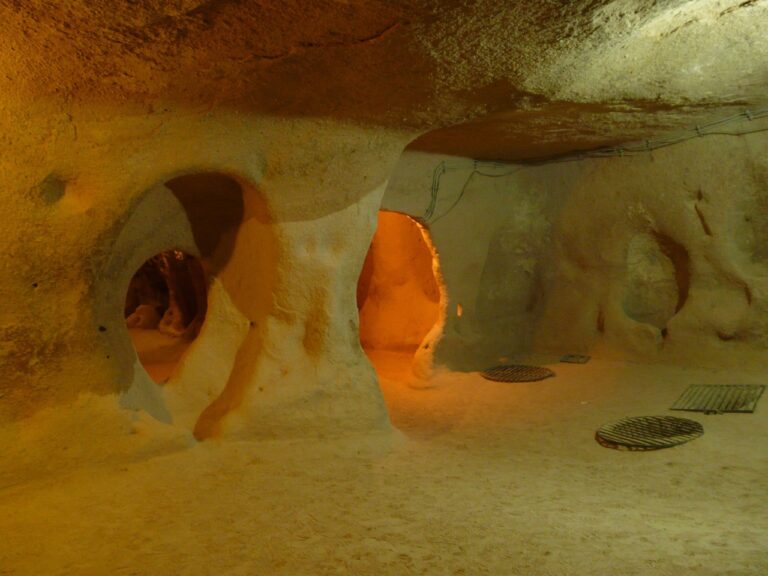
The Complete History of Kaymakli Underground City
Kaymakli Underground City is the great companion of Derinkuyu, a second marvel hidden beneath the fields of Cappadocia.