Cappadocia is famous for its sky, but its most extraordinary secret lies beneath the ground. The region’s underground cities, carved over centuries into the soft volcanic rock, are among the most astonishing human creations on earth: whole communities, with chapels, kitchens, stables and wineries, built entirely underground and designed to shelter thousands of people from the dangers of the surface world. A visit is unlike anything else in Turkey, or anywhere else on the planet, and it belongs on every bucket list. Here is why.
Nothing Else on Earth Is Like This
You have seen temples, palaces and amphitheatres in other countries, but you have never seen anything like a Cappadocian underground city. The closest comparison might be a termite mound, or a science fiction colony on another planet, and neither is quite right. This is a city carved downward, level after level, into living rock, complete with its own ventilation, its own water supply and its own architecture of survival.
The uniqueness is the first reason to go. Derinkuyu descends deep into the earth through a labyrinth of tunnels and chambers, and the scale of the human effort is physically overwhelming. Standing in a chapel carved by hand out of solid rock, eight levels beneath the surface, you are in a place that exists nowhere else in the world, and that alone justifies the trip.
It Tells a Story of Survival
The underground cities were not built for comfort or for show; they were built for survival. From the Arab raids of the Byzantine era and the centuries of warfare before them, the people of Cappadocia learned to disappear, and they perfected the art of disappearance into an entire civilised system. The stone doors, the ventilation shafts, the narrow tunnels and the storerooms all speak of a people determined to endure.
That story of survival gives the experience an emotional weight that ruins rarely have. As you duck through the low passages and stand by the great circular doors that once sealed whole communities off from the world, you feel the urgency that shaped every corridor. The underground cities are not a monument to glory; they are a monument to the human instinct to live, and that is a rarer and more moving thing.

The Engineering Will Astound You
For anyone who loves how things work, the underground cities are a masterclass in engineering. The builders had no machines, no blueprints and no power tools, yet they created ventilation systems that still move air through the deepest levels, drainage that still functions and a defensive system of doors and bottlenecks that still reads like a manual of fortification.
Walk the route and you will keep asking the same question: how did they do this? The stone was cut by hand, generation after generation, and the result is a working city beneath a city. The ventilation shafts, some of them opening far from the inhabited chambers, show a sophisticated understanding of air flow, and the positioning of the stables, kitchens and chapels shows real urban planning. The engineering alone is worth the visit.
It Is a Perfect Fit for Cappadocia
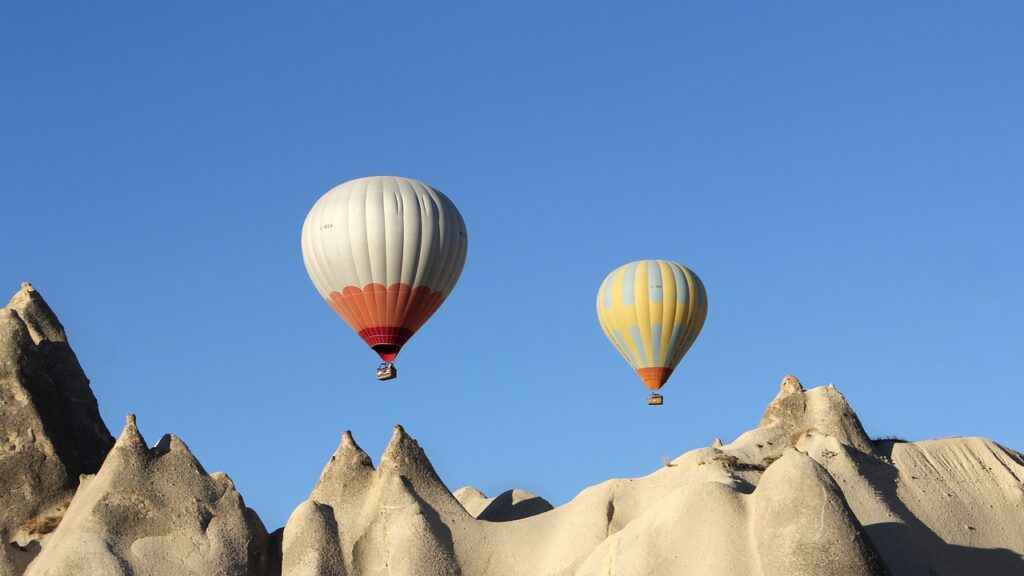
Cappadocia’s bucket list is already crowded: the balloons at sunrise, the fairy chimneys, the rock churches, the valleys. The underground cities do not compete with these experiences; they complete them. After the sky, the heights and the open air, the descent into the earth gives the region its missing dimension, and the contrast between the balloon-filled dawn and the dark tunnels of Derinkuyu is one of the great journeys of Turkish travel.
The underground cities also explain Cappadocia in a way the surface never can. The same soft rock that made the fairy chimneys and the churches made the refuges possible, and the region’s history of refuge explains the density of its rock-cut world. Visit the balloons, walk the valleys, and then go underground, and you will leave with a complete picture of the strangest landscape in Turkey.
It Is an Experience You Will Actually Remember
Most travel experiences blur together; the underground cities do not. Years after your trip, you will still remember the moment you stepped through a great stone door into the darkness, the feel of the cool rock under your hand, the ducking and squeezing through tunnels that seemed to go on forever, and the strange thrill of standing in a chapel beneath the earth. Few places on earth leave fingerprints on the memory like this one.
That memorability is the true test of a bucket list sight. The underground cities are not subtle, and they do not fade. When friends ask what the strangest thing in Turkey was, you will not hesitate, and you will find yourself describing the underground world of Cappadocia with a vividness that surprises even you.
It Works for Every Kind of Traveller
The underground cities have an unusual gift: they appeal to almost everyone. History lovers read the story of Byzantine refuge and monastic life. Engineers marvel at the ventilation and the stone doors. Families thrill to the adventure of the tunnels, which children treat as a giant secret hideout. Even travellers who are tired of ruins, churches and museums find the underground world novel.
There is also a version of the visit for every level of nerve. If you are bold, Derinkuyu’s deepest levels offer the full experience. If you are cautious, the upper levels and the gentler maze of Kaymakli give you the flavour without the claustrophobia. The underground cities meet you where you are, which is rare for a site of this importance, and it is one more reason they belong on your list.

The Perfect Escape from the Crowds
Cappadocia’s famous sights are wonderful and crowded. The underground cities are wonderful and, at the right hour, wonderfully quiet. Because the tunnels admit visitors at a controlled pace and the tours cluster in the middle of the day, an early visit can give you long stretches of solitude in chambers that were built for silence. The cool, dark calm is the perfect antidote to the balloon-crowded viewpoints.
There is something fitting about finding peace underground in a region famous for its crowded skies. The cities were built as places of refuge, and they still are. Descend early, let the crowds pass above, and you will experience the underground world as its builders knew it: a hidden, secret, protected place, far from the noise of the surface.
A Story You Can Touch
History is usually a story you read; at the underground cities, it is a story you touch. You can run your hand along the walls carved by Byzantine hands, stand inside a wine press, duck through a tunnel worn smooth by centuries of passage and close your eyes in a chapel where refugees once worshipped. The past at the underground cities is not behind glass; it is all around you, in the rock.
That tactile immediacy is the deepest reason the underground cities belong on your bucket list. Turkey is full of places where you can see history; this is one of the few where you can feel it. The cool stone, the low ceilings, the smell of the earth and the echo of the tunnels put you inside the story of Cappadocia in a way that no museum ever will.

The Mystery That Keeps Growing
Part of the fascination of the underground cities is that their story is still unfinished. No one knows their full extent, and new chambers and connections are still being discovered, sometimes under the houses of the region’s towns. The question of who carved the first tunnels, and when, is still debated, and even the largest known cities may be only fragments of a far larger underground world.
That living mystery gives the visit a sense of discovery. When you descend into Derinkuyu, you are walking into a story whose ending is unknown, a site where the archaeologists’ questions are still open. The mystery is not a flaw; it is part of the attraction. Few places in the world let you visit a wonder of antiquity that is still, in a real sense, being found.
The Gift of Perspective
Finally, the underground cities give you something every traveller needs: perspective. Turkey is so rich in history that the wonders can blur together, but you will not forget the descent into the earth. The cities force you to measure human ambition against human fragility, to think about what it meant to live in fear, and to admire what people can build when they must.
That perspective is the lasting souvenir of the visit. Long after the balloons have lifted and the valleys have been walked, the image of the carved chapel, the stone door and the endless tunnels will stay with you, and it will quietly change the way you think about the region, and about history itself. That is why the underground cities are not just an attraction; they are an essential part of the Cappadocian experience.
Frequently asked questions
Why are the underground cities of Cappadocia unique?
Nowhere else on earth has such complete cities carved entirely underground, with ventilation, water, stables, kitchens and chapels designed to shelter whole communities. They grew over centuries in the region’s soft volcanic tuff, and their scale and purpose are unmatched anywhere in the world.
Which underground city should I see first?
Derinkuyu is the most spectacular and the classic choice, with its deep levels and grand chambers. If you want a gentler, quieter experience, Kaymakli is smaller and more intimate. Many visitors see both, since they lie on the same road about ten minutes apart.
How long should I spend underground?
Allow about an hour inside Derinkuyu and slightly less at Kaymakli. The one-way routes involve ducking and climbing through narrow tunnels, so they take longer than the distances suggest, and the experience is best enjoyed slowly, at the opening hour, when the crowds are thin.

All Over Information
The All Over Information editorial team researches and writes practical English-language guides to Turkey. Facts are checked against official and local sources before publication, prices are published as dated ranges rather than quotes, and guides are revised when things change. We accept no sponsored posts, paid placements or paid links.
More guides like this

Why Gobekli Tepe Should Be on Your Turkey Bucket List
Most of the great wonders of the world are famous for what they are; Gobekli Tepe is famous for what it changed.

Best Time to Visit Sardis to Avoid Crowds
Sardis is one of the quieter ancient sites of western Turkey, but quiet is a relative word.

The Architecture of Pamukkale Travertines Explained
The terraces of Pamukkale are a building without an architect, a structure created by water and chemistry over thousands of years.

The Architecture of Aphrodisias Explained
Aphrodisias is the rare ancient city you can read like a textbook, because almost all of it was built from the same…

Derinkuyu Underground City Through the Centuries
The history of Derinkuyu Underground City is measured not in years but in centuries, and even in millennia.

The Architecture of Priene Explained
Priene is the most complete example of Greek city planning in the world, a city designed on paper and built exactly to…