Every season in Besiktas has its own character, and the honest truth about the district’s climate is that it has no bad month — only different ones. The summer brings the Bosphorus alive, the villages to their fullest, and the evenings to their longest; the autumn gives the district its best weather and its best fish; the winter hands it to the locals, the meyhanes, and the football; and the spring is the season of the waterfront at its gentlest. Choosing when to visit is a matter of matching the season to the kind of trip you want. This guide breaks down the year month by month, with the honest trade-offs.
The Seasons at a Glance
The shape of the Besiktas year: Spring (March–May) is mild and green — the waterfront at its gentlest, the gardens of the Yıldız Park at their best, the crowds still thin. Summer (June–September) is hot, lively, and long — the season of the water, the villages, the late evenings, and the crowds. Autumn (September–November) is the sweet spot for many — warm days, cool nights, the best fish of the year, and the crowds thinning out. Winter (December–February) is cold, wet, and cozy — the season of the meyhanes, the football, and the lowest prices of the year. None of it is extreme: Istanbul’s climate is moderate by regional standards, and the sea keeps the worst of it away.

Spring: March to May
Spring is the district at its gentlest. The gardens of the Yıldız Park come alive — the blossoms, the green, the peacocks strutting the paths; the waterfront softens into its pleasant season, the ferries running in the mild light; and the weather is genuinely lovely: warm days in the high teens and low twenties, cool nights, and the rain softening into April showers. The crowds are modest, the prices are mid-range, and the palace and the fish market are at their most comfortable. The only real downside is the unpredictability — a cold snap can arrive in March, and the rain can still be persistent. For the traveler who wants the district’s beauty without the summer heat or the winter gloom, spring is the classic choice.
Summer: June to September
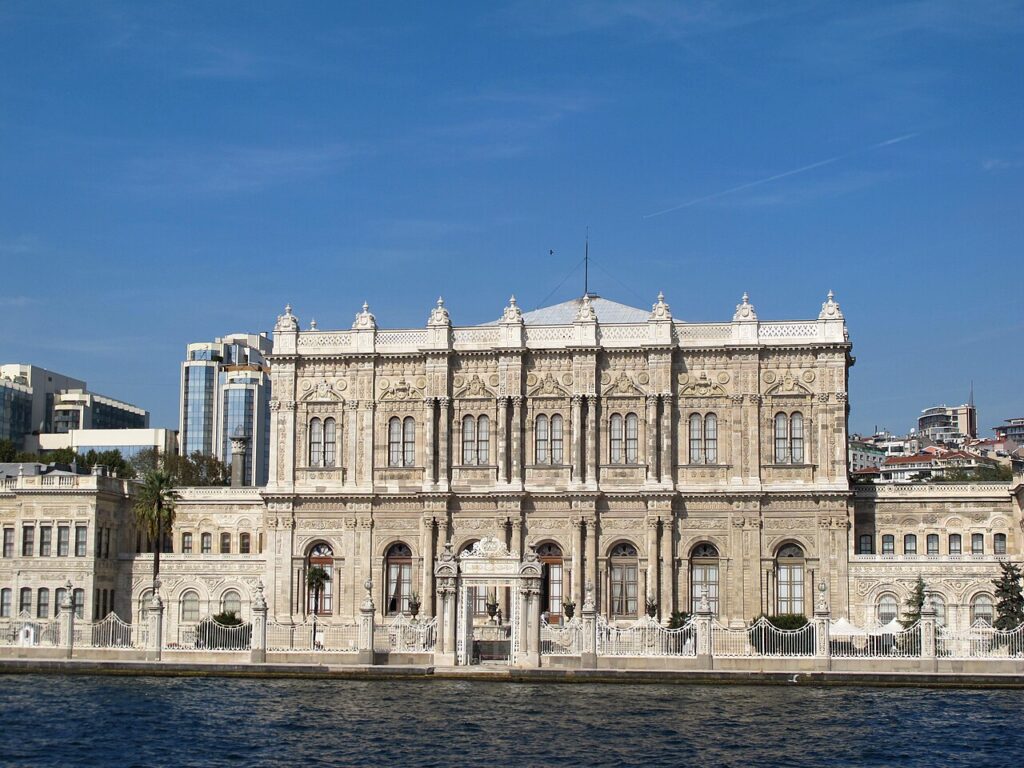
Summer is Besiktas at its most alive. The long evenings are the gift of the season — the waterfront filling after dinner, the ferries running late, the sunset the daily show — and the water is the center of life: the village terraces of Ortakoy and Bebek, the balık ekmek on the seawall, the Bosphorus crossings that double as entertainment. The costs are the crowds and the heat: July and August afternoons are heavy with humidity, the weekend ferries are packed, and the palace queues. The prices peak, and the hotels fill. For the visitor who wants the full summer Istanbul — the water, the villages, the outdoor life — this is the season; for the visitor who wants quiet, it is not.

Autumn: September to November
Autumn is the season the locals call the best, and the arguments are strong. September carries the summer’s warmth into the long evenings, then October settles into the sweet spot — days in the low twenties, nights cool enough for a jacket, the light golden and low. It is the season of the year’s best eating: the bluefish (lüfer) run begins, the fish market does its finest work, and the meyhanes are at their warmest. The crowds have gone, the prices have eased, and the district belongs to the locals again — which is exactly the version that visitors come to find. The only downsides: the evenings close in earlier, and the rain returns in November. For the traveler who wants the best balance of weather, food, and crowds, autumn is the answer.

Winter: December to February
Winter is the season of the district’s inner life. The waterfront empties, the crowds vanish, the prices drop to the year’s lowest, and Besiktas hands itself over to its warm rooms: the meyhanes at their coziest, the fish market with its winter anchovies, the palace floodlit over the dark water. The winter food is the best of the year in its own way — the hamsi at their peak, the soups and the stews of the lokantas, the chestnuts on every corner — and the football culture intensifies, the floodlit stadium glowing on match evenings. The costs are real: the cold and the wind off the strait, the short days, the rain that can lock you indoors. For the traveler who wants the real, local Istanbul at the lowest prices of the year, winter is a secret worth knowing.
The Month-by-Month Notes
January–February: The coldest and quietest months; the prices at the year’s floor; snow a rare possibility; the hamsi season at its peak. March: Spring’s false starts and first blossoms; the crowds still thin. April–May: The golden shoulder — beautiful weather, the gardens at their best, the crowds building toward summer. June: The best of both worlds — summer warmth, manageable crowds, the first of the season’s evenings. July–August: Peak summer — the liveliest and most crowded, the hottest and most expensive; the villages at their best. September: Summer holding on, the crowds easing, the lüfer season beginning. October: The classic choice — warm days, golden light, the district at its most local. November: The transition — cooler, wetter, cheaper, the last of the outdoor life. December: The winter begins — the meyhanes, the football, the year’s quietest weeks.
The Seasoned Decision
Choose by the kind of trip you are planning. A water-and-villages trip is a summer trip — the terraces, the crossings, the long evenings are all season-dependent, and the summer versions are the full versions. A food trip has two peaks: the autumn, for the lüfer and the harvest, or the winter, for the hamsi and the cozy rooms — and both come with the district at its most local. A culture trip — the palace, the football, the fish market, the meyhanes — works in every season, with the winter’s warmth making the indoor life at its most atmospheric. A football trip should be timed to the fixtures rather than the weather — the match days are the district’s great communal ritual in every season. And a budget trip is a winter or shoulder-season trip: the prices drop with the temperature, and the district’s best experiences cost the same all year. The traveler who matches the season to the trip gets the version of Besiktas they came for; the traveler who matches the trip to the season gets the best of both — and the traveler who comes twice, once in summer and once in winter, gets two different neighborhoods for the price of one address. Whatever the month, the palace, the fish market, and the Bosphorus are waiting.
Frequently asked questions
What is the best month to visit Besiktas?
October — warm days, golden light, the season’s best fish, the crowds gone, and the district at its most local.
Is Besiktas worth visiting in winter?
Yes — it is the season of the meyhanes, the fish market’s hamsi, the football, and the lowest prices of the year, with the district at its most authentic.
When is the district most crowded?
July and August, and the weekend crowds from the rest of the city throughout the summer — plus the match days of the football season, which bring their own intensity.
When is the bluefish (lüfer) season?
Autumn — roughly September through November — when the fish market and the meyhanes are at their finest.
Does it snow in Besiktas?
Occasionally, a few days a year in January or February — and when it does, the palace against the snow is one of the city’s great sights.
When should I book accommodation?
For the summer and the holiday weeks, book well ahead — the hotels fill. For the spring, autumn, and winter, the availability is generous and the walk-in rates improve with the season.
When is the football at its best?
The fixtures run through the autumn, the winter, and the spring — the match days are the district’s great communal ritual in every season, and the winter floodlit evenings have a drama of their own.
Is there a bad month?
Not really — each month has its character and its advocates. The honest caveats are the summer heat and crowds and the winter cold and rain; the shoulder months split the difference.
What should I pack for the shoulder seasons?
Layers are the uniform of the spring and the autumn — warm days and cool nights mean a light jacket that comes off and goes back on as the sun moves.
Is the fish market seasonal?
It runs all year, but the eating peaks with the water’s calendar — the bluefish in the autumn, the anchovies in the winter — which is one more argument for the cooler months.

All Over Information
The All Over Information editorial team researches and writes practical English-language guides to Turkey. Facts are checked against official and local sources before publication, prices are published as dated ranges rather than quotes, and guides are revised when things change. We accept no sponsored posts, paid placements or paid links.
More guides like this

Besiktas Airport and Transport Guide
Besiktas is one of the best-connected neighborhoods in Istanbul, and its transport is part of why travelers choose to base themselves on…

Family-Friendly Activities in Besiktas
Besiktas is the Istanbul neighborhood that families discover and then refuse to leave.
Top 10 Things to Do in Besiktas
Besiktas is the Bosphorus neighborhood that has everything: a world-class palace, a legendary football culture, a fish market that feeds the district's…
Photography Spots in Besiktas You Can’t Miss
Besiktas is a photographer's neighborhood, and it offers a rare combination: one of the great palaces of the world, a waterfront that…

Besiktas in Winter: What to Expect
Besiktas in winter is the neighborhood's true character revealed.