Pergamon is one of the calmest of Turkey’s great ancient sites, and for most of the year crowds are a minor consideration. But the acropolis has its busy hours, the summer heat is real, and the right timing makes the difference between a hurried climb and a contemplative day among the terraces. This guide explains the best seasons, days, and hours for a quiet visit to the city of the Attalids, and how to enjoy the theatre, the Asclepieion, and the town with the minimum of company.
The Crowd Profile of Pergamon
Pergamon receives a small fraction of the visitors that flock to Ephesus, and its crowds are modest even at the peak. The pressure concentrates on the acropolis, where the tour groups from Izmir and the cruise ports arrive in the mid-morning hours.
The Asclepieion, the Red Basilica, and the museum are usually quiet even on busy days, because the tours concentrate their time on the summit. The result is a site where a little planning buys a great deal of solitude.
The pattern is predictable: the mornings see the tours, the afternoons thin out, and the low season is nearly empty. Pergamon rewards the visitor who knows the rhythm and works with it.
April to June: The Ideal Window
Spring is the ideal season at Pergamon. The plain turns green, the hillsides bloom, and the temperatures stay comfortable for the climb, usually in the low to mid twenties, with the long daylight giving flexibility to the day.
The tour season builds through May, but the crowds remain light, and the acropolis can feel almost private on a weekday morning. The light is superb, raking across the theatre and the terraces, and the views over the green valley are at their most beautiful.
For the best of the season, aim for late April or May. The combination of mild weather, clear light, and thin crowds is the sweet spot of the Pergamon year.
The shoulder seasons also bring practical advantages beyond the crowds. The cable car runs on full schedules, the minibus connections from Izmir are frequent, and the tea gardens and restaurants of Bergama have tables to spare. You also see the sites at their best: the flowers of the spring and the golden light of the autumn belong to the months when the site is quietest, and the long days give you time to climb, explore, and still sit for an hour in the Asclepieion.

September to November: The Quiet Autumn
The autumn is the second great window, and for some travelers it is the best of all. September keeps the summer warmth with the crowds gone, and October brings golden light and a quiet, contemplative atmosphere across the whole site.
By late October and November, the acropolis can be almost empty on weekday afternoons, and the Asclepieion is a place of genuine solitude. The museum, too, is calm, and the town of Bergama returns to its local rhythm.
The one caution is the shortening of the hours through the autumn. Arrive in the morning or the early afternoon, and you will have the site at its quietest and its most beautiful.
July and August: Hot but Manageable
The summer months are the busiest and the hottest at Pergamon. The temperature on the exposed acropolis can climb well into the thirties, and the climb, by cable car or on foot, is a serious business in the midday sun.
The crowds, however, are nothing like the great sites of the coast. The tours arrive and leave in waves, and the theatre and the terraces are rarely crowded. The challenge is the heat, not the company.
The summer strategy is simple: ride the cable car early, explore the summit before the sun is high, rest in the museum or the shade of the Red Basilica at midday, and visit the Asclepieion in the cooler afternoon. The site gives you all day; use the morning and the evening.
Winter: Cool, Green, and Almost Empty
Winter is the secret season of Pergamon. From December through February, the site receives a handful of visitors, and the acropolis, the Asclepieion, and the town are yours to wander at will.
The winter brings rain and wind, and the hill can be cold and the paths slippery, but the reward is an intimacy that no other season offers. The green of the plain is at its freshest, and the low light on the terraces and the Red Basilica is dramatic.
The trade-offs are the short hours and the reduced services, including the cable car, which may operate on a limited schedule. For the traveler who accepts the weather, winter Pergamon is a private audience with a great city.
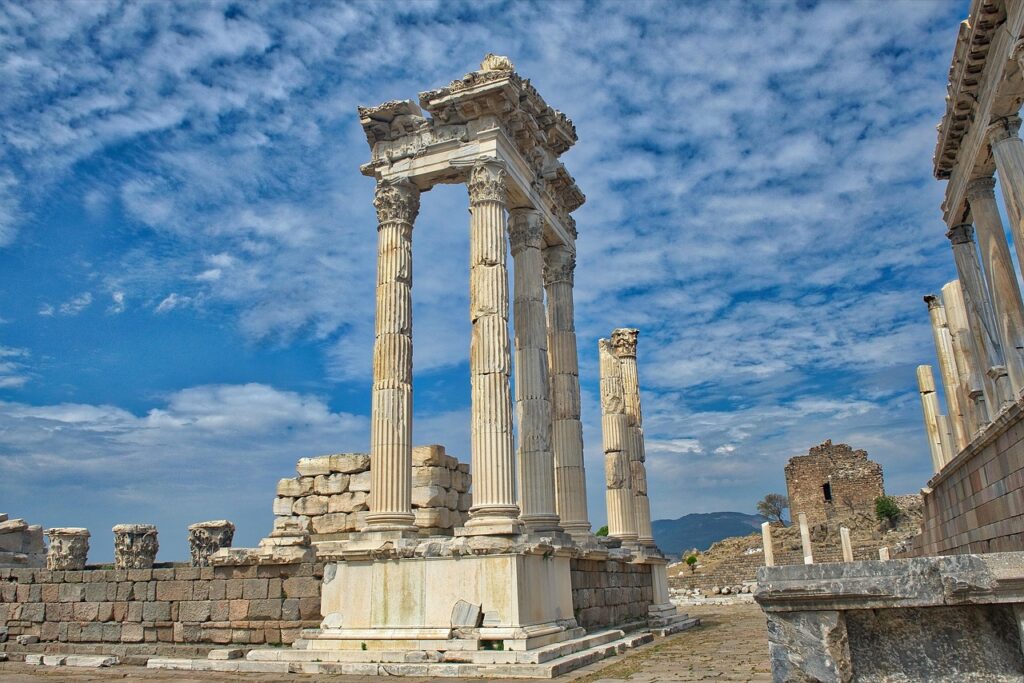
For photographers, the light of Pergamon is a reason in itself to choose the right time. The morning sun strikes the theatre and the upper terraces from the east, while the late afternoon turns the whole acropolis golden against the valley. The winter light is lower and more dramatic, and the summer haze softens the distances. Whatever the season, the hour before sunset on the theatre steps is the image that sums up Pergamon.
Morning vs Afternoon
The morning is the best time at Pergamon, and not only for the light. The tours arrive mid-morning, so the first hour after opening gives you the theatre and the terraces at their quietest, with the sun rising across the valley.
The afternoon brings the heat and, until about 3 p.m., the tour groups, but it also brings the golden light of the late day. The last hours before closing are a second golden window, especially on the acropolis, where the low sun turns the theatre to gold.
The perfect day spreads across both: the acropolis in the morning, the museum and the Red Basilica at midday, and the Asclepieion in the long light of the afternoon.

Weekdays vs Weekends
The weekday is the friend of the quiet visitor at Pergamon. The organized tours cluster on the weekdays of the season, but the domestic visitors arrive mainly at weekends, and the balance between the two favors the middle of the week.
Tuesdays and Thursdays are generally the calmest days, while Saturdays can be lively with families and groups from Izmir and the surrounding region. The Sunday morning, before the day-trippers arrive, is another hidden quiet hour.
If your schedule is flexible, choose a midweek day and combine it with the morning or the late afternoon. The combination of a quiet day and a quiet hour is the surest route to a solitary Pergamon.
Holidays and Special Events
The Turkish school holidays and public holidays bring their own surges to Pergamon. The summer break fills the weekends with families, and the spring religious holidays can bring crowds to the sites and the town.
The cultural events of Bergama, including the traditional festivals and the carpet and textile fairs, can also swell the town and the sites on particular weekends. These occasions are charming, but they are not quiet.
If a calm visit matters to you, check the calendar before you book and favor the ordinary weeks. The quiet of an average Tuesday in May is worth more than any festival.
One factor unique to Pergamon is worth planning around: the sites are spread out, so the day involves movement as well as climbing. The distance between the acropolis and the Asclepieion is several kilometers, and the journey, by cable car, taxi, or foot, shapes the timing of the day. A sensible order keeps the climbing for the cool morning, the movement for the warm middle, and the gentlest site, the Asclepieion, for the afternoon.

Weather Realities on the Acropolis Hill
The weather at Pergamon is shaped by the hill. The acropolis is exposed to wind as well as sun, and the temperature drops noticeably with the altitude, so a layer is useful even on a warm day.
The summer sun is fierce on the summit, where the shade is scarce, and the cable car and the terraces demand hats, water, and sunscreen. The winter brings wind and rain, and the plain below can be humid in every season.
The golden rule is to check the forecast and dress in layers. The climate of Pergamon rewards the prepared, and the prepared traveler gets the long, comfortable day that the site deserves.
Finally, remember that Pergamon rewards the second look. The theatre is the famous image, but the terraces of the gymnasium, the library terrace, the substructures of the Trajaneum, and the engineering of the Red Basilica repay the visitor who walks slowly and looks closely. The quiet seasons give you the time for that looking, and the site, in return, gives you more than the famous view.
Your Personal Strategy
The perfect Pergamon visit is easy to construct: choose a weekday in May, September, or October; ride the cable car at opening time; explore the summit before the tours; and descend to the Red Basilica and the museum as the day warms.
Spend the afternoon at the Asclepieion, where the greenery and the healing sanctuary are at their best in the long light, and finish with the bazaar and a tea in the town of Bergama. In summer, start early and rest at midday; in winter, embrace the solitude and dress for the wind.
Follow that pattern, and Pergamon gives you its best self: quiet, golden, and unhurried, the great site that still belongs to the traveler who finds it.
Frequently asked questions
What is the best time of year to visit Pergamon?
May and September are the ideal months, with mild weather, clear light, and thin crowds. Late April and October are also excellent. Summer is manageable with an early start, and winter offers near-total solitude at the price of short hours and possible rain.
What is the best time of day to visit Pergamon?
The first hour after opening is the quietest and most beautiful, especially on the acropolis. The last two hours before closing are the second best window, with golden light over the theatre. Avoid the mid-morning tour hours on the summit, and use the midday heat for the museum.
Does Pergamon get crowded?
Rarely. Pergamon receives a small fraction of the visitors of Ephesus, and the crowds concentrate in brief mid-morning waves on the acropolis. The Asclepieion, the Red Basilica, and the museum are usually quiet, and a weekday in the shoulder season is almost empty.

All Over Information
The All Over Information editorial team researches and writes practical English-language guides to Turkey. Facts are checked against official and local sources before publication, prices are published as dated ranges rather than quotes, and guides are revised when things change. We accept no sponsored posts, paid placements or paid links.
More guides like this

The Complete History of Pamukkale Travertines
The white terraces of Pamukkale, the cotton castle of southwestern Turkey, look like a frozen waterfall poured over the hillside.

Visiting Aphrodisias: Tickets, Hours, and Tips
Aphrodisias is one of the most rewarding ancient sites in Turkey and one of the least crowded, a city of marble in…

Why Termessos Should Be on Your Turkey Bucket List
Turkey is full of ancient cities, but there is only one Termessos.
Best Time to Visit Priene to Avoid Crowds
Priene is one of the quietest of the great ancient sites of Turkey, but it is not always empty.

Best Time to Visit Miletus to Avoid Crowds
Miletus is a quieter site than the great Aegean showpieces, but it still has its crowded hours.
Pergamon Through the Centuries
Pergamon lived for more than two thousand years, and its centuries are written across the hill above Bergama and the plain below.