Balat is the old city’s deepest layer — the quarter on the Golden Horn where the history of the city’s communities is written in the stone. For five centuries the quarter was the home of the Jewish community of the Ottoman capital; its neighbor Fener was the seat of the Greek world; and together the two quarters hold the story of the city’s tolerance — the faiths and the peoples who lived side by side on the hillside above the Golden Horn. The colorful houses are the recent paint; the history beneath them is the quarter’s real story. This guide tells that story — the history and the culture of the old quarter on the shore.
The Beginnings: The Quarter on the Golden Horn
The history of Balat begins with the city itself. The shore of the Golden Horn was the capital’s port from the Byzantine centuries, and the hillside above it was settled early — the quarter’s ground holds the layers of the city’s oldest life. The name Balat is old, and its origins are debated — the palatium, the palace of the Byzantine quarter, is the most likely root — and the quarter’s position at the head of the Golden Horn made it the home of the working city: the sailors and the traders, the craftsmen and the communities of the port. The medieval centuries brought the quarter’s first great chapter: the Jewish community, arriving with the city’s trade, established its synagogues and its life on the hillside, and the Greek community of the neighboring Fener grew around the church of the Patriarchate. The foundations of the quarter were laid in the centuries of the Byzantine and the early Ottoman city.
The Ottoman Centuries: The Communities of the Quarter
The Ottoman conquest of 1453 opened the quarter’s golden age. The great event of the century was the arrival of the Sephardic Jews — the community expelled from Spain in 1492, welcomed by the Ottomans and settled in the quarter that became their home. The Sephardic community of Balat grew into one of the great Jewish communities of the empire: the synagogues and the schools, the rabbis and the scholars, the Ladino-speaking life of the quarter that lasted for five centuries. The neighbor Fener was the Greek world’s seat: the Ecumenical Patriarchate — the first church of the Orthodox world — established its center on the hill, and the Greek community of the quarter grew around it: the churches, the schools, the grand houses of the merchants and the notables. The two quarters — the Jewish Balat and the Greek Fener — lived side by side, the communities of the empire’s capital in the tolerance of the Ottoman city.

The Nineteenth Century: The Golden Age of the Hill
The nineteenth century was the golden age of the hill — the era of the communities’ greatest flourishing. The reforms of the empire opened the century: the Jewish community of Balat built its synagogues and its schools, its institutions and its life; the Greek community of Fener built its great school buildings — the red-brick palaces of the lycee and the academies that educated the quarter’s children; and the merchants and the notables of both communities built the grand houses that still line the streets. The century’s great monument was the iron church — the Church of St. Stephen of the Bulgarian community, the prefabricated cast-iron building shipped from Vienna and assembled on the shore in 1898, the architectural wonder of the quarter. The nineteenth-century hill was the city’s most diverse quarter: the communities of the empire side by side, the faiths and the languages of the capital on a single hillside.
The Twentieth Century: The Changing Quarter
The twentieth century transformed the quarter. The wars and the upheavals of the century changed the city’s communities: the Jewish community of Balat — the quarter’s great population for five centuries — diminished through the century, the synagogues and the schools closing or quieting; the Greek community of Fener declined with the century’s events; and the quarter’s life shifted with the changes of the modern city. The houses aged and the streets quieted, and the quarter entered the long decline of the old neighborhoods — the working life continuing, the colors fading, the history settling into the stone. By the late century, Balat was the poor old quarter of the Golden Horn: the layers of its history intact, the life of the communities reduced, the color postcard waiting to be discovered.

The New Century: The Colors and the Remaking
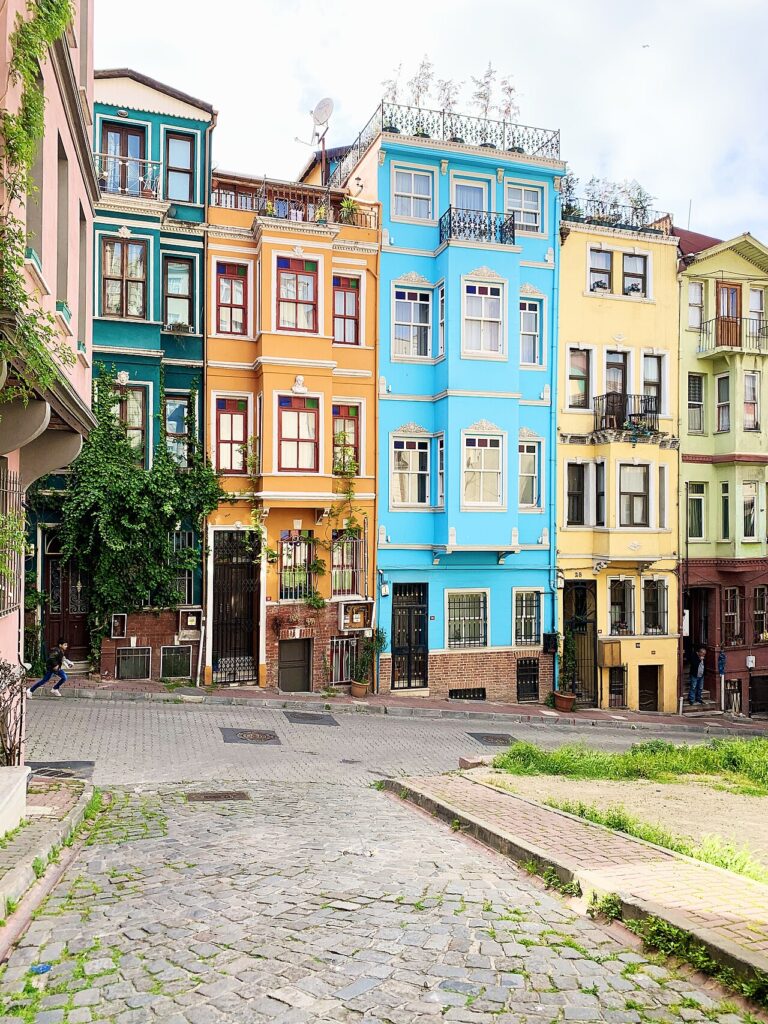
The newest chapter of the quarter’s history is the remaking — the transformation of the old quarter into the fashionable corner of the old city. The change began with the restoration: the houses of the quarter, aged and faded, were restored and painted in the bright colors that made the neighborhood famous — the pinks and the blues, the greens and the yellows of the new Balat. The cafes and the antique shops followed: the vintage rooms of the colored streets, the coffee shops of the young Istanbul, the day-trippers of the city’s new life. The quarter’s fame grew with its colors — the most photographed corner of the old city, the postcard of the Golden Horn — while the history beneath the paint remained: the synagogues and the churches, the old schools and the grand houses, the layers of the communities’ centuries.
The Culture Today: The Layers of the Quarter
The culture of contemporary Balat is the layers of the quarter together — the history and the new life, the communities’ past and the colors’ present. The working life continues: the residents of the old streets, the tea houses and the lokantas, the daily rhythm of the neighborhood. The landmarks endure: the iron church, the Patriarchate, the synagogues and the schools — the monuments of the communities’ centuries. And the new life surrounds them: the cafes and the shops of the colored streets, the visitors of the famous lanes, the fashionable face of the old quarter. The culture of Balat is the culture of the layers — the tolerance of the past and the colors of the present, the communities’ history and the quarter’s new life, read together in the same streets.

The Layers, Read Together
The history of Balat is the city’s tolerance in stone — the Jewish quarter and the Greek neighbor, the Sephardic centuries and the Orthodox seat, the iron church of the Bulgarians and the schools of the communities. The traveler reads the layers in the walk: the synagogues of the old Jewish quarter, the Patriarchate and the schools of Fener, the iron church of the waterfront, the grand houses of the hill — the communities of the empire’s capital, read in the buildings they left. The colors are the recent paint; the layers beneath are the quarter’s real story — five centuries of the city’s peoples side by side, the history of the tolerance that the old quarter still holds.
The Walking Tour: The Layers in Order
The traveler who wants the layers in order walks them in order. Start at the waterfront — the iron church of St. Stephen, the monument of the Bulgarian community on the shore — the layer of the nineteenth century’s diversity. Climb to the Patriarchate of Fener — the courtyard and the church of St. George, the seat of the Orthodox world — the layer of the Greek centuries. Walk the streets of Fener — the grand houses and the old schools of the community, the red-brick palaces of the academies — the layer of the golden age. Cross into Balat — the synagogues and the schools of the old Jewish quarter, the institutions of the Sephardic centuries — the layer of the community that lived here for five hundred years. And end at the colored streets — the restored facades and the cafes, the present face of the old quarter — the layer of the new century. The walk is the quarter’s whole history in a single afternoon: the iron and the stone, the faiths and the peoples, the centuries and the colors — the tolerance of the old city, read from the shore to the painted lanes.

The Takeaway
Balat is the old city’s deepest layer — the quarter on the Golden Horn where the history of the city’s communities is written in the stone. From the Byzantine shore and the Sephardic centuries to the golden age of the hill and the remaking of the new century: the quarter’s layers are the city’s tolerance in stone, read in the synagogues and the schools, the Patriarchate and the iron church, the grand houses and the painted facades. Walk the quarter with that story in mind — the communities’ past beneath the colors’ present — and the color postcard stops being a backdrop and starts being history: five centuries of the city’s peoples side by side, the deepest story of Istanbul painted in the brightest shades.
Frequently asked questions
Why is Balat historically important?
It is the old city’s deepest layer — the home of the Jewish community of the Ottoman capital for five centuries, and the neighbor of the Greek Fener with its Patriarchate.
What is the most important historical site?
The Ecumenical Patriarchate of Fener — the seat of the Orthodox world’s first church — and the iron church of St. Stephen, the quarter’s architectural wonder.
Why are the houses so colorful?
The colors are the recent restoration — the paint of the new century that made the quarter famous — while the history beneath them is the communities’ centuries.
What happened to the Jewish community?
The community diminished through the twentieth century’s upheavals, and the synagogues and the schools quieted — the layers of the community’s centuries remain in the stone.
What makes Balat culture distinctive?
The layers of the communities — the Jewish and the Greek, the Ottoman and the modern — read together in the same streets, the tolerance of the past and the colors of the present.

All Over Information
The All Over Information editorial team researches and writes practical English-language guides to Turkey. Facts are checked against official and local sources before publication, prices are published as dated ranges rather than quotes, and guides are revised when things change. We accept no sponsored posts, paid placements or paid links.
More guides like this

Where to Stay in Balat: Neighborhood Guide
Balat is the character stay of the old city — the colorful quarter on the Golden Horn where the boutique rooms fill…

Balat on a Budget: Money-Saving Travel Tips
Balat is the budget quarter of the old city — the colorful streets cost nothing to walk, the working tables feed the…

Photography Spots in Balat You Can’t Miss
Balat is the photographer's color postcard — the painted houses and the cobbled lanes, the iron church and the Patriarchate, the walls…

A Solo Traveler’s Guide to Balat
Balat is one of the best quarters in Istanbul for the solo traveler — safe, walkable, and full of the quiet company…
A First-Timer’s Guide to Balat
Balat is the color postcard of Istanbul — the old quarter on the Golden Horn where the houses climb the hill in…
Top 10 Things to Do in Balat
Balat is the color postcard of Istanbul — the old quarter on the Golden Horn where the houses climb the hill in…