Balat is the photographer’s color postcard — the painted houses and the cobbled lanes, the iron church and the Patriarchate, the walls and the waterfront, the light over the Golden Horn and the colors of the old quarter. It is one of the most photographed corners of Istanbul and one of its most rewarding for the camera: the frames are everywhere, and the light is the quarter’s gift. This guide covers the essential photography spots of Balat — the streets, the landmarks, the viewpoints, and the light — for the photographer who wants the old quarter on the card.
The Colorful Streets: The Postcard Frames
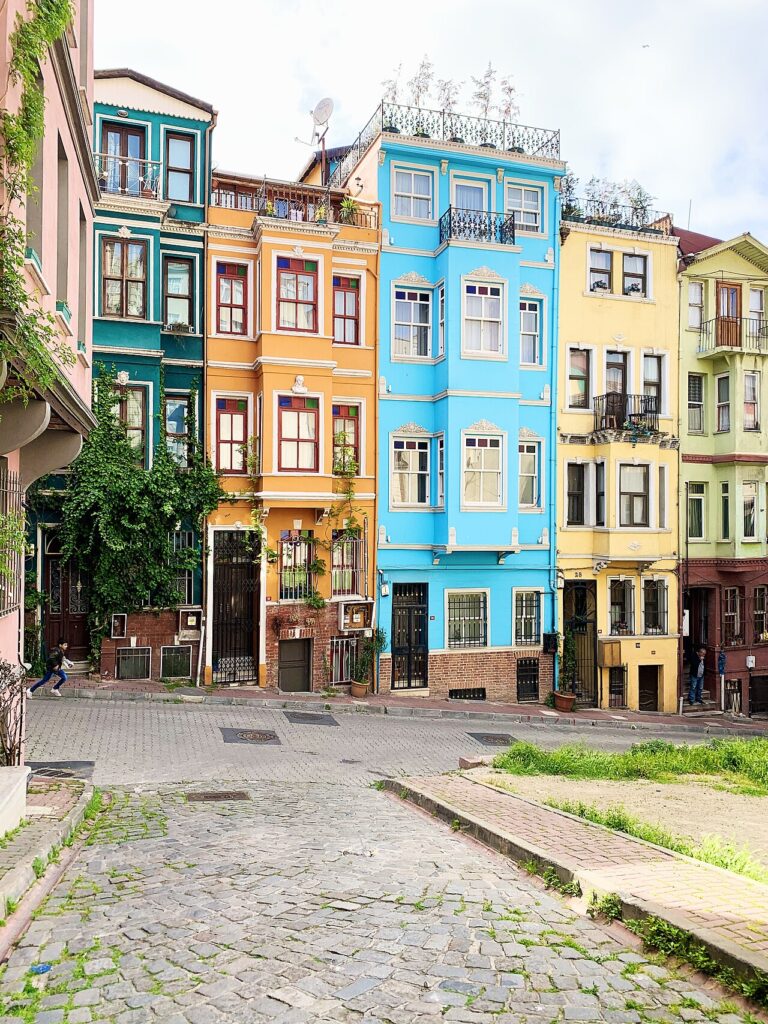
The colorful streets are the quarter’s essential frames — the painted houses climbing the hill in their rows, the pinks and the blues, the greens and the yellows, the facades that made Balat famous. The shots are the classics: the rows of the houses from the length of the lane, the details of the doors and the windows, the steps and the cobbles with the colors rising above. The light is the key: the soft morning light for the facades at their best, the golden hour for the amber on the paint, the night for the colors in the lamplight. The early morning — before the crowds — is the streets at their cleanest, and the photographer who comes early gets the postcard without the people. The colorful streets are the quarter’s signature frame, and they are the essential start.
The Back Lanes: The Hidden Angles
The back lanes of the quarter — the steps and the alleys behind the famous facades — are the hidden photography: the houses unpainted and unphotographed, the washing lines and the doorways, the textures and the shadows of the old neighborhood. The shots are the quiet frames: the details of the old fabric, the cats and the doorways, the life of the quarter away from the crowds. The light is the side light of the late afternoon, when the lanes catch the gold and the shadows deepen; the black-and-white is the classic for the old stone and the textures. The back lanes are the photographer’s discovery — the angles that the postcards never show — and the wander through them is the shoot.
The Iron Church: The Waterfront Monument
The iron church of St. Stephen — the prefabricated cast-iron building on the waterfront — is the quarter’s architectural frame. The Gothic Revival form, the metal ribs and the pointed arches, the tower and the cross: the building is the photographer’s subject from every angle — the full facade from the shore, the details of the ironwork, the reflections in the water of the Golden Horn. The light is the morning for the clear facade and the golden hour for the amber on the metal; the night, with the church lit, is the dramatic frame. The iron church is the quarter’s most distinctive architecture, and it rewards the photographer who circles it for the angles.
The Patriarchate: The Courtyard and the Icons
The Ecumenical Patriarchate of Fener — the seat of the Orthodox world’s first church — is the quarter’s sacred frame. The courtyard, the church of St. George, the icons and the relics: the photography is the quiet one — the respect of the working place of worship — and the frames are the atmosphere: the courtyard in the soft light, the doors and the arches, the details of the old complex. The interiors — the icons and the gold — ask for the low light and the no-flash respect, and the rewards are the images of the sacred quarter. For the photographer who comes for the history, the Patriarchate is the essential frame — the seat of the faith, shot with the respect it is due.

The Walls: The Panorama of the Quarter
The land walls of the old city — the ancient fortifications at the quarter’s edge — are the elevated viewpoint, and the panorama from them is the quarter’s best frame: the Golden Horn below, the old city’s domes and minarets across the water, the colored houses of Balat climbing the hill beneath the walls. The towers and the gates of the ancient defense are the foreground; the city is the backdrop; and the whole of the old quarter fits in the frame. The light is the golden hour — the amber over the water and the city — and the sunset is the walls’ finest hour, the crowds gone and the light low. The walls are the photographer’s elevated platform, and the panorama is the shot that frames the quarter whole.
The Waterfront: The Quarter from the Water
The waterfront below the quarter — the shore of the Golden Horn — is the photographer’s second viewpoint: the quarter’s colors from the water, the postcard image that made Balat famous. The shots from the shore give the layers: the iron church on the waterfront, the colored houses climbing the hill behind, the ferries and the fishing boats in the foreground. And the ferry crossing — the ride across the Golden Horn — gives the moving frame: the quarter receding and approaching, the colors from the deck, the postcard from the water. The light is the golden hour, when the colors glow and the water turns amber. The waterfront of Balat is the quarter’s postcard angle, and the crossing is the ride that frames it.

The Seasonal Light and the Night
The season changes the light, and the night is the quarter’s last frame. The spring brings the soft light and the clear air — the facades at their gentlest. The summer brings the long evenings and the golden hours stretched — the colors at their brightest under the high sun. The autumn brings the low golden light — the amber on the paint and the stone, the quarter’s most photogenic season. The winter brings the dramatic light — the gray skies, the mist over the Golden Horn, the rare snow on the colored houses, the frames of a lifetime. And the night — the facades in the lamplight, the cafes’ windows glowing, the colors muted and atmospheric — is the quarter’s most underrated frame. Match the season and the hour, and the quarter delivers the frames you came for.
The Practical Notes
A few things make the photography smooth. The morning is the light: the soft sun on the facades and the thin crowds make the early hours the quarter’s best — start the shooting day early. The tripod is the night kit: the lamplight shots of the lanes need the steady base — pack the small travel tripod. The respect is the rule: the churches and the synagogues are working places of worship — the no-flash and the quiet respect go with the shooting. The wander is the discovery: the back lanes and the hidden angles are the quarter’s depth — leave the main frames and follow the steps. And the weather is the ally: the mist and the snow and the storm light are the dramatic conditions — shoot in them when they come.

The People and the Life: The Street Frames
Beyond the landmarks, the quarter’s best frames are its life — the people and the streets of the old neighborhood. The residents at their doorways, the cats in the lanes, the shopkeepers at their rooms, the tea houses’ tables: the street frames of Balat are the quarter’s everyday, and they reward the patient eye. The shots are the candid classics: the figure on the steps, the doorway with the life behind it, the lane with the cat and the washing line. The light is the side light of the late afternoon, when the streets catch the gold and the life of the quarter comes out; the black-and-white is the classic for the street frames, the textures and the faces of the old neighborhood. The respect is the rule — the quarter’s residents are the subject, and the polite distance and the smile go with the shooting. The people of Balat are the quarter’s most human frames, and the photographer who waits for them gets the old quarter’s life on the card.
The Takeaway
The photography of Balat is the color postcard on the card — the painted houses and the cobbled lanes, the iron church and the Patriarchate, the walls’ panorama and the waterfront’s postcard, the seasonal light and the lamplight night. The quarter is the photographer’s old Istanbul in miniature: the frames are everywhere, and the light is the gift. Shoot the mornings and the golden hours, the back lanes and the postcard angles, the colors and the night — and the color postcard of Istanbul comes home in the frames: the painted houses and the sacred places, the photography of the quarter whole.
Frequently asked questions
What is the best photography spot in Balat?
The colorful streets in the morning light — the postcard frames of the painted houses, best before the crowds.
When is the best light?
The early morning for the soft sun on the facades and the golden hour for the amber — with the night for the lamplight frames.
Is the ferry crossing worth it for photos?
Yes — the crossing of the Golden Horn gives the postcard view of the quarter from the water, the frame that made it famous.
Do I need a tripod?
For the night shots — the lamplight on the lanes — yes; the day is hand-holdable in the quarter’s light.
What should I shoot in black and white?
The back lanes and the old stone — the textures and the shadows of the old neighborhood reward the monochrome.

All Over Information
The All Over Information editorial team researches and writes practical English-language guides to Turkey. Facts are checked against official and local sources before publication, prices are published as dated ranges rather than quotes, and guides are revised when things change. We accept no sponsored posts, paid placements or paid links.
More guides like this

Balat on a Budget: Money-Saving Travel Tips
Balat is the budget quarter of the old city — the colorful streets cost nothing to walk, the working tables feed the…

Where to Stay in Balat: Neighborhood Guide
Balat is the character stay of the old city — the colorful quarter on the Golden Horn where the boutique rooms fill…

Balat in Summer: A Complete Travel Guide
Summer is Balat's liveliest season — the long days, the full streets, the colors at their brightest under the high sun, the…

History and Culture of Balat
Balat is the old city's deepest layer — the quarter on the Golden Horn where the history of the city's communities is…

Nightlife Guide to Balat
Balat is not the nightlife quarter of Istanbul — the clubs and the loud bars belong to other districts — but the…
A Foodie’s Guide to Balat
Balat is the old city's food at its most real — the working tables and the waterfront, the tea houses and the…