Besiktas is a neighborhood whose history is written on its waterfront. The palaces of the last Ottoman sultans line the shore; the football club that carries the district’s name was founded in its streets; the ferries have landed at its piers for centuries; and the culture of the district — the fish market, the meyhane evenings, the black-and-white passion — is the product of every layer of that past. This guide tells the story of Besiktas: the Ottoman centuries, the Republican transformation, and the culture that makes the neighborhood what it is today.
The Ottoman Shore: The Palaces and the Gardens
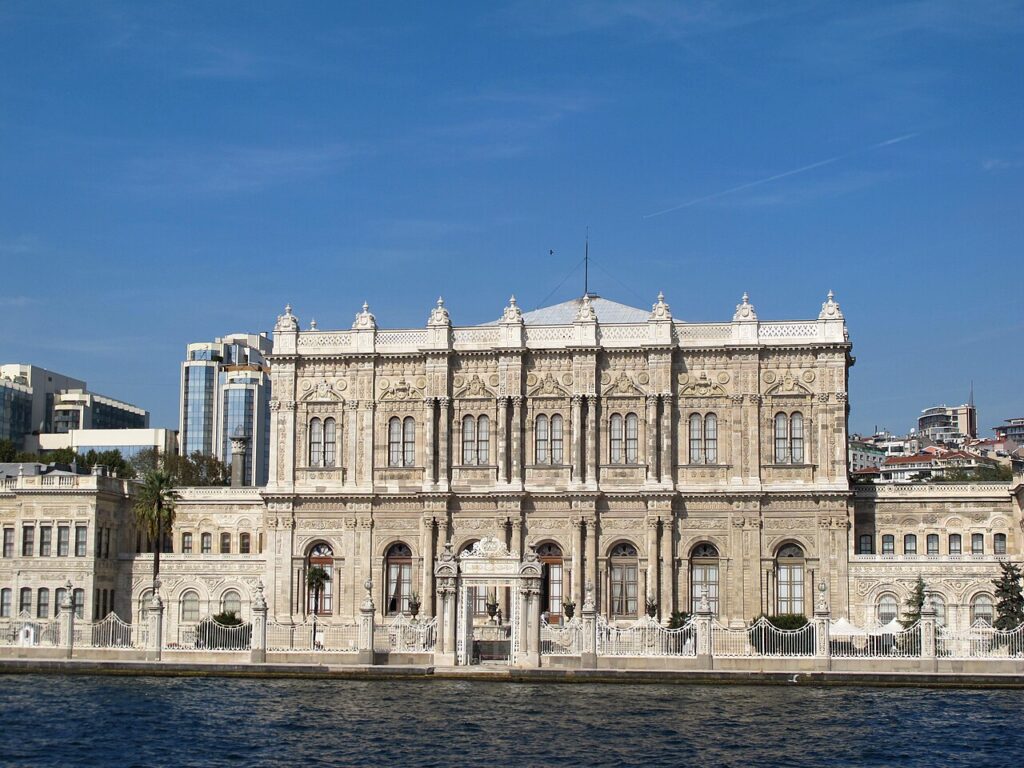
The history of Besiktas as a settlement reaches back to the Byzantine era, but its identity was fixed in the Ottoman centuries, when the Bosphorus shore became the summer court of the empire. The sultans and the great families built their waterfront palaces along the district’s coast — the yalıs and the grand residences that still line the shore — and the hills behind filled with the gardens and the pavilions that gave the district its character. The nineteenth century brought the climax of this world: the Dolmabahce Palace, built in the 1850s as the empire’s new ceremonial home, a vast white marble statement of Ottoman power at its most European. The same era built the mosque at the water’s edge, the clock tower, and the planned estates — like Akaretler, the row housing built for the palace’s staff — that became the bones of the modern neighborhood. The waterfront that the traveler sees today — the palace, the yalıs, the gardens — is the visible history of that world.
The End of the Empire and the Birth of the Republic
The same waterfront witnessed the empire’s end. It was in the Dolmabahce Palace that the last Ottoman sultans held their final years, and it was there, in 1938, that Mustafa Kemal Atatürk — the founder of the Turkish Republic — spent his last days and died; his bedroom in the palace is preserved as it was. The district’s role in the national story did not end with the empire: the Republican era made Besiktas a modern neighborhood, the ferries carrying the new city’s commuters across the strait, the hills filling with apartment blocks, and the waterfront developing into the working district that it remains. The palace, once the seat of an empire, became a museum and a monument — and the neighborhood around it continued its own, quieter history.

The Football Century: The Club That Named the District
The twentieth century added the element that defines Besiktas more than any building: the football club. Besiktas JK was founded in 1903, in the district’s own streets, and its history is inseparable from the neighborhood’s — the black-and-white of the “Black Eagles” is the district’s true color scheme, and the club’s journey from the streets to the great stadiums of the city is the story of the neighborhood’s own rise. The club’s famous identity — the first Turkish club to play abroad, the working-class passion of its supporters, the intensity of its matches — is a matter of national pride, and its stadiums, culminating in the modern Vodafone Park on the Bosphorus shore, have always been at the heart of the district. On match days, the streets of Besiktas become the club’s territory, and the black-and-white floods the neighborhood. The football is not a pastime of the district; it is the district’s collective heart.

The Market and the Waterfront Life
Beneath the palaces and the football lies the district’s everyday history: the market and the waterfront life that have connected Besiktas to the Bosphorus for centuries. The fish market behind the terminal — the Balık Pazarı — has fed the district through all of its eras, its catch landing at the piers that the ferries still use. The meyhane culture of the surrounding alleys is the evening version of that history — the taverns where the district’s life has been argued, toasted, and sung for generations. The ferries themselves are the continuity: the boats have crossed the strait here since the Ottoman administration ran its lines, and the terminal’s role as a hub of the Bosphorus network is unchanged in kind. The district’s culture — the food, the drink, the waterfront, the daily rhythm — is the living history of that life.

The Modern District: The Culture of Today
The culture of modern Besiktas is the sum of its history, and it has a character that is instantly recognizable. It is a waterfront culture: the ferries, the promenade, the villages to the north — Ortakoy, Bebek, Arnavutkoy — and the yalıs that give the shore its elegance. It is a food culture: the fish market, the meyhane evenings, the köfte houses, the breakfast spreads — the district that treats the table as the center of the day. It is a football culture: the black-and-white woven through the streets, the match days the great communal ritual. And it is a neighborhood culture in the oldest sense: the working district where the palaces and the market, the students and the fishermen, the families of the hills and the crowds of the waterfront all share the same few streets — the mix that makes Besiktas feel like a real place with a real past, not a stage set for visitors.
The Layers, Read Together
The traveler who walks Besiktas with its history in mind sees the district in three dimensions. The palace tells the imperial story; the stadium tells the republican one; the fish market and the meyhanes tell the everyday one; and the ferries tie them all to the water that made the place. Every layer is visible to the eye that knows to look — the marble and the black-and-white, the market and the mansion, the old ferries and the new glass stadium. That depth is what gives the district its particular quality: the sense of a place that has been living its own life for centuries, and that welcomes the visitor into it — the rarest quality a city neighborhood can have. Besiktas is the neighborhood where the empire ended and the republic began, where the football was born and the fish still land — and all of it on the same few hundred meters of Bosphorus shore, in plain sight of any visitor who cares to look twice.
Frequently asked questions
How old is Besiktas?
The settlement’s history reaches back to the Byzantine era, but its identity was fixed in the Ottoman centuries, when the Bosphorus shore became the empire’s summer court.
What is the Dolmabahce Palace’s place in history?
Built in the 1850s as the empire’s new ceremonial home, it was the last great Ottoman palace — and the place where Atatürk died in 1938, his bedroom preserved as it was.
Why is the football club so central to the district?
Besiktas JK was founded in the district’s own streets in 1903, and its black-and-white identity is fused with the neighborhood’s — the match days are the district’s great communal ritual.
What is the Balık Pazarı’s history?
The fish market has fed the district for centuries, its catch landing at the piers the ferries still use — the everyday history beneath the palaces and the football.
What makes Besiktas culture distinctive?
The mix — the waterfront, the food, the football, and the working neighborhood beneath the monuments — a real place with a real past, lived daily on the same shore.
What is Akaretler?
The planned row-housing estate built in the 19th century for the palace’s staff, now a lane of boutiques, galleries, and cafes — the district’s gentrified face, and a visible piece of its imperial history.
Where can I see the history?
The palace and the clock tower for the imperial layer; the club museum and the stadium for the football century; the fish market and the meyhanes for the everyday one; and the ferry for the water that tied it all together.
How did the yalıs come to be?
The great waterside mansions were built over the Ottoman centuries by the sultans and the great families, who made the Bosphorus shore their summer court — the yalıs of the coast are the visible remains of that world.
Is the district’s history visible in a single walk?
Nearly — the waterfront walk from the palace to the stadium passes the imperial layer (the palace, the clock tower, the mosque), the everyday layer (the fish market, the piers), and the modern layer (the stadium, the ferries) within a few hundred meters.
What role did the ferries play in the district’s history?
The boats have crossed the strait here since the Ottoman administration ran its lines — the terminal’s role as a Bosphorus hub is centuries old, and the district’s identity as a commuter shore is built on it, the water linking the district to the city’s every era.

All Over Information
The All Over Information editorial team researches and writes practical English-language guides to Turkey. Facts are checked against official and local sources before publication, prices are published as dated ranges rather than quotes, and guides are revised when things change. We accept no sponsored posts, paid placements or paid links.
More guides like this

A Solo Traveler’s Guide to Besiktas
Besiktas is one of the best neighborhoods in Istanbul for the solo traveler, and the reasons are specific.

A First-Timer’s Guide to Besiktas
Besiktas is the Istanbul neighborhood that travelers keep stumbling into and then refusing to leave.

Besiktas Airport and Transport Guide
Besiktas is one of the best-connected neighborhoods in Istanbul, and its transport is part of why travelers choose to base themselves on…
Best Local Restaurants in Besiktas
Besiktas is the neighborhood where Istanbul eats well without ceremony.

Family-Friendly Activities in Besiktas
Besiktas is the Istanbul neighborhood that families discover and then refuse to leave.