Beyoglu is the young side of Istanbul — young by this city’s standards, which means only about eight hundred years of history instead of two thousand. Where the old city across the Golden Horn preserves the Byzantine and Ottoman past, Beyoglu preserves the other Istanbul: the foreign merchants’ quarter, the embassy district, the birthplace of the city’s modernization, and the neighborhood where the modern Republic’s culture was forged. To understand Beyoglu is to understand how Istanbul became the city it is today.
The Genoese Colony and the Tower
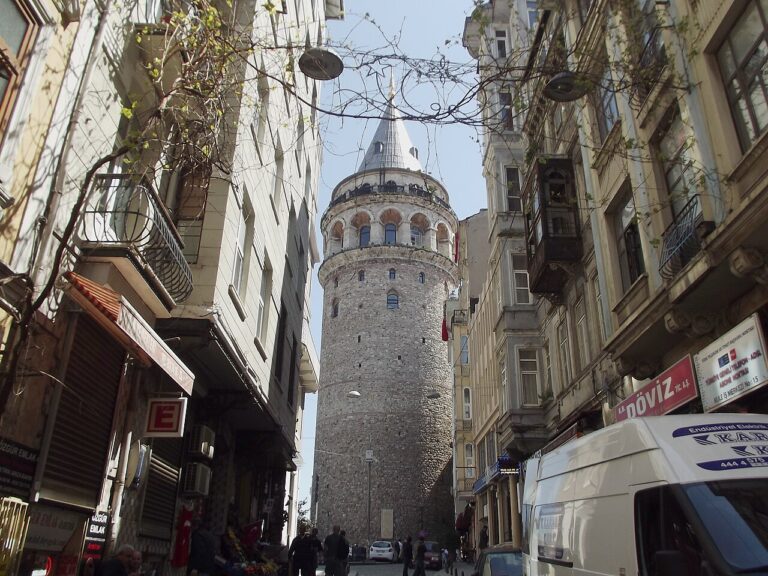
Beyoglu’s history begins with the Genoese — the Italian merchant republic that dominated Mediterranean trade in the thirteenth century. Around 1273, the Genoese established a colony at Galata, across the water from the Byzantine capital, and built it into a walled trading town with its own churches, warehouses, and fortifications. Their great survival is the Galata Tower, built in 1348 as the colony’s watchtower and landmark, its cone rising above the quarter it has watched over for nearly seven centuries.
The colony’s position was the point: the Genoese could trade with the Byzantines on one shore and the wider Mediterranean on the other, and Galata grew rich on the gap between empires. When the Ottomans conquered Constantinople in 1453, the Genoese negotiated terms and kept their quarter — a pattern that would define Beyoglu for centuries: the foreign, the commercial, and the tolerated.
The Pera of the Embassies
In the centuries after the conquest, the district became Pera — the European quarter of the Ottoman capital. The foreign embassies built their palaces along the Grand Rue de Péra (today’s Istiklal Avenue), and the district filled with the merchants, bankers, and missionaries of every trading nation. The nineteenth century was Pera’s golden age: the great hotels rose, the theaters and the opera opened, the arcades and the confectioners arrived, and the district became the most European city in the Ottoman Empire — a place where the telegraph, the tramway, and the fashion of Paris arrived decades before the rest of the empire.
This is the Beyoglu of the old photographs: the gentlemen in frock coats, the tramcars on the avenue, the shop signs in French, the cosmopolitan crowd that made the district the empire’s window to the modern world.
The Tünel and the Modern City
The district’s modernization is written in its transport. In 1875, the Tünel — the second-oldest underground railway in the world, after London’s — began carrying passengers up the hill from Karaköy to Pera, and the little funicular still runs today, a working museum of the district’s modernity. The Galata Bridge was rebuilt and rebuilt, the ferries multiplied, and by the turn of the twentieth century Beyoglu was the city’s showcase: the hotels, the theaters, the nightlife, and the cinemas that arrived with the new century.
The Republic and the Golden Age
When the Republic replaced the empire in 1923, Beyoglu did not lose its role — it doubled down. The district became the capital of Turkish culture: the cinemas, the jazz clubs, the theaters, and the publishing houses that shaped the young Republic’s intellectual life. The 1950s were Beyoglu’s legendary era — the “swinging” Istanbul of the movies, the nightclubs, the cosmopolitan glamour that the older generations still remember with a sigh.
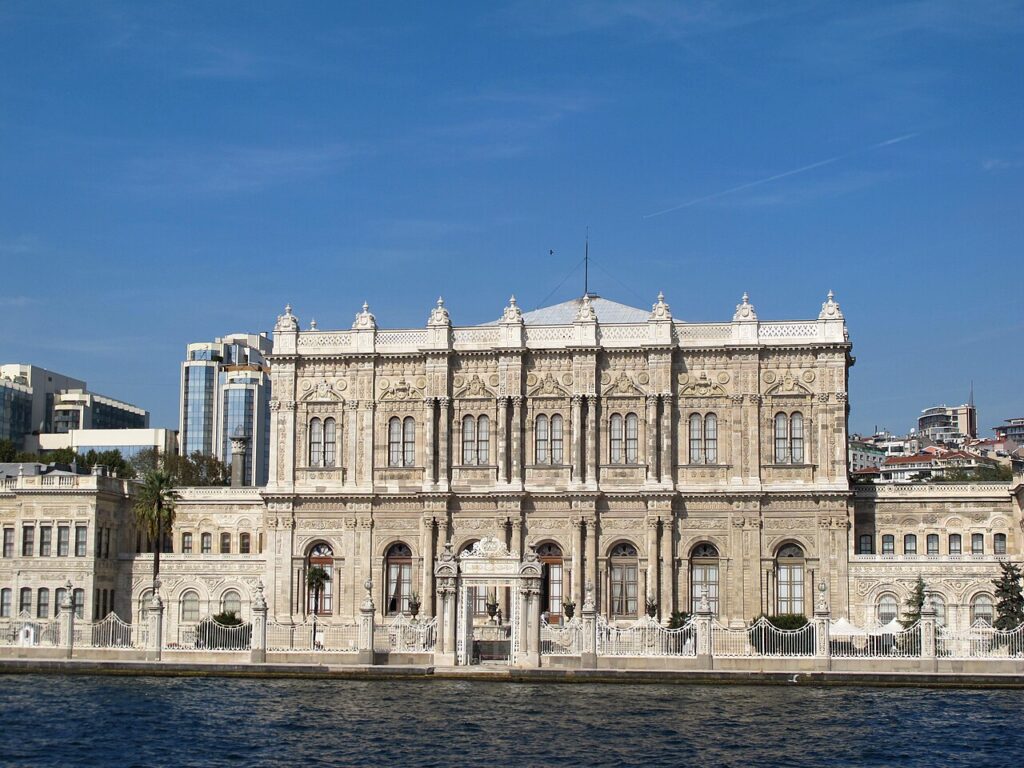
The great Dolmabahçe Palace, at the district’s water’s edge, belongs to this story too: built in the 1850s as the sultans’ modern palace on the Bosphorus, it was where the Republic’s founder, Atatürk, spent his last days and died in 1938 — the building where the old empire’s glamour and the new Republic’s grief met.
The Decline and the Revival
The late twentieth century was hard on Beyoglu. The embassies moved to Ankara, the wealthy moved to the suburbs, and the district slid into the decline that overtook many great city centers — the grand buildings faded, the avenue lost its polish, and the glamour became memory. Then, from the 1990s onward, the revival came: the restoration of the historic buildings, the return of the galleries and the cafes, the new generation of designers and restaurateurs, and the avenue’s rebirth as the city’s most popular street.
The revival was a cultural reclaiming as much as a physical one. Beyoglu became the home of the city’s art scene — the Pera Museum, the Istanbul Modern, the galleries of Karaköy — and the stage for its public life: the protests, the celebrations, the street life that makes the avenue the district’s permanent performance.
The Culture of the District Today
Beyoglu’s culture is the visible argument that Istanbul is a European, cosmopolitan, modern city — and it has been making that argument for three hundred years. The district’s trademarks are all here: the rooftop bars, the meyhane taverns, the bookshops, the record stores, the galleries, the cinema culture, and the crowds that make the avenue the city’s shared living room. The tower watches over it all, and the ferries carry the crowds across the water that has always been the district’s frontier.

The Layers You Can Still See
The history of Beyoglu is not confined to the museums — it is written in the streets, and the walker who knows the layers reads them as they go. The Genoese layer survives in the Galata Tower and in the fragments of the medieval walls, the medieval street pattern of the tower’s hill, and the churches of the Latin community. The embassy layer survives in the palatial facades of the Pera boulevards — the old embassy buildings, some still in diplomatic use, their grand doorways and gardens the ghost of the nineteenth-century quarter. The banking layer survives on Bankalar Caddesi, where the Ottoman empire’s great financial institutions built their marble headquarters, and in the Kamondo Steps, the curved staircase built by the Jewish banking family in the 1880s. And the modern layer is the most visible of all: the 1950s apartment blocks, the cinemas and the music halls of the golden age, and the street art and the galleries of the revival.
The practical version of the history is a walking route: begin at the tower for the medieval layer, descend through the embassy streets of Pera, cross the banking quarter via the Kamondo Steps, and finish on the avenue with the modern city. Each layer explains the one after it, and the district that looks like a single jumble of streets turns out to be a thousand years of the city’s story, layered on the same hillside.
The Culture in the Daily Life
The history of Beyoglu is not only in the buildings — it lives in the daily rituals of the district. The coffeehouse culture that the nineteenth-century Pera inherited from the Ottoman city still runs in the venues of the district: the coffee of the morning, the newspapers, the conversation — the tradition that made the avenue the city’s forum. The meyhane culture is the direct descendant of the taverns that the embassies and the merchants patronized, and the Nevizade tables still run on the same raki, meze, and muhabbet that the nineteenth-century visitors recorded. The music culture — the fasıl of the taverns, the jazz of the postwar clubs, the rock of the modern venues — is the district’s continuous soundtrack, the live rooms of today standing where the golden age’s clubs stood. And the street culture — the avenue’s crowds, its protests, its celebrations — is the living version of the political history that the district has always embodied.
The visitor who experiences the daily Beyoglu — the coffee in the morning, the avenue at noon, the meyhane at night — is experiencing the culture that the buildings only frame. The district’s history is not finished; it is being made on the same streets, by the same rituals, in the same rooms where it was made for the last three centuries. That continuity — the history that is still alive — is the deepest layer of the culture of Beyoglu.

The Takeaway
Beyoglu is the history of Istanbul’s modern century, told in stone: the Genoese tower, the embassy palaces, the 1875 funicular, the palace on the water, and the revival that turned a faded quarter back into the city’s heart. It is the district that made the argument — for three centuries — that Istanbul belongs to the modern world, and it is still making it, every night, on the avenue. Walk it with that story and the streets read like a biography of the city.
Frequently asked questions
How old is Beyoglu?
As a distinct district, about eight hundred years — the Genoese colony at Galata dates to the late thirteenth century. The tower was built in 1348.
Why is Beyoglu different from the old city?
It developed as the foreign and commercial quarter — the embassies, the merchants, the European-style modernization — while the old city remained the imperial and religious center. Beyoglu is the history of Istanbul’s modernity.
What is the oldest building in Beyoglu?
The Galata Tower (1348) is the great survivor; parts of the Genoese walls and the district’s medieval churches also remain.
When was Beyoglu’s golden age?
The nineteenth-century Pera of the embassies and theaters, and again the 1950s of the clubs and the cinemas. The current revival dates from the 1990s.
What should you visit to understand Beyoglu’s history?
The Galata Tower, the Tünel (a working museum of 1875), the Pera Museum’s collections, Dolmabahçe Palace, and the Kamondo Steps and Bankalar Caddesi of the old banking quarter.

All Over Information
The All Over Information editorial team researches and writes practical English-language guides to Turkey. Facts are checked against official and local sources before publication, prices are published as dated ranges rather than quotes, and guides are revised when things change. We accept no sponsored posts, paid placements or paid links.
More guides like this

Beyoglu Airport and Transport Guide
Beyoglu is the best-connected district in Istanbul, and that is one of the quiet reasons so many travelers base themselves here.
Beyoglu in Summer: A Complete Travel Guide
Summer is when Beyoglu shows its full hand.

Nightlife Guide to Beyoglu
" Where the old city rolls up its streets by ten, Beyoglu is just getting started: the avenue crowded until the small…
Beyoglu in Winter: What to Expect
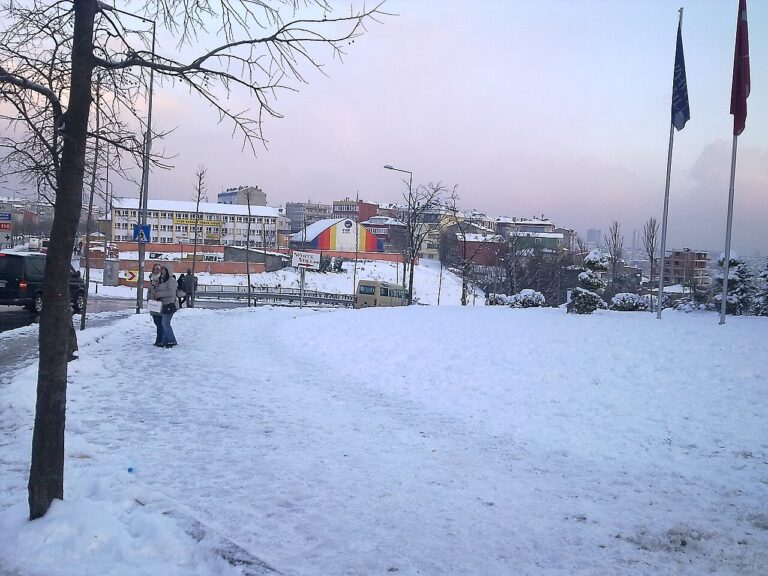
Beyoglu in winter is Istanbul's cosiest district — and its most contradictory.

Photography Spots in Beyoglu You Can’t Miss
Beyoglu is a photographer's playground that hands you the composition before you ask for it: the medieval tower on its hill, the…

Beyoglu on a Budget: Money-Saving Travel Tips
Beyoglu has a reputation as the expensive side of Istanbul, and the reputation is half true: the avenue, the rooftops, and the…