Besiktas sits on the European shore of the Bosphorus, just north of the old city, and it is one of the easiest places in Istanbul to reach from anywhere in the city. The ferries, the trams, the funicular, and the metro all converge on the district, and the approaches themselves are part of the experience — the crossing from the Asian shore, the tram ride along the coast, the descent from the hills. This guide covers every realistic way to reach Besiktas, from wherever you are likely to be staying, with the trade-offs of each spelled out honestly.
The Ferry: The Bosphorus Approach
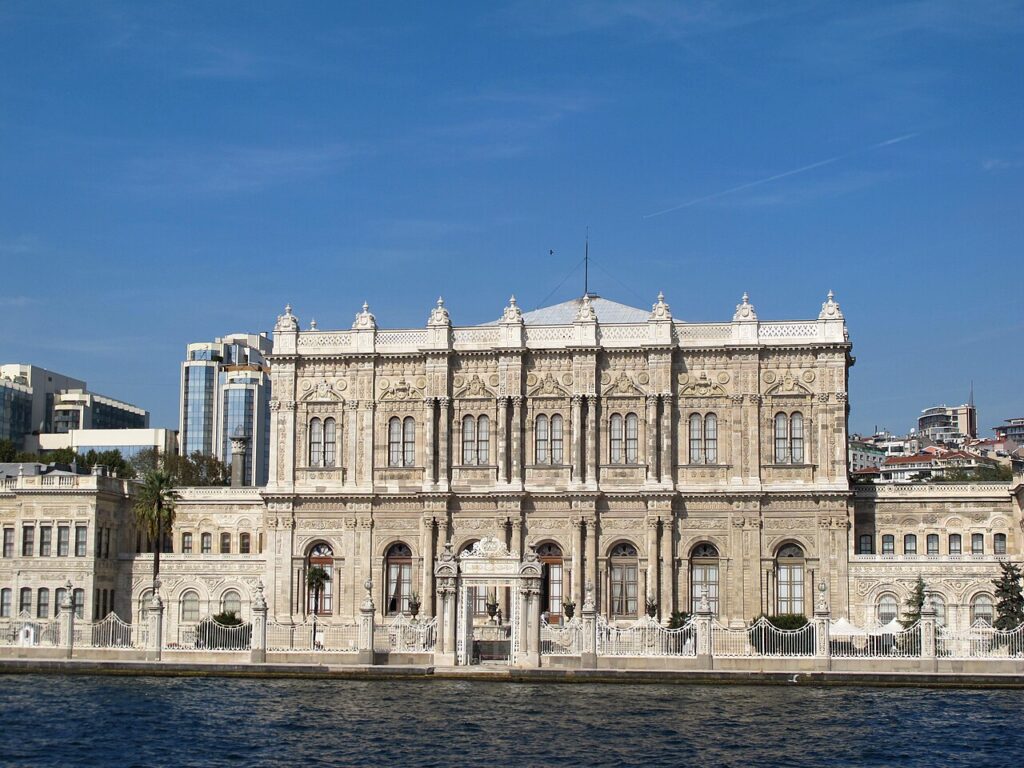
The ferry is the way to arrive in Besiktas, and for many travelers it is the only way that matters. The boats run from the Asian-side piers at Kadikoy and Uskudar — fifteen minutes and ten minutes respectively — and from the piers further up the strait, and they are frequent through the day, cheap, and beautiful. The approach gives you the district’s best portrait: the Dolmabahce Palace and the mosque sliding into view, the stadium on the water, the ferry terminal ahead. The fare is a single transit ride on the Istanbulkart, and the crossing is one of the great cheap views in the world. For the visitor coming from the Asian side — or simply wanting the Bosphorus as the commute — the ferry is the answer.

From the Old City and Sultanahmet
From the tourist heart of the old city, Besiktas is a straight shot up the coast. The T1 tram from Sultanahmet runs north along the Golden Horn shore to the Kabatas terminus — about fifteen minutes — and from Kabatas, the funicular to Taksim or the buses along the coast continue to Besiktas, another ten minutes; the alternative is the short ferry or bus from Eminonu. The whole journey from Sultanahmet is about half an hour and costs a couple of transit fares. The tram ride itself is a sightseeing tour — the old city, the water, the bridges — and the transfer at Kabatas is a five-minute walk. The other option for the time-pressed is the Marmaray rail tunnel: from Sirkeci under the Bosphorus to Uskudar, then the ferry across to Besiktas — faster in bad weather, but the ferry version is the beautiful one.
From Taksim and Beyoglu
Taksim, the heart of the modern city, is Besiktas’s nearest neighbor to the north, and the connections are short and direct. The funicular from Taksim Square descends to Kabatas in a minute or two; from Kabatas, the coastal buses and minibuses run to Besiktas every few minutes, and the walk along the shore is pleasant. Alternatively, the buses and minibuses run directly from Taksim to Besiktas down the hill — about fifteen minutes in light traffic. The walkers’ route is the scenic one: down the hill from Taksim, past the bars and the cafes of the Cihangir and the streets above the shore, to the waterfront. For the Beyoglu visitor, Besiktas is effectively a suburb of the district, connected by a short ride or a longer, prettier walk.

From the Airports
Istanbul’s two airports connect to Besiktas with varying effort. From Istanbul Airport (IST) on the far European side, the honest answer is about an hour to an hour and a half: the M11 metro to Kağıthane, a change to the M7, and a final bus or minibus toward the coast — or the Havabus shuttle services, which run routes through the city. From Sabiha Gökçen (SAW) on the Asian side, the route is the scenic one: the M4 metro to the Kadikoy end, then the ferry across the Bosphorus to Besiktas — about an hour in total, and the ferry crossing turns the airport transfer into a sightseeing ride. Taxis are the fast option from both airports, at the standard city rates. The honest advice: build in the traffic time, and use the ferry for the SAW approach.

From Elsewhere on the European Side
The European-side neighborhoods connect to Besiktas by tram, bus, and ferry. The coastal bus lines run along the Bosphorus shore through the district, serving the villages to the north and the city center to the south. The tram-and-funicular network ties in at Kabatas. And the ferries from the Golden Horn piers — Eminonu and Karakoy — run up to Besiktas throughout the day. The Metrobus, the dedicated bus-rapid-transit line, stops at the Zincirlikuyu station in the hills above, from which the buses and minibuses descend to the coast. For most European-side travelers, the tram and the bus cover the route; the ferry is the bonus.
Getting Around Once You Arrive
Arrival is the easy part; the district rewards a little orientation. From the ferry terminal, almost everything is on foot: the fish market and the center are two minutes, the palace is a ten-minute walk south, the stadium is just north of the center, and the hills behind hold the views. For the villages to the north — Ortakoy, Arnavutkoy, Bebek — the coastal buses and minibuses run constantly, and the promenade is walkable. The Istanbulkart works on all of it. Taxis are plentiful at the terminal and honest enough by city standards, but the ferries, the buses, and the walks cover most visitors’ needs.
The Practical Details
The card. Buy an Istanbulkart at the kiosks near the ferry terminal, the tram stops, or any station, load it with a modest amount, and tap it on every mode of transport — including the ferry. It pays for itself within a few rides and is the only ticket you need. The schedule. The ferries run from early morning to past midnight on the main lines, with the frequencies thinning in the evening and in winter; check the boards at the pier. The rush hour. The 8–10 a.m. and 5–8 p.m. windows bring the commuter crowds to the terminal and the buses — the visitor should either ride with them (it is part of the city) or shift the travel times. The views. The open decks are the prize in good weather; the lower salons are warmer and windproof. And the sunset ferry — any direction — is the district’s daily gift.
The Takeaway
There is no wrong way to reach Besiktas — the ferry is the experience, the tram is the shortcut, the airports connect with varying patience — but there is a right way for a first visit: the ferry, from Kadikoy or Uskudar, on a fine day, on the open deck. Fifteen minutes on the water, the palace and the mosque and the stadium sliding past, and you are at the fish market that anchors the district’s evening life. After that first crossing, you will understand why the Bosphorus is the city’s true street — and why the approach to Besiktas is the prelude to everything good about the neighborhood.
Frequently asked questions
How long is the ferry from Kadikoy to Besiktas?
About fifteen minutes — one of the shortest and most beautiful crossings in Istanbul.
How do I get from Sultanahmet to Besiktas?
The T1 tram to Kabatas, then the coastal buses or a walk north — about half an hour door to door.
How do I get from Istanbul Airport to Besiktas?
The M11 metro, a change to the M7, and a final bus or minibus — roughly an hour to an hour and a half. The Havabus shuttles are the alternative.
How do I get from Sabiha Gokcen to Besiktas?
The M4 metro to the Kadikoy end, then the ferry across — about an hour, with the crossing as the scenic part.
Do the ferries run late?
Yes — past midnight on the main lines in summer, with reduced frequency in the evening and in winter. Check the schedules at the pier.
Is the ferry wheelchair accessible?
The main terminals and most commuter boats are step-free, and the staff assist with boarding. The open decks involve stairs; the lower salons are level access.
Can I take a taxi or a car?
Yes — the roads from the city center and the bridges connect easily, though the coastal traffic can be heavy at rush hour. The ferry is usually faster and always cheaper.
What about the walkers’ route from Taksim?
The descent through Cihangir and the streets above the shore is a scenic 20-minute walk with views — the charming option for the fit and the unhurried.
Is the tram the best option from the old city?
Yes — the T1 runs from Sultanahmet along the Golden Horn to Kabatas in about fifteen minutes, with the water and the bridges as the view, and the transfer to Besiktas is a short bus or walk.
What is the rush-hour advice?
The 8–10 a.m. and 5–8 p.m. windows bring the commuter crowds to the terminal and the buses — ride with them and it is part of the city, or shift the travel times to the shoulder hours.

All Over Information
The All Over Information editorial team researches and writes practical English-language guides to Turkey. Facts are checked against official and local sources before publication, prices are published as dated ranges rather than quotes, and guides are revised when things change. We accept no sponsored posts, paid placements or paid links.
More guides like this

The Best Day Trips from Besiktas
Besiktas sits at the heart of the Bosphorus, which makes it one of the best launch points in Istanbul for day trips.

Best Local Restaurants in Besiktas
Besiktas is the neighborhood where Istanbul eats well without ceremony.

48 Hours in Besiktas: The Perfect Itinerary
Besiktas is the neighborhood that rewards a weekend.
A Solo Traveler’s Guide to Besiktas
Besiktas is one of the best neighborhoods in Istanbul for the solo traveler, and the reasons are specific.

Family-Friendly Activities in Besiktas
Besiktas is the Istanbul neighborhood that families discover and then refuse to leave.

History and Culture of Besiktas
Besiktas is a neighborhood whose history is written on its waterfront.