The Blue Mosque is the last great imperial mosque of the Ottoman classical age, and its history is a story of ambition, legend, and beauty. It was built in the seventeenth century for the young Sultan Ahmed I, who wanted a mosque to rival the greatest building of the Byzantine world, and the result, with its six minarets and its cascade of blue tiles, became the most famous mosque in Istanbul. Its architect was Sedefkâr Mehmed Ağa, the last great pupil of Mimar Sinan, and its construction ran from 1609 to 1616, a remarkably short span for a building of this scale. This guide tells the complete history of the Blue Mosque, from the sultan’s dream to the monument you can visit today.
The Sultan Behind the Mosque
The Blue Mosque is inseparable from the story of Ahmed I, who was still a teenager when the empire’s fate rested on him. Born in 1590, he became sultan in 1603 at thirteen, after the death of his father Mehmed III, during difficult wars with the Habsburgs and the Safavids.
Ahmed I was the first sultan in centuries to build a new imperial mosque in Istanbul, and the decision was a statement. The great mosques of his ancestors stood as monuments to their reigns, and Ahmed chose to leave the same kind of legacy.
The site he chose carried its own symbolism: the mosque would rise facing Hagia Sophia, on ground that had once belonged to the Byzantine imperial palace, answering the old cathedral across the square.
The Controversial Six Minarets
The Blue Mosque’s most famous feature, its six minarets, was also its most controversial. No mosque in Istanbul had ever had six, and the number provoked talk that the sultan had overreached.
The legend says that Ahmed’s architect misunderstood an order for a minaret of gold, altın, as one for six, altı, and built accordingly, a story that is charming and almost certainly invented. The more likely explanation is that the number was a deliberate assertion of the sultan’s power and piety.
The controversy had a solution. The story holds that Ahmed responded by financing a seventh minaret for the great mosque at Mecca, keeping his six and restoring harmony. Whether true or not, the six minarets made the Blue Mosque unique among the imperial mosques of Istanbul.

The Architect: Sedefkâr Mehmed Ağa
Behind the mosque stands one of the great names of Ottoman architecture: Sedefkâr Mehmed Ağa, the student of Mimar Sinan who rose to become chief imperial architect. His master, Sinan, had reshaped the skyline of Istanbul, and Mehmed Ağa inherited that tradition and its ambition.
Mehmed Ağa’s design for the Blue Mosque drew on the lessons of his teacher while adding his own signature. He studied Hagia Sophia and the great mosques of Sinan, and he refined the dome-and-pendentive system into a cascade of domes and half-domes that has a lightness his master’s buildings sometimes lacked.
The result was the last great classical mosque of the empire, built in the style Sinan had perfected but with a delicacy that belongs to Mehmed Ağa alone. When he died, the classical age was effectively complete.
Construction: 1609-1616
The construction of the Blue Mosque was an imperial undertaking on an epic scale. The foundations were laid in 1609, and the mosque was completed in 1616, a pace that required thousands of workers and the personal attention of the sultan, who is said to have worked alongside the builders.
The site required its own engineering. The mosque rose on the slope above the sea, over the ruins of the Byzantine Great Palace, and the foundations had to be built deep and strong. The cost was immense, drawn from the imperial treasury, and the scale was a statement of the empire’s resources.
The completed mosque was inaugurated with prayer in 1617, and the complex around it, the madrasa, the hospital, the baths, the school, and the market, was finished in the years that followed. The sultan who ordered it, however, did not live to see his legacy complete in peace.

The Design and the Blue Tiles
The Blue Mosque’s interior is its glory. More than twenty thousand Iznik tiles line the walls and the galleries, painted in blues, greens, and turquoise, with patterns of flowers and calligraphy that flow across the surfaces like water.
The tiles were the finest product of the Iznik workshops, then at the height of their craft, and the mosque became their greatest showcase. The blue that dominates the decoration, the color that gave the mosque its popular name, is everywhere, in the tiles, in the stained glass of the windows, and in the painted patterns of the dome.
Above, the dome system rises in a series of shells, each supporting the next, to a height of more than forty meters, and the light falls through the windows onto the blue like a sky turned inside out.
The Sultan’s Box and the Imperial Fittings
The Blue Mosque was built for a sultan, and it was fitted for one. On the eastern side of the gallery, the sultan’s box, the hünkâr mahfili, stands raised and screened, and a private ramp was built so he could ride to it on horseback.
The imperial fittings extended to the whole complex: a pulpit of carved marble and ebony, a mihrab framed in stone and tile, and a royal entrance reserved for the sultan alone, while the madrasa, the hospital, and the market served the city and the poor.
The most moving element is the tomb of Ahmed I, completed after his death in 1617 and built into the complex at the edge of the square. The young sultan was buried there, alongside his sons, and the türbe remains a place of quiet pilgrimage, the founder resting beside his great work.

The Death of Ahmed and the Aftermath
Ahmed I died in 1617, a year after the mosque’s completion, at the age of twenty-seven. The sultan who had defied the odds and changed the skyline of Istanbul was buried in the garden of his own mosque, and the building became his monument.
The century that followed was not kind to the dynasty. Ahmed’s sons Osman II and Murat IV both ruled and died young, and both were buried beside their father in the tomb at the Blue Mosque.
Through it all, the mosque endured. It was repaired, maintained, and used without interruption, and the complex grew around it. The building that began as one young sultan’s gamble became, in the centuries after his death, the fixed point of the old city’s skyline.
The Name “Blue Mosque” and European Fascination
The name by which the world knows the mosque, the Blue Mosque, was not its Ottoman name. The Ottomans called it the Sultan Ahmed Mosque, and it still carries that official name today, but European travelers, seeing the flood of blue tile inside, gave it the nickname that stuck.
The fascination was lasting. From the seventeenth century, European visitors wrote about the six minarets and the luminous interior, and the Blue Mosque became, with Hagia Sophia, the image of Istanbul for the Western imagination.
The name is so universal now that even Turkish tourism uses it, and it speaks to the building’s fate: a monument built as an assertion of Ottoman power, adopted by the wider world as a symbol of the city, and loved under a name that no Ottoman would have recognized.

Repairs and the Modern Era
The Blue Mosque has spent its modern centuries in continuous repair, because a building of its scale is never finished. The great nineteenth-century restoration by the Fossati brothers, the architects who also worked on Hagia Sophia, renewed the fabric and the decoration at a time when the empire itself was struggling.
The twentieth century brought the Republic and the modern era of mass tourism. The mosque remained a working place of prayer while becoming one of the most visited monuments in Istanbul, and the authorities balanced both roles,.
In recent decades the restoration has been intensive, with the dome, the tiles, and the stonework receiving careful treatment. The Blue Mosque you see today is the product of that long maintenance.
The Blue Mosque Today
Today the Blue Mosque is an active mosque and one of the great sights of Istanbul, drawing millions of visitors a year. It is free to enter, open to visitors outside the prayer times, and still used for the five daily prayers, as it has been for four centuries.
The visit has its own rhythm. You remove your shoes at the door, cover your shoulders and your head, and step onto the carpet beneath the great dome. The complex around the mosque, the tombs and the market, extends the visit into the square.
The Blue Mosque faces Hagia Sophia across the same square, and the two buildings complete each other’s story. Standing between them, you are at the center of Istanbul’s history, where a teenage sultan’s dream still answers the greatest dome of the ancient world.
The Legacy of the Blue Mosque
The legacy of the Blue Mosque is written across Istanbul. It was the last great mosque of the classical age, the final refinement of the tradition that began with Sinan, and after it the imperial mosques grew more European and less ambitious.
Its influence, however, outlived the classical period. The mosque’s balance of domes, its handling of light, and its use of tile became the image of Ottoman architecture for the world, and its silhouette, with the six minarets against the sky, is one of the most reproduced images of any building on earth.
And the building itself endures as a living place, prayed in daily, repaired faithfully, and visited by the world. The mosque that a teenage sultan built against the advice of his counselors has outlasted the empire, the dynasty, and the controversy, and it stands today exactly as it was meant to stand, as the answer to the ages.
Frequently asked questions
Why is the Blue Mosque called the Blue Mosque?
The name comes from the more than twenty thousand blue Iznik tiles that cover the interior, which European travelers found so striking that they gave the mosque its popular nickname. Its official name is the Sultan Ahmed Mosque, and the building was called that by the Ottomans.
Who built the Blue Mosque and when?
The Blue Mosque was commissioned by Sultan Ahmed I and built between 1609 and 1616 by the architect Sedefkâr Mehmed Ağa, a pupil of the great Mimar Sinan. It was completed in time for prayer in 1617, the year before the sultan’s death at the age of twenty-seven.
Why does the Blue Mosque have six minarets?
The six minarets were a deliberate assertion of the sultan’s power and piety, exceeding every mosque in Istanbul. The legend of an architect mistaking an order for a golden minaret for one for six is almost certainly invented. Ahmed reportedly financed a seventh minaret at Mecca in response to the controversy.

All Over Information
The All Over Information editorial team researches and writes practical English-language guides to Turkey. Facts are checked against official and local sources before publication, prices are published as dated ranges rather than quotes, and guides are revised when things change. We accept no sponsored posts, paid placements or paid links.
More guides like this

The Architecture of Grand Bazaar Explained
The Grand Bazaar is not a building but a city, and its architecture is the architecture of a working commercial world that…
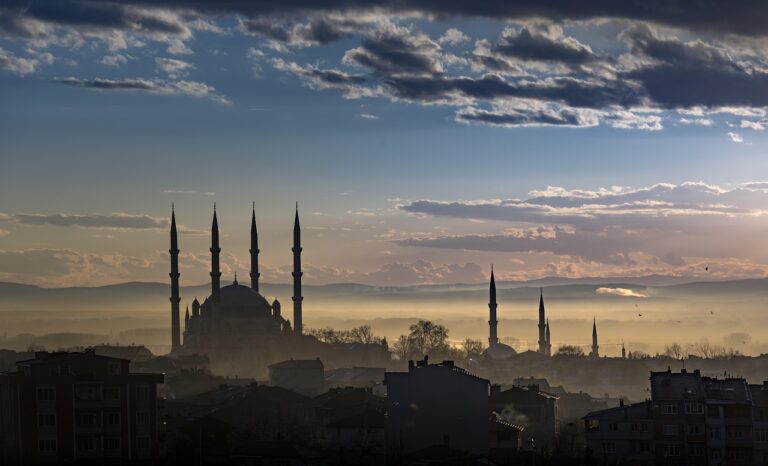
The Complete History of Selimiye Mosque
The Selimiye Mosque in Edirne is the crowning achievement of Ottoman architecture, the building that its own creator, Mimar Sinan, called his…

Best Time to Visit Anitkabir to Avoid Crowds
Anıtkabir — the mausoleum of Atatürk — is the most visited monument of Ankara, and the crowds of the national memorial can…

Visiting Anitkabir: Tickets, Hours, and Tips
Anıtkabir — the mausoleum of Atatürk, the founder of the Turkish Republic — is the essential visit of Ankara, and the practical…
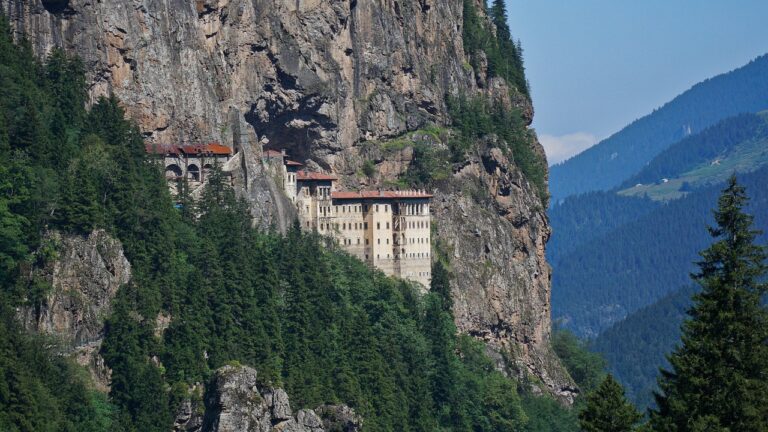
Best Time to Visit Sumela Monastery to Avoid Crowds
Sumela Monastery is one of the most popular sights on Turkey's Black Sea coast, and on a summer day the narrow paths…

Turkey’s UNESCO World Heritage Sites Explained
Turkey is one of the great heritage countries of the world, and its UNESCO World Heritage Sites tell the story of ten…