Every great city has its essential experiences, and for Istanbul, few are more essential than a visit to the Spice Bazaar. It is not the largest market in the city, nor the most ancient, but it is the most vivid, a compact wonder of color, scent, and taste that has stood on the waterfront of Eminönü since the 1660s. In a single visit you can sample the sweets that have delighted the city for centuries, watch the merchants weigh out spices from every corner of the world, and stand in a building that still works exactly as it was built to work. Here is why the Spice Bazaar deserves a place on your bucket list.
The Scent of a Thousand Journeys
The first thing that hits you at the Spice Bazaar is the smell. Long before you reach the stalls, the air begins to carry the warmth of cinnamon, the sharpness of pepper, the sweetness of dried fruit, and the earthiness of cumin, and by the time you step through the gate, you are walking inside a cloud of fragrance.
The scent is the market’s signature, and it is the same signature that has welcomed travelers for more than three and a half centuries. In an age before refrigeration and global shipping, the spice trade was the trade of the world, and this market was one of its great stages.
The smell is also a kind of time travel. Close your eyes for a moment and the centuries fall away: the same aromas filled these vaults when the Ottoman ships unloaded their cargoes at the quays outside, and the market still carries the memory of that long trade in every breath.
A Feast for the Eyes
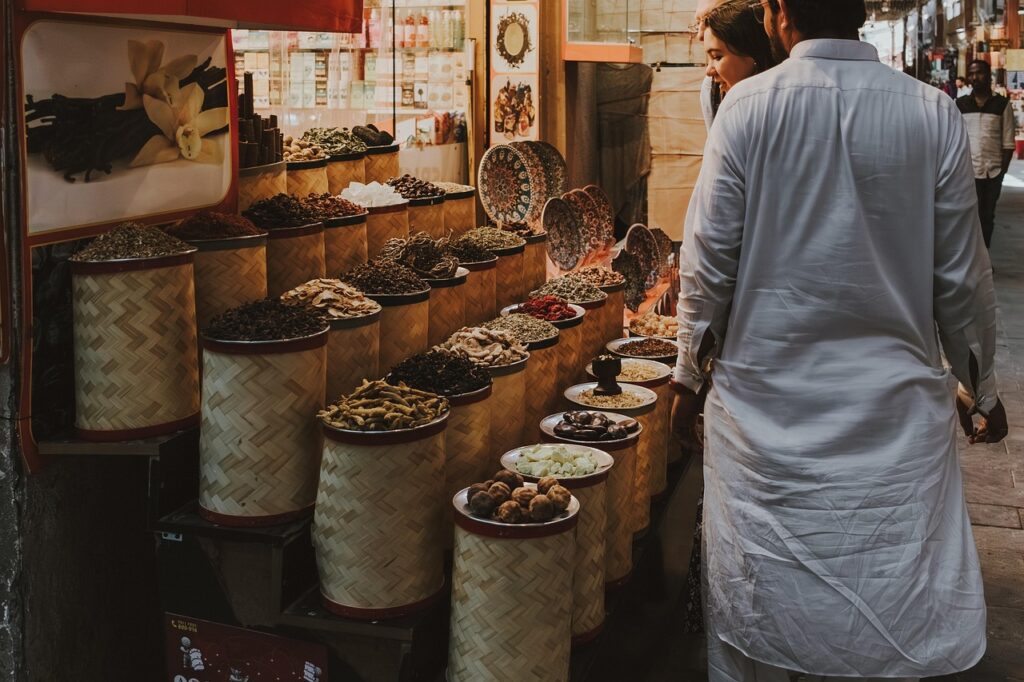
If the nose is the first sense the bazaar captures, the eyes are the second. The stalls are arranged like a painter’s palette, pyramids of red paprika, yellow turmeric, green herbs, and black pepper, glowing under the vaults in colors that seem almost unnatural.
The sweets are the showstoppers. Turkish delight in every shade, studded with pistachio and rose petal, sits in gleaming trays, and the baklava is stacked in golden towers that catch the light. It is a display built for delight, and it photographs magnificently.
The visual richness of the bazaar is one of its great gifts. Unlike the huge, chaotic Grand Bazaar, the Spice Bazaar concentrates its wonders into a small, walkable space, so that the whole market reads as one continuous still life, dense enough to fill a camera roll in minutes.
The Sweet Heart of Istanbul
No visit to the Spice Bazaar is complete without surrendering to its sweets, and this is where the market earns its place on any food lover’s bucket list. The Turkish delight here, soft, fragrant, and freshly made, is a world apart from the packaged boxes you find elsewhere.
The baklava deserves equal attention. The layers of filo, butter, and pistachio, soaked in syrup, are a science and an art, and the bazaar’s pastry stalls have been perfecting their craft for generations. Watch the trays being carried through the lanes and you will understand the obsession.
The sweet tradition of the bazaar is deeply rooted in Turkish culture. Sweets are the currency of hospitality, of celebration, and of diplomacy, and the merchants of Eminönü are its great ambassadors. A box of Turkish delight from the Spice Bazaar is not a souvenir; it is a piece of Turkish culture, wrapped and tied.
Spices, Teas, and Remedies from Every Corner
Beyond the sweets, the Spice Bazaar is a university of the world’s flavors. The spice stalls sell pepper and saffron, sumac and zaatar, dried mint and chili, and the herbalists offer teas and remedies whose recipes reach back through centuries of tradition.
The teas alone are worth the visit. Apple tea, sage, linden, rosehip, and a hundred blends fill the stalls, and the ritual of Turkish tea, small glasses, strong brew, endless refills, is waiting for you in the neighborhood beyond the market.
The remedies tell the deeper story. The traditional apothecaries of the bazaar still compound their mixtures of herbs and roots, and their knowledge is the living descendant of the medicine of the Ottoman world. Browsing the herbal stalls, you are reading a pharmacopoeia that is older than the market itself.

History in Every Vault
The Spice Bazaar is not just a market; it is a monument, and its history surrounds you as you shop. The vaulted halls were built in the 1660s as part of the Yeni Mosque complex, and the market and the mosque still stand together as a single grand ensemble.
The building is one of the finest examples of Ottoman market architecture in existence. Its L-shaped plan, its domed vestibules, and its vaulted galleries have survived the centuries in remarkably complete form, and walking through it is walking through a piece of the seventeenth century.
The history is alive in the details. The gates, the inscriptions, and the stonework all carry the marks of the builders, and the market’s long life, through empires, fires, and restorations, is written into its fabric. You can shop in a masterpiece, and few experiences offer that combination.
The Perfect First Market
For travelers new to Istanbul, the Spice Bazaar is the perfect introduction to the city’s market culture, and that is one of its quiet virtues. It is compact, easy to navigate, and forgiving: you cannot get lost, and the whole market rewards a casual hour with rich experience.
The pace is gentler than the Grand Bazaar. The merchants are welcoming, the scale is human, and the pressure to buy is lighter, which makes it an ideal place to learn the rituals of Turkish shopping, the tasting, the bargaining, and the tea, without feeling overwhelmed.
The market is also a perfect warm-up for the bigger bazaars. Once you have tasted Turkish delight in Eminönü, practiced your bargaining, and learned to judge a stall, the Grand Bazaar becomes far less intimidating, and your whole market experience of Istanbul is enriched.

The Waterfront Setting
The setting of the Spice Bazaar is a bucket-list experience in its own right. The market stands on the shore of the Golden Horn, with the Galata Bridge at its feet and the ferries calling at the docks, and the whole waterfront is one of the great public scenes of Istanbul.
The view is unforgettable. From the square beside the bazaar, you look across the water to Galata and the modern city, while the seagulls wheel overhead and the ferry horns sound, and the mosque’s domes rise beside you in the foreground.
The location turns a market visit into a full waterfront experience. Arrive early, shop in the bazaar, then cross the bridge, ride a ferry, or sit with a tea and watch the city move. The Spice Bazaar is the gateway to the most animated corner of Istanbul.
Shopping with a Story
Everything you buy at the Spice Bazaar carries a story, and that is what makes its shopping so different from a mall. The saffron has crossed continents to reach its stall, the honey comes from the mountains of the Black Sea, and the Turkish delight is made by families who have worked the craft for generations.
The stories are told with generosity. The merchants of the bazaar are narrators, and they will happily explain the origin of their goods, the way to use them, and the traditions behind them. Shopping here is a conversation, not a transaction.
Bringing the goods home extends the story. The jar of saffron and the box of delight are not simply purchases; they are the sensory memory of Istanbul, and every time you open them, the vaults of the bazaar and the voices of its merchants come back to you.

An Easy Add-On to Any Itinerary
The Spice Bazaar fits into almost any Istanbul itinerary, and that practicality is a reason it should be on yours. It is easy to reach, free to enter, and quick to visit, which makes it a perfect addition to a day built around the old city’s monuments.
The market combines beautifully with the great sights. It is a short walk or tram ride from Sultanahmet, and its waterfront location pairs naturally with a Bosphorus cruise, a walk across the Galata Bridge, or an afternoon in the neighborhoods across the Golden Horn.
The efficiency is a blessing for busy travelers. In an hour, you can see a seventeenth-century monument, taste the classics of Turkish cuisine, buy your souvenirs, and photograph one of the most colorful corners of the city. Few attractions in the world pack so much into so little time.
An Experience for All the Senses
In the end, the Spice Bazaar earns its bucket-list place because it engages every sense at once. The sight of the colored pyramids, the scent of the spices, the taste of the samples, the sound of the bargaining, and the touch of the velvet-soft Turkish delight: the market is a total experience.
That sensory richness is rare in the modern world. Most of what we consume arrives packaged and disembodied, but the bazaar confronts you with the raw materials of flavor and fragrance, and the encounter is thrilling precisely because it is unmediated.
A visit to the Spice Bazaar is more than a stop on an itinerary; it is a memory that stays with you, called up by a scent or a taste for years afterward. If you want to feel Istanbul rather than merely see it, this is the place. It belongs on your bucket list.
Frequently asked questions
How long should I spend at the Spice Bazaar?
An hour is enough for a relaxed visit, though most travelers stay longer, drawn in by the tasting and the conversation. Combine it with the Yeni Mosque and the waterfront, and the market becomes the centerpiece of a wonderful half day.
What should I buy at the Spice Bazaar?
The classics are Turkish delight, baklava, spices, and teas. Taste and compare before you buy, and choose stalls that are busy with locals. Watch your purchases being weighed and wrapped, and you will go home with the best the market offers.
Is the Spice Bazaar worth visiting if I am not a shopper?
Absolutely. The market is a free, living monument of the seventeenth century, a visual and sensory spectacle, and a window into Istanbul’s daily life. You can walk its lanes, photograph the stalls, and taste the samples without buying anything at all.

All Over Information
The All Over Information editorial team researches and writes practical English-language guides to Turkey. Facts are checked against official and local sources before publication, prices are published as dated ranges rather than quotes, and guides are revised when things change. We accept no sponsored posts, paid placements or paid links.
More guides like this

Visiting Spice Bazaar: Tickets, Hours, and Tips
The Spice Bazaar of Eminönü is one of the most accessible and rewarding sights in Istanbul, a compact, colorful market that you…

Chora Church Through the Centuries
The Chora Church — the Kariye — has stood through the deepest history of Istanbul, and its story runs from the early…

Visiting Rumeli Fortress: Tickets, Hours, and Tips
The Rumeli Fortress is one of the most impressive sights on the Bosphorus, a vast medieval castle of towers and walls that…
Seljuk Architecture and Its Distinct Style
When you travel across central Turkey, you will notice buildings that look unlike anything else you have seen: vast stone portals carved…
Visiting Basilica Cistern: Tickets, Hours, and Tips
Descending into the Basilica Cistern is one of the most atmospheric experiences Istanbul offers, a step from the noise of the streets…

Best Time to Visit Spice Bazaar to Avoid Crowds
The Spice Bazaar is one of the most popular destinations in Istanbul, and at its busiest moments its narrow galleries are packed…