If you sit down to a Turkish breakfast expecting a quick bowl of cereal, you are in for a surprise. The table arrives covered in small plates: cheeses, olives, jams, honey, eggs, pastries, and a teapot that never empties. Locals do not rush this meal, and neither should you. Breakfast in Turkey is a social ritual built for conversation, and a full spread can happily absorb two hours of a morning. This guide unpacks the traditions behind the table and the etiquette that lets you join in like a local.
The Table That Covers Everything
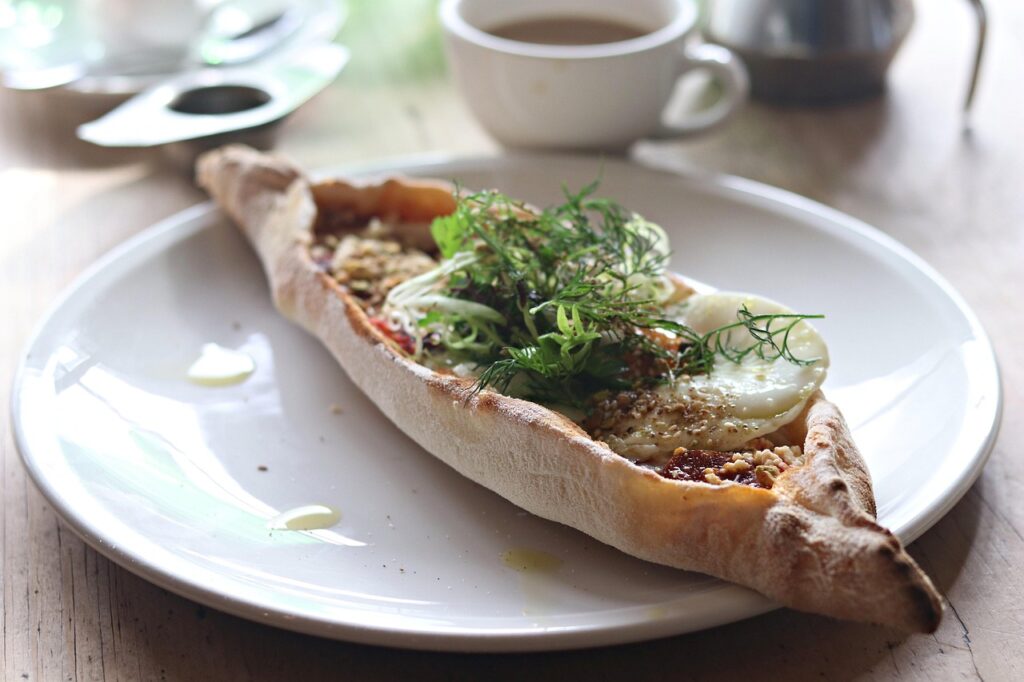
The classic Turkish breakfast is built around small plates rather than one main dish. A typical table includes white cheese and aged kashar, black and green olives, honey with clotted cream, jams, and fresh cucumber and tomato. Alongside sit eggs, pastries such as borek, and the sesame-crusted bread rings called simit. At the center is fresh bread, torn by hand as the meal progresses.
Dishes arrive over time, and the table gradually fills as the kitchen sends out more. Nothing is portioned for one person; everything is shared, and empty plates are replaced before you have to ask. This abundance is deliberate and carries over to cafes and restaurants.
The result is a meal that reads like a buffet but behaves like a family dinner. You pick, taste, and talk, moving from cheese to jam to egg with no sense of courses, which is the first reason breakfast takes hours.
The Unstoppable Teapot
Tea is the true engine of the Turkish breakfast. Black tea brewed strong is served in small tulip-shaped glasses, usually with sugar but rarely with milk. The pot is a double-decker arrangement, strong tea above and hot water below, so each glass can be adjusted to taste. The server keeps the glasses refilled without being asked.
Tea does more than wash down the food; it paces the meal. Each glass lasts through small sips and conversation, and the refill signals that talking continues. The teapot structures the morning. You are not finished until the tea runs its course, and with a pot that keeps being refilled, that takes a long time.
Coffee belongs to the end of the meal; it is tea that accompanies the whole spread. The tea is not a side drink but the measure of the meal itself. When the tea stops, the breakfast is over.
Why It Takes Hours: The Social Logic
The length of the Turkish breakfast is not an accident; it is the point. The meal exists to hold people together, and its structure prevents anyone from rushing. Because the dishes arrive gradually, the table never feels finished. Because the tea keeps flowing, there is always a reason to stay. And because everything is shared, no one eats alone.
The breakfast table is where family news is exchanged, friends catch up, and plans are made. On weekends especially, the meal becomes a standing appointment. Busy people treat the slow breakfast as a deliberate luxury, a way of saying that conversation matters more than the schedule.
For visitors, the lesson is simple: do not fight the pace. If you try to eat a full Turkish breakfast quickly, you will miss the point. Order the spread, pour the tea, and let the morning expand to fit it. The hours disappear because the table makes time feel generous.
The Geography of Breakfast
Breakfast changes as you travel across Turkey. Along the Aegean and Mediterranean coasts, the spread leans on herbs and greens: wild thyme, purslane, and mountain herbs beside the cheese. The Black Sea region brings cornbread and a dairy wealth that reflects its pasturelands. In the southeast, breakfasts grow spicier, with regional pastries and dried meat.
In the big cities, the classic Istanbul table adds everything at once: coastal greens, central Anatolian cheeses, and the bakeries’ simit and borek. Central Anatolia offers hearty village-style spreads built around eggs, cheese, and honey from the flowering highlands.
What stays constant is the structure: shared plates, abundant tea, and bread at the center. Order the same breakfast in Izmir, Trabzon, Gaziantep, and Istanbul, and you will taste four different tables.

Weekend Breakfast: A National Institution
The weekend breakfast is one of Turkey’s great social institutions. On Saturday and Sunday mornings, families and friends gather at breakfast halls and cafes that specialize in the long meal. These venues often serve breakfast until the early afternoon.
The weekend version is bigger than the weekday one. A weekday breakfast might be modest at home; the weekend version is a celebration, with more cheeses, more jams, wider pastry trays, and hot dishes cooked to order. It is not unusual for such a breakfast to stretch past noon.
For visitors, the weekend breakfast is the best chance to see the culture in action. Choose a place popular with locals, go hungry, and expect noise: families laughing, children running between tables, tea glasses clinking.
Menemen and the Hot Corner
Not everything on the Turkish breakfast table is cold. The most famous hot dish is menemen: eggs scrambled with tomatoes and green peppers, often with a little cheese folded in at the end. Menemen is cooked to order and arrives in a small copper pan, still sizzling, to be eaten with bread straight from the pan.
Other hot items vary by region and cafe. Sujuk and eggs is a favorite: spicy dried sausage fried in butter, with eggs broken over the top. Pastries such as borek, flaky layers filled with cheese, potato, or meat, may come warm from the oven.
The hot corner changes the rhythm of the meal. While the cold plates are steady, the hot dishes arrive as moments of focus: the pan of menemen, the plate of borek, the sizzling sausage, each one renewing the table’s energy.
Bread, Cheese, and the Dairy Corner
Bread and dairy form the quiet backbone of the Turkish breakfast. Fresh bread is expected at every table, whether the round loaves of a village bakery or the sesame simit of the city street. The bread is not buttered in advance; it is torn and used to scoop up cheese, dip into eggs, or mop up the last of the menemen.
The dairy corner shows real depth. White cheese is the anchor, a salty, crumbly cheese that varies from mild to sharp. Aged kashar is a firmer yellow cheese with a stronger flavor. Kaymak, the thick clotted cream, is a luxury paired with honey and spread on bread.
Yogurt appears too, sometimes plain, sometimes mixed with herbs. The dairy selection is a map of the country’s pasturelands: the cheeses of the Aegean, the cream of the Black Sea highlands, the yogurts of central Anatolia.
The Village Breakfast
The most memorable Turkish breakfasts are often the village ones. In the countryside, breakfast is built from what is produced nearby: eggs from the coop, cheese from the local dairy, honey from the region’s hives, olives from the family grove, and bread from the village oven.
Village breakfasts tend to be served in the open air, in a garden, a courtyard, or under a grapevine. The pace is even slower than in the city, because village life has its own clock. Neighbors may stop by, conversation extends the meal, and the food keeps coming.
Many rural regions now serve village breakfasts to visitors, especially in the Aegean. The format is the same, shared plates, endless tea, torn bread, but the intimacy is different.

Etiquette: How to Join In
Joining in is easier than it looks. At a cafe, order kahvalti, the word simply means breakfast, and the full spread will appear. You can also order menemen or simit for a lighter start; sharing is the point.
A few habits will help you fit in. Drink the tea the way you like it, but try it plain or lightly sweetened first. Use the bread to eat with rather than reaching for a fork at every moment. Do not be in a hurry to leave; the bill comes when you ask for it, and lingering is expected.
Above all, bring your appetite and your patience. The breakfast is a lesson in slowing down, and the culture rewards those who accept its rhythm. If you leave having eaten less than you planned but talked more than you thought you would, you have understood the tradition.
Making It Yours
You do not have to wait for an invitation to experience Turkish breakfast properly. Seek out a neighborhood breakfast hall rather than a hotel buffet, go early, and order the local spread. On a market day, buy fresh simit, white cheese, olives, and tomatoes, and assemble your own table by a park or a window overlooking the water.
Traveling between regions, let breakfast become part of your itinerary. The coastal herb breakfasts, the southeastern feasts, the Black Sea dairy spreads, and the village garden tables all belong on a food lover’s list. Each one teaches you something about the place you are visiting.
The reason the Turkish breakfast takes hours is that it was never meant to be quick. It is a standing argument for the slow life, made with cheese, olives, and an unstoppable pot of tea. Give it the morning it asks for, and it will give you a memory of Turkey that no monument can match.
Frequently asked questions
Is Turkish breakfast really eaten every day?
Yes, in some form. On weekdays, families often eat a lighter breakfast at home: bread, cheese, olives, eggs, and tea. The full spread with dozens of small plates is typically reserved for the weekend, when families gather at home or at a breakfast hall. Either way, tea is almost always present, and breakfast remains the day’s most social meal.
What is the most important part of a Turkish breakfast?
The tea is often called the most essential element, since it accompanies the whole meal and keeps the table going. But the identity of the spread rests on its shared small plates: white cheese, olives, honey with kaymak, eggs, fresh bread, and seasonal additions. The combination, rather than any single dish, defines the Turkish breakfast table.
How can a visitor experience a Turkish breakfast like a local?
Find a neighborhood breakfast place popular with residents rather than a hotel buffet, and go on a weekend morning. Order kahvalti and let the spread arrive in waves, drink your tea slowly, and take your time. Bring conversation and curiosity, ask what is local, and do not rush to pay. Lingering is the point.

All Over Information
The All Over Information editorial team researches and writes practical English-language guides to Turkey. Facts are checked against official and local sources before publication, prices are published as dated ranges rather than quotes, and guides are revised when things change. We accept no sponsored posts, paid placements or paid links.
More guides like this

Turkey’s Geography: Mountains, Rivers, and Plateaus
Turkey is a geography lesson in a single country.

Turkish Meze Platters: A Taste of Turkish Culture
The meze platter is where Turkish culture sits down at the table. It is a spread of small dishes that demands sharing,…

Stuffed Grape Leaves (Dolma) Vs. International Variations: What Makes It Turkish
The stuffed grape leaf belongs to a wide international family: the Balkans, the Middle East, the Caucasus, and the Mediterranean all roll…

How to Make Authentic Hunkar Begendi at Home
Hunkar begendi, the sultan's favorite, may sound like a palace-only dish, but it is built from simple ingredients and straightforward techniques that…

Doner Kebab: A Taste of Turkish Culture
Doner kebab is not just a food in Turkey; it is an institution, a daily ritual, and a point of pride.

Where to Find the Best Kunefe in Turkey
Kunefe is made all over Turkey, but it is not made equally well everywhere. The dish belongs to the southeast, and the…