Dining in Turkey is about far more than the food. Meals are social events, built on generosity, sharing, and hospitality, and the rules around them reflect that spirit. Understanding Turkish restaurant etiquette will help you feel comfortable, avoid small missteps, and enjoy the warmth of Turkish dining culture. The good news is that the rules are gentle and forgiving; Turks are delighted when visitors make an effort. This guide covers the essential etiquette of eating out in Turkey, from the moment you walk in to the final cup of tea.
Arriving and Being Seated
When you enter a Turkish restaurant, you will usually be greeted warmly and shown to a table. In casual lokantas, you may simply pick a spot yourself. In more formal places, the staff will guide you. A smile and a greeting like “merhaba” set a friendly tone from the start.
Seating customs vary by region and venue. In traditional settings, the most honored guest sits farthest from the door, and the host arranges the order. In restaurants, this usually matters less, but showing deference to elders or guests of honor is always appreciated.
Do not be surprised if the owner or a waiter comes to chat. Turkish hospitality treats customers as guests, and a brief conversation about where you are from is completely normal. Answer warmly, and you will be treated with extra care for the rest of your meal.
The Meaning of Meze
Meze, the small plates served before the main course, are central to Turkish dining. A meze table may include yogurt dips, stuffed vine leaves, eggplant preparations, and fresh salads, all meant to be shared. In a meyhane, the meze spread can take over the table.
The custom is to order several meze and share them, not to keep one plate to yourself. This sharing is the heart of Turkish dining etiquette. Serve yourself from the shared plates, and do not be shy about trying everything, since generosity is the norm.
In some restaurants, the waiter brings a tray of meze for you to choose from. Point at what appeals to you, and it will be brought to the table. If you are unsure, ask for a recommendation; Turks love guiding newcomers through their cuisine.

Bread on the Table
Bread arrives with nearly every Turkish meal, usually before you order. It is free in most restaurants and refilled without asking. The bread is meant to be torn, not cut, and it accompanies soups, meze, and main courses alike.
Turkish bread culture has a strong sense of respect. Bread is never wasted, and dropping it on the floor is considered unfortunate. If you leave bread on your plate, it is normal to take it home or leave it for the staff; do not feel obligated to eat every piece.
Because bread is central, it is also a signal of hospitality. A table without bread feels incomplete to Turkish diners. Accept the bread, tear off pieces as you eat, and you will be following local custom without even thinking about it.
Sharing the Main Course
Main courses in Turkey are often designed for sharing. Grills arrive on large platters, and stews are served in pots for the whole table. Even when everyone orders their own dish, tasting from each other’s plates is normal and friendly.
If you are a guest, the host may serve you first, selecting the best pieces and placing them on your plate. This is a sign of respect, and you should accept graciously. Offering food to others is equally appreciated, so pass the platter before helping yourself.
When sharing, pace yourself. Turkish meals are long and leisurely, and there is usually more food coming. The conversation matters as much as the eating, and rushing through a meal is seen as missing the point. It is also polite to compliment the food during the meal; a simple remark about how delicious something is will please your hosts and the kitchen alike.
The Rhythm of the Meal
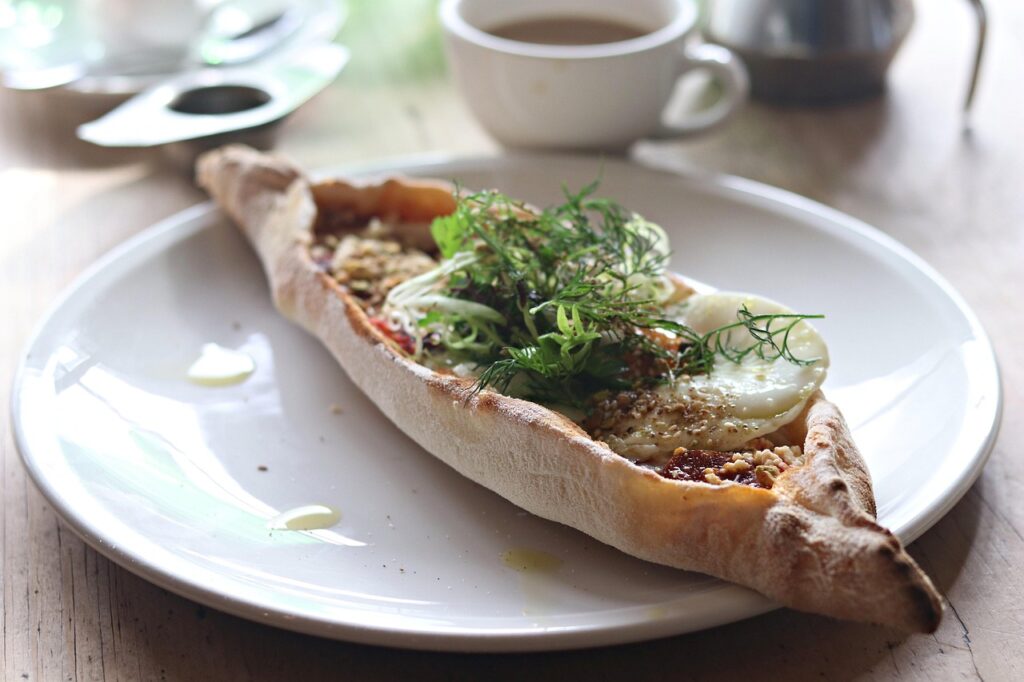
Turkish meals follow a relaxed rhythm. Appetizers are followed by the main course, and the table stays full of plates, bread, and conversation. Nobody hurries you, and lingering after the meal is completely normal. In many places, the table is yours for the evening.
After the main course, tea is often served, sometimes without your asking. In restaurants, this tea may be on the house, especially in the east of the country. Accept it, sip it slowly, and let the meal come to a natural close. The tea signals that you are welcome to stay, and it is the traditional way to finish a meal in Turkey.
The end of a Turkish meal is rarely abrupt. There is talk, tea, perhaps a dessert, and a gradual winding down. The bill is requested when you are ready, not pressed upon you. Enjoy the pace, and your dining experience will feel effortless.
Etiquette in a Meyhane
The meyhane is the traditional Turkish tavern, where meze, fish, and rakı flow late into the night. The etiquette here is its own world, with a strong sense of ceremony. The meze selection is an event, and the table fills with small plates as the evening progresses. Even the seating has meaning; the most honored guest takes the seat with the best view of the room, and everyone waits for the eldest diner to start the meal before reaching for the bread.
Rakı, the anise-flavored spirit, is usually poured and mixed with water, turning milky white. It is sipped slowly alongside food, never gulped. The meyhane is about conversation, and the meal stretches for hours as the night deepens.
In a meyhane, sharing is absolute. Dishes are passed, glasses are raised, and strangers at nearby tables may even toast yours. Joining the spirit of the place, cheerful and generous, is the best etiquette you can practice.

What to Wear
Turkish restaurants range from casual lokantas to elegant fine dining, and dress codes follow the venue. For most restaurants, neat casual clothing is perfect. For upscale places in Istanbul, smart casual is expected, and some may appreciate a jacket for men. When in doubt, it is better to dress slightly smarter than necessary, since Turks appreciate guests who take the occasion seriously.
Mosques and religious sites have stricter dress codes, but restaurants are generally relaxed. The main thing is to feel comfortable, since the food and company matter more than fashion. If you plan a special evening, dress up a little; Turks appreciate effort.
In summer, the heat makes light clothing essential, while winter evenings call for layers. Whatever you wear, be ready for warm hospitality. The staff’s attention to your comfort is part of the experience.
Paying the Bill
In Turkey, the bill is usually brought only after you ask for it. Saying “hesap lütfen” signals that you are ready. Paying at the table is normal, and cards are widely accepted, though cash remains useful for small venues.
Who pays is a cultural question. Among friends, there is often a gentle competition to pay, and the one who insists most wins. Among guests, the host typically pays and expects no argument. As a visitor, offering to pay or to share is polite, but accepting the host’s insistence is the graceful move.
Tipping is appreciated in restaurants, but the amount is flexible. Service charges may be included in some venues, so check the bill before adding anything. A small tip for good service is the norm, and it is always received with thanks.

Special Diets and Allergies
Turkish restaurants are generally accommodating of dietary needs. Vegetarian options abound, from meze to stuffed vegetables, and fish restaurants are common. Vegans may need to ask for adjustments, since yogurt and butter appear in many dishes.
If you have allergies, state them clearly and early. Saying “fıstık alerjim var” for a nut allergy or explaining in English will help the staff guide you. Most kitchens are willing to adapt dishes, especially for guests.
Do not be shy about asking what is in a dish. Turkish cooks are proud of their ingredients and happy to explain. A few questions at the start of the meal prevent surprises and open the door to better recommendations. Many restaurants will also bring a small taste for you to try before you commit, which is a lovely way to discover new flavors.
Common Mistakes to Avoid
The most common visitor mistakes are small: stirring Turkish coffee, cutting bread with a knife, or ordering sweet coffee and asking for sugar. None are serious, and Turks are forgiving. Still, a little awareness goes a long way.
Another habit to avoid is refusing offered food too firmly. In Turkey, offering food is a sign of friendship, and repeated refusals can feel dismissive. Accept a little, even if you are full, and you honor the host’s hospitality.
Finally, do not rush the meal or leave immediately after eating. The conversation, tea, and lingering are part of the experience. If you have to leave early, explain politely; your hosts will understand, as long as you show appreciation.
Frequently asked questions
Is bread free in Turkish restaurants?
In most restaurants, yes, and it is refilled without asking. Bread accompanies every meal and is meant to be torn, not cut. If you do not eat it all, it is fine to leave it; the staff will handle it.
Should I tip in Turkish restaurants?
Tipping is appreciated but not mandatory. A small tip for good service is the norm, and some venues add a service charge to the bill, so check before adding more. Rounding up the bill is a simple, common way to tip.
Is it rude to ask for the bill right after eating?
It is a little abrupt by Turkish standards. Meals are meant to be leisurely, and tea or conversation after the main course is normal. When you are ready, simply say “hesap lütfen,” and the staff will bring the bill without pressure.

All Over Information
The All Over Information editorial team researches and writes practical English-language guides to Turkey. Facts are checked against official and local sources before publication, prices are published as dated ranges rather than quotes, and guides are revised when things change. We accept no sponsored posts, paid placements or paid links.
More guides like this

Respect for Elders in Turkish Culture Explained for Foreigners
If you travel in Turkey, you will quickly notice that older people are treated with a courtesy that may be stronger than…

Understanding Gift-Giving Customs in Turkey
Gift-giving in Turkey is not an occasional formality; it is a living language of relationships, gratitude, and respect that you will encounter…
The Symbolism of the Evil Eye (Nazar Boncugu)
The nazar boncugu, the blue glass bead with its concentric circles, is the most recognizable symbol of Turkey.

A Deep Dive into Religious Diversity in Turkey
The religious diversity of Turkey is the product of ten thousand years of history, a palimpsest of faiths inscribed on the same…

Turkish Hamam (bath) Rituals Explained for Foreigners
As a visitor, walking into a Turkish hamam for the first time can feel both exciting and intimidating.

A Deep Dive into Modern Turkish Pop Culture
Modern Turkish pop culture is one of the world's most successful entertainment industries, yet its history and machinery are little known outside…