Summer is Balat’s liveliest season — the long days, the full streets, the colors at their brightest under the high sun, the cafes spilling onto the lanes and the waterfront filling with the evening crowds. The day-trippers come for the famous facades; the residents live the quarter’s real rhythm; and the Golden Horn does the cooling. This guide covers the complete summer experience of Balat — the weather, the rhythms, the food, and the hours of the quarter’s peak season.
The Summer Climate: The Heat and the Hill
Istanbul’s summer is hot and dry — the afternoons in the high twenties and the thirties, the sun strong, the humidity low by the standards of the region. Balat, on the hillside above the Golden Horn, catches the breeze off the water, and the evenings cool noticeably — the quarter’s nights are the season’s secret, pleasant and fresh after the heat of the day. The practical kit: the light clothes, the sun protection, the hat and the sunglasses, the water bottle — the quarter’s walking is the season’s activity, and the middle hours belong to the shade of the lanes and the cool of the cafes. The visitor should plan the outdoors for the mornings and the evenings, and the indoors — the cafes, the antique shops, the churches — for the heat of the afternoon. The summer Balat is a quarter of two rhythms: the shaded day and the cool evening.
The Morning: The Colors at Their Best
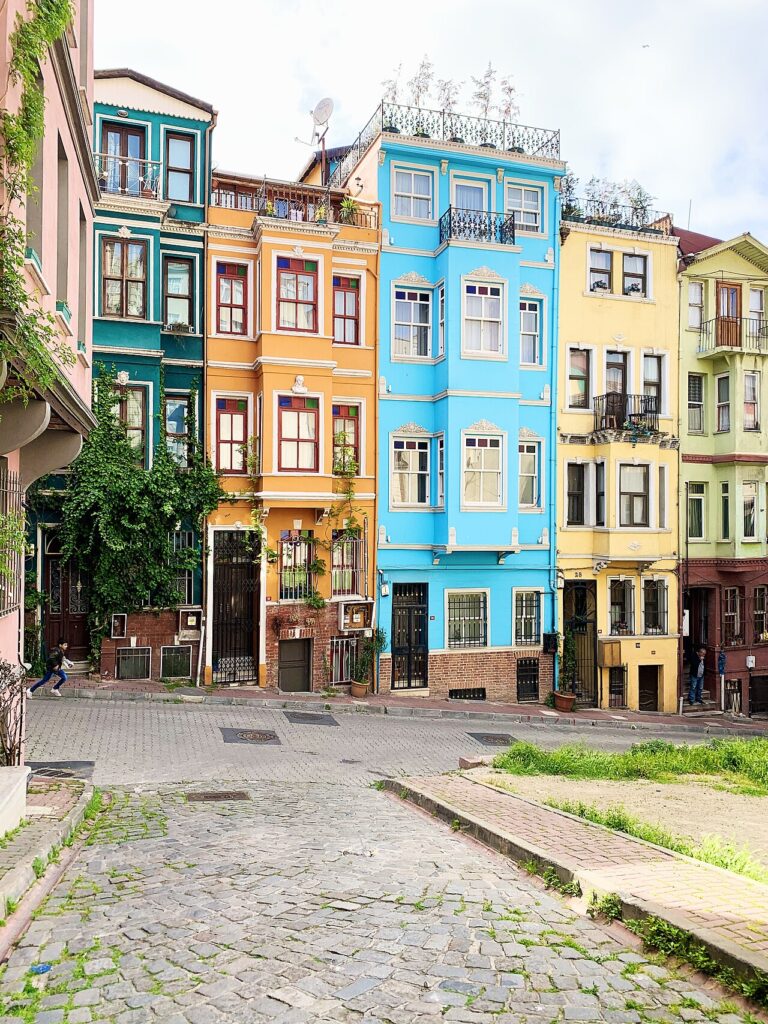
The summer mornings are the quarter’s best hours — the light soft on the painted facades before the heat and the crowds. The colored streets are at their most beautiful in the morning sun: the pinks and the blues, the greens and the yellows, the facades glowing in the clear light, the lanes still quiet. The morning is also the walking hour: the climb to the walls and the heights before the heat, the landmarks of the quarter in the cool of the day. The visitor should make the mornings the quarter’s own — the colored streets first, the landmarks after, the photography done before the crowds — and the summer Balat gives its best face to the early riser.

The Midday: The Shade and the Rooms
The midday belongs to the shade and the rooms. The lanes of the quarter — narrow and shadowed — are the walking of the hot hours, the cobbles cooler than the open streets. The cafes of the colored streets are the midday’s sitting rooms: the coffee and the cake, the vintage rooms with their fans, the long tables of the fashionable quarter. The antique shops are the midday’s hunting: the cool rooms, the objects to turn over, the hours that pass inside. And the churches and the landmarks — the iron church on the waterfront, the Patriarchate’s courtyard — are the midday’s quiet visits: the cool stone, the history, the pause from the heat. The summer midday of Balat is the indoor quarter, and the rooms are the refuge.
The Afternoon: The Water and the Light
The late afternoon brings the quarter’s second act. The waterfront below the quarter — the shore of the Golden Horn — fills with the evening life: the benches and the promenade, the fishing boats and the ferries, the breeze off the water. The light turns golden over the inlet, the colored houses of the quarter glowing above the shore, and the photographers arrive for the golden hour. The ferry crossing — the ride across the Golden Horn — gives the postcard view: the quarter’s colors from the water, the image that made it famous. The afternoon is the quarter’s golden hour: the water, the light, the colors, and the crossing that frames them all.
The Evenings: The Quarter After Dark
The summer evenings are the quarter’s finest hours. The cafes spill onto the lanes; the tea houses and the restaurants of the working streets fill with the residents; and the colored streets — the day-trippers gone — belong to the quarter’s life. The dinner is the waterfront’s or the lanes’: the fish table over the Golden Horn, the kebab house of the working street, the courtyard table of the cafe. And the night walk of the quarter — the facades in the lamplight, the quiet lanes, the lights of the old city across the water — is the summer evening’s end, the quarter at its most atmospheric. The summer visitor should plan the evenings as carefully as the days — the quarter’s best hours come after the heat.
The Weekend Rhythm: The Crowds and the Calm
The summer weekends bring the crowds — the day-trippers of the city filling the colored streets, the cafes doing their busiest trade, the famous lanes at their most photographed. The weekdays are the calm: the quarter walkable, the tables findable, the lanes belonging to the residents. The visitor should follow the rhythm — the weekdays for the quiet quarter, the weekends for the full one — and the summer Balat gives both versions of the season. The early mornings of the weekends are the compromise: the colors before the crowds, the photography done, the quarter’s best hours taken before the day-trippers arrive.

The Practical Notes
A few things make the summer visit smooth. The mornings and the evenings are the days: plan the outdoors for the cool hours and the indoors — the cafes, the shops, the churches — for the heat. The water is the cooling: the waterfront and the ferry crossings are the summer’s air-conditioning — take the breeze and the rides. The shade is the lane: the narrow streets of the quarter are cooler than the open ones — the midday walking belongs to the shaded lanes. The sunscreen is the kit: the summer sun is strong, and the hat and the water are the season’s necessities. And the ferry is the evening’s ride: the crossing at the golden hour gives the postcard view — the quarter’s colors from the water in the summer light.
The Summer Tables: The Season’s Food
The summer changes the quarter’s tables, and the season’s food is the lightest of the year. The cafes of the colored streets do the summer’s cold drinks and the iced coffees, the courtyard tables in the shade of the old houses. The waterfront’s fish restaurants — the tables along the Golden Horn — do the summer’s freshest meals: the fish of the inlet, the meze, the evening breeze off the water. The dondurma — the stretchy theatrical ice cream of the Turkish tradition — is the summer’s street food: the stands of the quarter, the children’s delight and the adults’ refreshment. And the simit and the tea of the corners are the summer’s constants: the bread rings and the glasses at every hour. The summer table of Balat is the old quarter’s freshest cooking at its most pleasant — the iced drinks, the fish, and the dondurma of the season.

The Summer Nights: The Quarter After Dark
The summer nights of the quarter are the season’s second gift — the warm evenings, the cafes spilling into the lanes, the colored streets in the soft dark. The day-trippers leave as the light fades; the quarter returns to its residents; and the evening life begins: the cafes lit, the tea houses filling, the restaurants of the working streets doing their trade. The night walk of the quarter — the facades in the lamplight, the quiet lanes, the lights of the old city across the water — is the summer evening’s end, the quarter at its most atmospheric. And the waterfront — the shore of the Golden Horn — is the night’s second room: the benches, the breeze, the lights across the inlet. The summer nights of Balat are the quarter’s quiet hours, and the visitor who stays for them gets the village that the day trips never see.
The Takeaway
Summer Balat is the quarter at its most alive — the colors at their brightest, the streets full, the cafes spilling onto the lanes, the waterfront cool in the evenings and the golden hour over the inlet. The heat is real and the quarter answers it: the mornings for the colors, the midday for the shade and the rooms, the evenings for the water and the night. Come for the facades and the light; stay for the evenings and the ferry crossings; and walk the lanes after dark — the summer Balat, the season the color postcard lives for.
Frequently asked questions
How hot does it get in Balat in summer?
The afternoons reach the high twenties and the thirties, but the breeze off the Golden Horn cools the evenings — the nights are the season’s secret.
Is the quarter too crowded in summer?
The weekends bring the day-trippers to the colored streets — go early for the quiet, and take the weekdays for the quarter’s calm.
What is the best summer meal?
The fish table on the waterfront or the kebab house of the working streets, with the coffee in the cafe after — the quarter’s summer tables.
What is the best summer hour?
The golden hour of the late afternoon — the light over the inlet, the colors glowing, the ferry crossing for the postcard view.
Should I book ahead in summer?
Yes — the guesthouses and the popular cafes of the quarter fill with the season’s crowds; book the beds and the tables ahead.

All Over Information
The All Over Information editorial team researches and writes practical English-language guides to Turkey. Facts are checked against official and local sources before publication, prices are published as dated ranges rather than quotes, and guides are revised when things change. We accept no sponsored posts, paid placements or paid links.
More guides like this
Best Time of Year to Visit Balat
Balat is a year-round quarter — the colors and the cafes, the landmarks and the lanes run through all four seasons —…

How to Get to Balat from Istanbul
Balat is the old city's hidden quarter — off the tram lines, reached by the buses and the walking, and the better…

Family-Friendly Activities in Balat
Balat is a family quarter — safe, walkable, and full of the things children actually enjoy.

Nightlife Guide to Balat
Balat is not the nightlife quarter of Istanbul — the clubs and the loud bars belong to other districts — but the…
Shopping Guide: What to Buy in Balat
Balat is the treasure shopping of the old city — the quarter of the antique shops and the vintage rooms, the crafts…
Balat in Winter: What to Expect
Winter changes Balat the way it changes every old quarter — the crowds thin, the colors soften under the gray light, and…