When you travel across central Turkey, you will notice buildings that look unlike anything else you have seen: vast stone portals carved like lace, geometrically patterned brick, and domes crowned with tiled cones. These are the works of the Seljuk Turks, who ruled Anatolia from the eleventh to the thirteenth centuries. Their architecture is one of the most original styles ever created, a fusion of steppe traditions, Persian influence, and local craftsmanship. This guide explains what makes it distinct and where you can experience it best.
Who Built the Seljuk Monuments
The Seljuks were Turkic peoples who swept out of Central Asia and established a powerful empire in Iran and Mesopotamia before entering Anatolia. After their victory at the Battle of Manzikert in 1071, they opened Anatolia to Turkish settlement. The Seljuk sultans of Rum, based at Konya, built the great monuments you see today.
Their architects drew on Persian building traditions, but they added something new. Seljuk buildings are built almost entirely in stone, where their Persian predecessors favored brick. The results are monuments of astonishing structural confidence, decorated with carving so rich it seems almost woven rather than chiseled.
For the traveler, the Seljuk legacy defines the look of central Anatolia. Konya, Kayseri, Sivas, Erzurum, and Divriği are all cities shaped by Seljuk builders. Understanding their style is the key to reading the region’s most beautiful buildings.
The Portal as the Face of the Building
The single most distinctive feature of Seljuk architecture is the monumental portal. Where other traditions framed their entrances modestly, the Seljuks made the doorway the entire artistic statement of the building. Portals rise far above the human scale, framed by pointed arches and thick bands of carved decoration.
Inside these frames, carvers filled every surface with geometric star patterns, interlocking polygons, and swirling arabesques. Calligraphy bands carry inscriptions naming the ruler and the architect. The depth of the carving creates dramatic shadows that change with the light of day.
The portal was a public statement of power. A sultan building a mosque or a caravanserai would inscribe his name in the stone so that every traveler would remember who built the road and the shelter. When you stand before a Seljuk portal, you are reading the political message of a medieval state.

Stone Carving and Muqarnas
Seljuk masons were among the greatest stone carvers in the history of Islamic architecture. They developed a vocabulary of decoration based on geometry and repetition: eight-pointed stars, interlaced polygons, and patterns that seem to multiply endlessly. The effect is hypnotic, and the precision is extraordinary.
Their most spectacular invention is the muqarnas, a three-dimensional honeycomb of small niches used to fill the space beneath domes and arches. Seljuk builders in Anatolia pushed this technique to extremes, creating vaulted ceilings that look like stalactite caves formed in stone.
You will see muqarnas at its finest in the portals and domes of Konya and Sivas. Look up as you pass through a Seljuk doorway, and you will often find an entire universe of carved geometry waiting above your head. It is decoration that does the work of structure, an idea that later Ottoman architects would inherit and perfect.
The Great Mosques
Seljuk mosques developed a plan very different from the classical Ottoman mosques you may know from Istanbul. Instead of one enormous central dome, the Seljuk mosque is usually a hall of many columns supporting a forest of small domes. The prayer hall stretches wide and low, like a great stone tent.
The Alaeddin Mosque in Konya is the classic example, built on the city’s ancient mound with a forest of reused classical columns. The Ulu Cami in Divriği is the masterpiece of the type, its two portals among the most intricate carvings in the world. Erzurum’s Ulu Cami shows the style in the east.
These mosques reward slow exploration. Their interiors are cool, calm, and intimate compared with later Ottoman grandeur. The forest of columns, the small domes, and the carved wooden pulpits create a space that feels both ancient and alive, and the sense of the congregation gathered beneath a single wooden roof is still palpable.

Madrasas: Schools of Stone
One of the great contributions of Seljuk architecture is the madrasa, the college where Islamic sciences, law, and medicine were taught. Anatolian Seljuk sultans built dozens of them, and many survive in astonishing condition. They represent the intellectual ambition of the era.
The typical Seljuk madrasa is built around an open courtyard, with an arcade of student rooms on two floors. The most splendid examples add a monumental portal and a domed hall at the back. The Çifte Minareli Madrasa in Erzurum and the Gök Medrese in Sivas are famous for their twin minarets, the latter giving its name to the “Blue Madrasa.”
The most unusual type is the covered madrasa, roofed with a dome that rises over the courtyard. The Karatay Madrasa in Konya is the finest example, its interior glazed with deep turquoise tiles. Walking into its domed hall on a sunny day is like stepping into a jewel box of blue light.
Caravanserais: Hotels of the Silk Road
No building type is more closely tied to the Seljuk age than the caravanserai, the fortified inn that sheltered merchants and their animals on the trade routes. The Seljuks built them at intervals of about a day’s travel, creating a network of safe havens that made Anatolian commerce possible.
A great caravanserai is a fortress-sized building: high walls, a single massive portal, and an interior court surrounded by covered galleries. One side holds the stables for the animals, the other the rooms for travelers. Some, like the Sultan Han near Aksaray, are vast enough to hold hundreds of people and their camels.
These buildings are the hidden treasures of the Seljuk itinerary. Many stand in open countryside, empty and silent, and visiting them feels like stepping into the past. Look for the carved portals, the small mosque block rising in the middle of the courtyard, and the monumental scale that made travelers feel safe.

Konya and the Seljuk Capital
Konya was the capital of the Anatolian Seljuk sultans, and it remains the best city for seeing their architecture. The Alaeddin Mosque crowns the city’s ancient mound. The Karatay and Ince Minareli madrasas preserve their extraordinary tilework. The city walls, the great gates, and the palace remains speak of imperial ambition.
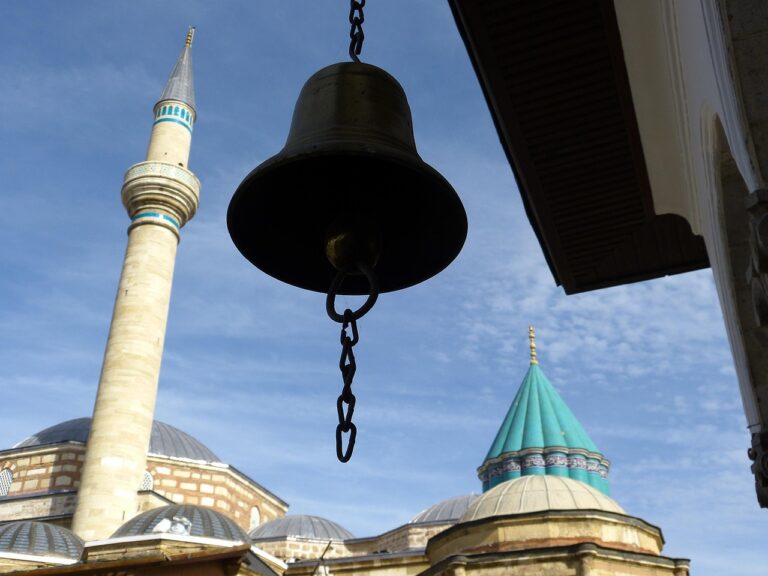
The city is also the home of the Mevlana, the Sufi mystic whose followers became the whirling dervishes. The Mevlana Museum, built around the saint’s tomb, incorporates the green-tiled conical dome that is one of the most photographed landmarks in Turkey. Seljuk patrons built the complex that protects it.
Konya rewards a full day of walking. The monuments cluster close together, and the Seljuk Museum displays carved woodwork, tiles, and doors rescued from demolished buildings. The city gives you the chance to see a Seljuk capital from the inside, not as a ruin but as a living urban landscape.
Divriği: A World Heritage Marvel
In the remote mountains of eastern central Anatolia, the Great Mosque and Hospital of Divriği stand as the supreme masterpiece of Seljuk architecture. The complex was built in the thirteenth century, and its four carved portals are considered among the finest stone carvings ever created. UNESCO lists it as a World Heritage Site.
The carvings at Divriği are astonishing even by Seljuk standards. They combine geometric patterns, plant forms, and figural motifs in a dense, organic swirl that seems to have grown rather than been carved. The portal of the hospital is signed with the names of the craftsmen, a rare honor in Islamic art.
Getting to Divriği takes effort, and that is part of the experience. The complex stands in a small provincial town, largely unvisited. You can spend a long hour examining the portals without a crowd, and the sheer intricacy of the work will keep you looking. It is the most rewarding architectural pilgrimage in central Turkey.

Tiles and the Blue Revolution
The Seljuks transformed Islamic tilework, turning fired clay into a medium for entire walls of color. Their signature palette was deep turquoise and cobalt blue, set against cream. The Gök Medrese of Sivas is named for exactly this blue, and its facade is a masterpiece of colored tile.
The Karatay Madrasa in Konya shows the technique at its most dramatic. The interior dome is entirely faced in turquoise and dark blue tiles arranged in radiating star patterns. The effect is of standing beneath a sky made of pottery, cool and glowing.
Tiles were also used on minarets, giving them a brilliance visible from far away. The Çifte Minareli madrasas of Erzurum and Sivas send twin towers of patterned brick and blue tile into the sky. When you see these towers against the Anatolian light, you understand why the Seljuks are remembered as the masters of the blue revolution.
Seeing Seljuk Architecture Today
You can build a wonderful trip around Seljuk architecture alone. Begin in Konya, see the mosques and madrasas of Sivas and Erzurum, and make the pilgrimage to Divriği. Between the cities, stop at the caravanserais that still dot the old routes. A week is enough for the core, and two weeks allows the eastern sites.
Plan for access. Some madrasas are museums with entrance fees; others are mosques, open free and welcoming. Caravanserais may be empty, ruined, or converted into hotels and restaurants. Dress modestly for religious buildings, and allow generous time to study the carving.
The best season is spring or autumn, when the light is low and golden, making the carved stone and blue tiles glow. Arrive at the big monuments early, before the tour groups. And remember to look up constantly: in Seljuk architecture, the most spectacular work is always above eye level.
Frequently asked questions
What is the difference between Seljuk and Ottoman architecture?
The Seljuks built in stone with monumental carved portals, forests of columns, and muqarnas ceilings, favoring open courtyards. The Ottomans, who followed, perfected the single massive dome on a square base, creating soaring central spaces. Seljuk buildings feel intimate and intricately carved; Ottoman buildings feel vast and unified. Both styles use tiles and calligraphy, but the Ottomans refined them into a more polished imperial idiom.
Where are the best Seljuk sites to visit?
Konya offers the richest concentration, including the Alaeddin Mosque and the Karatay Madrasa. Sivas and Erzurum preserve superb madrasas with twin minarets. The Great Mosque of Divriği is the unmissable masterpiece of Seljuk carving. Along the old trade routes, caravanserais such as the Sultan Han near Aksaray survive in spectacular condition.
What is a caravanserai, and can you stay in one?
A caravanserai was a fortified roadside inn where merchants, their animals, and their goods slept safely overnight. The Seljuks built them a day’s travel apart along the trade routes. Today most are ruins or museums, but several historic caravanserais have been restored as hotels and restaurants, so you can indeed sleep inside one of these medieval structures.

All Over Information
The All Over Information editorial team researches and writes practical English-language guides to Turkey. Facts are checked against official and local sources before publication, prices are published as dated ranges rather than quotes, and guides are revised when things change. We accept no sponsored posts, paid placements or paid links.
More guides like this

Best Time to Visit Spice Bazaar to Avoid Crowds
The Spice Bazaar is one of the most popular destinations in Istanbul, and at its busiest moments its narrow galleries are packed…

Best Time to Visit Dolmabahce Palace to Avoid Crowds
Dolmabahce Palace is one of Istanbul's busiest sights, and its guided-tour system means crowds are not just uncomfortable but limiting: you wait…

Mevlana Museum Through the Centuries
The Mevlana Museum of Konya has stood through the deep history of the Sufi tradition, and its story runs from the thirteenth…
The Architecture of Sumela Monastery Explained
Architecture is usually the art of building on solid ground, and Sumela Monastery is the exception that proves the rule.

Byzantine Architecture Surviving in Modern Turkey
When you travel through Turkey, you are walking through the living museum of the Byzantine Empire.

Turkey’s Best Museums Beyond Istanbul
Istanbul has the museums everyone knows, from the great archaeological collections to the palaces and cisterns.