Turkey has set itself an ambitious goal: to transform from a country heavily dependent on imported fossil fuels into a renewable energy powerhouse. The geography is on its side. The Aegean coast is windy, the southeast is drenched in sun, the rivers of the east and southeast hold enormous hydropower potential, and the tectonic faults that cause earthquakes also deliver geothermal heat. This article explains the main pillars of Turkey’s energy transition and what it means for the country’s economy and for travelers.
From Imports to Independence
For decades, Turkey has imported most of the energy it consumes, spending heavily on natural gas, oil, and coal from abroad. This dependence has shaped the economy and foreign policy, and the motivation for the renewable push is therefore partly strategic: every megawatt produced from wind, sun, and water is a megawatt that does not have to be bought from overseas. Energy security is the quiet engine behind the green ambitions.
The transition is well underway. Renewable sources now supply a significant and growing share of Turkey’s electricity, and the country has added new renewable capacity at a rapid pace in recent years. The mix is unusually balanced by global standards, with hydropower, wind, and solar each contributing large shares, plus a world-class geothermal sector. The ambition now is not just more renewables, but more domestic manufacturing of the turbines, panels, and equipment they require.
Solar Power in the Sun Belt
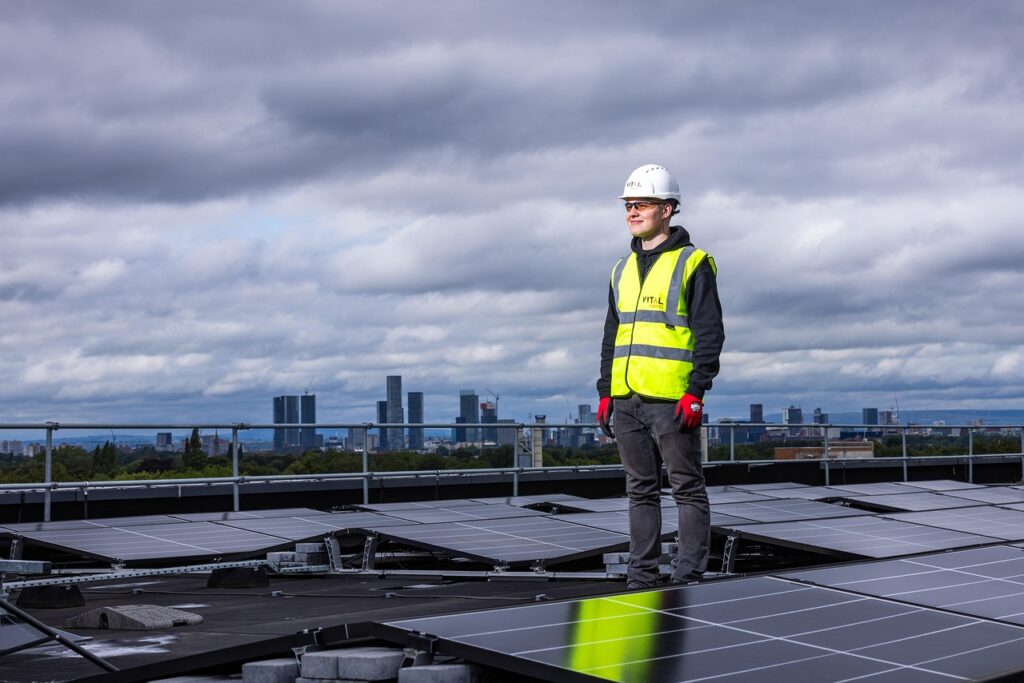
Turkey’s solar potential is exceptional. The southeast, around Gaziantep, Sanliurfa, and the Cukurova plain, receives some of the highest solar radiation in Europe and the Middle East, and the central plateau is not far behind. Solar farms have spread across these regions, and the panels are now a common sight from the highway, rows of dark blue gleaming in the flat golden landscape.
The solar story is not only about giant farms. Rooftop panels have multiplied on homes, factories, and hotels, and the government has encouraged small-scale generation with feed-in tariffs and net-metering schemes. Agricultural land has begun to host dual-use projects, with panels raised high enough for sheep to graze beneath. As battery storage becomes cheaper, solar is expected to play an even larger role, especially in the long, cloudless summers that make the country such a natural fit.

Wind Energy on the Aegean Ridges
The Aegean coast and the ridges of western Anatolia are among the windiest places in the eastern Mediterranean, and Turkey has built wind farms across these exposed heights. The turbines are a familiar sight along the Izmir and Canakkale regions, where summer sea breezes and winter storms alike keep the blades turning. Wind now supplies a substantial share of the country’s electricity, and the sector continues to expand offshore as well as on land.
The industry has grown a domestic supply chain too, with blades, towers, and generators now manufactured in Turkish factories. The next frontier is offshore wind in the Aegean and Marmara seas, where the strong, consistent winds offer large untapped potential. For travelers, the wind farms are a visible feature of the western landscape, and several sites have become minor attractions, with viewing points and picnic areas built beneath the towers.
Geothermal Power from the Tectonic Faults
Turkey sits on geological faults that bring hot water close to the surface, and it has turned this hazard into an energy asset. The country is a world leader in geothermal electricity generation, with plants concentrated in the Aegean region around Denizli, Aydin, and Manisa. Deep wells tap water heated by the Earth’s interior, and the steam drives turbines day and night, rain or shine, giving geothermal a unique advantage over sun and wind: it is constant.
Beyond electricity, geothermal heat is used directly, warming greenhouses where tomatoes grow in winter, heating hotels, and feeding the thermal spas that have drawn visitors since Roman times. The same hot springs that fill Pamukkale’s travertine terraces are part of this underground wealth. Geothermal development requires careful management of the water and gases involved, but the resource itself is one of Turkey’s most valuable natural endowments.

Hydropower and the Rivers of the East
Turkey’s rivers, especially the Euphrates and Tigris in the southeast, powered the country’s first great renewable push. Massive dams built over past decades generate a large share of the nation’s electricity, and hundreds of smaller plants on the country’s many rivers add more. Hydropower is flexible, able to ramp up quickly when demand peaks, which makes it a natural partner for variable wind and solar.
Hydropower also has costs. Large dams have flooded valleys, displaced communities, and altered river ecosystems, and drought years have shown that the reservoirs are vulnerable to a changing climate. The debate over new dams, versus restoring natural river flows, is active and unresolved. The future of Turkish hydropower lies less in new mega-dams and more in modernizing existing plants and adding pumped storage to hold water for when the wind is calm and the sun is down.
Green Hydrogen and Storage
The newest chapter in Turkey’s energy story is green hydrogen. The idea is simple: use surplus renewable electricity to split water into hydrogen and oxygen, storing the hydrogen as a clean fuel for industry, shipping, and power generation. Turkey has announced plans to develop hydrogen hubs, using its renewable capacity and its pipeline infrastructure to produce and export green hydrogen, especially toward Europe.
Storage is the key to making renewables reliable, and hydrogen is part of that answer alongside batteries and pumped hydro. The country’s geography helps here too: the deep caverns and old mines that could hold hydrogen, and the natural gas pipelines that could be converted to carry it. The hydrogen economy is still in its early stages, with pilot projects and roadmaps rather than large-scale production, but the ambition signals where Turkish energy policy is heading.

Modernizing the Grid
Renewable energy is only as good as the grid that carries it, and Turkey is investing heavily in transmission infrastructure. New high-voltage lines connect the windy west and sunny southeast to the industrial centers and cities, and digital technology now allows operators to balance supply and demand in real time. Battery storage projects, still young in Turkey, are beginning to smooth the ups and downs of wind and solar.
The grid work also supports electric mobility. Turkey’s domestic electric vehicle production has begun, and the charging network is expanding along the main highways and into the cities. Buses in several municipalities are going electric, and ferries are testing battery power. The electrification of transport and the decarbonization of electricity are two halves of the same transition, and both depend on the modernization of the national grid.
Investment, Policy, and Challenges
The renewable push has been supported by policy and investment. Auction mechanisms, guaranteed prices, and tax incentives have drawn private capital, and Turkish manufacturers have built strong positions in solar panels, wind components, and increasingly battery technology. International financing has supported specific projects, and the Paris Agreement commitments give the transition an official timeline and target.
Challenges remain significant. Coal still generates a large share of electricity, and the political economy of the coal industry, jobs and regional votes included, makes phase-out difficult. Grid connections for new projects face bureaucratic delays, and financing costs have been high. The pace of the transition therefore depends not only on resources and technology but on policy choices made year by year. The ambition is real, but the road is longer than the brochures suggest.
What the Energy Transition Means for Travelers
For travelers, Turkey’s energy transition is already visible. Wind farms crown the Aegean ridges, solar fields spread across the southeast, and geothermal greenhouses warm the fields around Denizli. Electric vehicles share the highways, and charging points have appeared in hotel car parks and city centers. Even some remote mountain lodges now run on solar and micro-hydro, part of the same national story.
The transition also offers new experiences: touring a geothermal plant, visiting an early-warning observatory, or staying in a hotel powered by its own panels. Sustainable travel choices, from electric buses to energy-conscious hotels, connect directly to the country’s energy ambitions. As the grid becomes greener, every kilowatt you use on holiday carries a smaller carbon footprint, and the choices you make, from transport to accommodation, nudge the market in the same direction as the national strategy.
The social dimension matters too. Renewable projects bring jobs and income to rural regions that have historically lost population, from the wind farms of the Aegean hills to the solar fields of the southeast, and community benefit programs are beginning to appear alongside the turbines and panels. Energy policy in Turkey is thus not only an engineering question but a question of regional development, and the transition is reshaping the economic map of the countryside as well as the national grid.
Jobs, Skills, and the New Energy Industry
The energy transition is also a story of employment. Wind and solar farms bring construction jobs and permanent technical positions to rural regions that have historically lost population, and the plants that build turbines, panels, and batteries are creating an industrial workforce with new skills. Training programs are preparing young Turks for careers in an industry that barely existed a generation ago.
The social dimension matters too. Renewable projects bring jobs and income to rural regions, from the wind farms of the Aegean hills to the solar fields of the southeast, and community benefit programs are beginning to appear alongside the turbines and panels. Energy policy in Turkey is thus not only an engineering question but a question of regional development, and the transition is reshaping the economic map of the countryside as well as the national grid.
Frequently asked questions
How much of Turkey’s electricity comes from renewables?
Renewable sources supply roughly half of Turkey’s electricity, with hydropower, wind, and solar the largest contributors, plus a significant geothermal share. The proportion fluctuates with rainfall and demand, since hydro output varies with drought. The renewable share has grown substantially over the past two decades and continues to rise as new wind, solar, and geothermal plants come online.
What is Turkey’s main renewable energy source?
Hydropower is Turkey’s largest renewable source, built around the country’s major river systems and dams. However, wind and solar have grown rapidly and now rival hydro in overall contribution, and Turkey is a world leader in geothermal electricity generation. The strength of the mix is its balance: no single renewable source dominates, which makes the system more resilient.
Will Turkey phase out coal?
There is a stated ambition to reach net zero emissions by the middle of the century, which implies a deep reduction in coal, but no firm near-term phase-out date has been set. Coal still provides a significant share of electricity, and the transition faces economic and social hurdles. The direction of travel is clear, with renewables expanding quickly, but the pace of coal’s decline depends on policy choices, investment, and technology costs.

All Over Information
The All Over Information editorial team researches and writes practical English-language guides to Turkey. Facts are checked against official and local sources before publication, prices are published as dated ranges rather than quotes, and guides are revised when things change. We accept no sponsored posts, paid placements or paid links.
More guides like this

Exploring the Nemrut Crater Lake: A Complete Guide
High above the southern shore of Lake Van, a sleeping volcano holds one of Turkey's most extraordinary sights: the crater lake of…

How to Visit the Nemrut Crater Lake: Practical Tips
Visiting the Nemrut crater lake is a journey into one of Turkey's most remote and rewarding landscapes, but it demands planning.

How to Visit Aladaglar National Park: Practical Tips
Aladaglar National Park is one of Turkey's most spectacular mountain destinations, but it is also one of the most demanding to visit…

Camping and Glamping Spots Across Turkey
Turkey is one of the best camping countries in the Mediterranean basin, and the choice is staggering: pine forests above turquoise bays,…

Staying in a Cappadocia Cave Hotel: What to Expect
Sleeping inside a cave in Cappadocia sounds like a gimmick, but it is actually one of the most memorable hotel experiences in…
Butterfly Valley: Turkey’s Natural Wonder
Butterfly Valley is a natural wonder in the truest sense: a deep, green canyon that opens onto the Mediterranean with cliffs so…