Hagia Sophia is the most visited monument in Istanbul, and visiting it is both simpler and more complicated than the guidebooks suggest. Since 2020 the building has been an active mosque, which means entry is free, the queues are different, and the rules are those of a place of prayer rather than a museum. There are no tickets to buy, but there are prayer times to respect, a dress code to follow, and crowds to outsmart. This guide covers everything you need to plan your visit: how to get there, when to go, what to expect inside, and how to see the building at its best.
Hagia Sophia Today: The First Thing to Know
The single most important fact for visitors is that Hagia Sophia is now a working mosque. Since July 2020, the building has been open for worship, and the museum era, with its ticket offices and turnstiles, is over. Entry is free, and the interior functions as a living place of prayer.
That status changes your visit in practical ways. The building closes to visitors during the five daily prayers and for a period around them, so your timing must respect the Islamic prayer schedule. It also means the great Byzantine mosaics, though still visible, are no longer the interpretive focus of the space.
The other consequence is atmosphere. Hagia Sophia today is a mosque with a cathedral’s bones, and the sight of worshippers beneath the greatest dome in the Byzantine world is part of what makes the visit unforgettable. Come prepared for a working monument, and you will see it at its most alive.
Getting There
Hagia Sophia sits in the heart of Sultanahmet, the old city of Istanbul, and reaching it is easy from anywhere in the historic center. The tram line T1 stops at Sultanahmet, and the monument is a short walk through the square, past the fountain and the former Hippodrome.
If you are staying in Sultanahmet, you will probably walk. The Blue Mosque faces Hagia Sophia across the square, Topkapi Palace is a five-minute stroll through the park, and the Basilica Cistern and the Grand Bazaar are all within a comfortable radius on foot.
From further afield, the Marmaray train and the funicular from the waterfront deliver you to nearby stations, and taxis and ride services handle the rest. Whichever way you come, aim to arrive at the entrance on foot, because the approach across the square, with the dome rising ahead, is half the experience.

Hours and Prayer Times
Hagia Sophia is open to visitors throughout the day except during prayer, and the rhythm of the day is set by the five daily prayers, which begin before dawn and run through the night. Between prayers, the building opens again, usually fairly quickly after the prayer itself finishes.
The prayer schedule shifts with the seasons and the sunrise, so it cannot be printed once and trusted forever. Check the daily prayer times for Istanbul before you go, and plan around them: the closures last roughly half an hour around each prayer, and Friday midday, the congregational prayer, is the longest closure of the week.
The practical advice is to arrive just after a prayer ends, when the building has just reopened and the first surge of the queue has passed. Early morning and late afternoon are the calmest windows, and the golden light of the late afternoon is a gift to photographers.
Entry: Free But Different
There is no ticket office at Hagia Sophia today. Entry is free, which is a change that surprises many travelers, and the line that forms outside is a security queue rather than a ticket queue. You simply join it, pass through security, and walk in.
The queue moves faster than it looks, but it can still be long in the middle of the day, and the security check is real, so travel light. Bags are screened, and there is no separate fast lane for most visitors, though the queue generally flows steadily.
Because there are no tickets, there is nothing to book in advance, and no official guided-entry product to buy. Private guides can still be hired on the square, but the building itself is free, and the money you save on admission is best spent on a good guidebook or a quiet lunch.

Dress Code and Etiquette
As an active mosque, Hagia Sophia enforces a dress code at the door. Shoulders and knees must be covered for everyone, women are asked to cover their hair, and the staff at the entrance will provide scarves and coverings for visitors who arrive unprepared.
Shoes come off at the entrance, where you will carry them in a bag provided, because the interior is carpeted for prayer. This is the moment to be glad you wore easy shoes, and the floor is cool, so socks are recommended.
Inside, the rules are those of any mosque: speak quietly, keep a respectful distance from worshippers, and do not walk in front of people at prayer. Photography is allowed in the building, but skip the flash, and do not photograph worshippers without their welcome, a simple courtesy that keeps the atmosphere calm for everyone.
What You’ll See Inside: The Ground Floor
The ground floor of Hagia Sophia is dominated by the nave, the great open space beneath the dome, and the first sight of it, fifty-five meters of air below the crown of the dome, stops most visitors cold. The scale is the message, and no photograph prepares you for it.
The orientation of the building has changed with its history. The mihrab, the niche that marks the direction of Mecca, and the minbar, the pulpit, now stand at the eastern end, and the great roundels bearing the names of God, the Prophet Muhammad, and the early caliphs hang high on the walls, Ottoman inscriptions set against Byzantine gold.
On the floor, the omphalion, the circular marble inlay where Byzantine emperors were crowned, still marks the heart of the building, and the famous weeping column, damp to the touch and credited with healing, draws a constant line of visitors who press a thumb into its worn hole and make a wish.

The Galleries and the Mosaics
For the Byzantine layer of Hagia Sophia, take the ramp to the upper galleries. The climb is gentle, and the reward is the view down into the nave and, more importantly, the mosaics, which survive best in the upper spaces where they were hardest to reach.
The Deesis mosaic, the great image of Christ flanked by the Virgin and John the Baptist, is the most celebrated work in the building, and its emotional power is intact despite the damage of centuries. The gallery also holds imperial portraits, including the famous mosaic of Constantine and Justinian offering models of the city and the church to the Virgin.
The galleries are also where the building’s double life is most visible: Byzantine mosaic on the walls, Ottoman medallions overhead, and the carpeted floor below. Standing there, you can read fourteen centuries in a single glance, and it is the part of the visit that most visitors remember.
Combining Hagia Sophia with the Neighborhood
Hagia Sophia sits at the center of the densest cluster of monuments in Istanbul, and a good visit builds outward from it. Across the square, the Blue Mosque offers the contrast of Ottoman architecture at its height, and the two buildings are best seen together.
The former Hippodrome, now a park-like square, runs beside the mosque, with its ancient obelisks, and Topkapi Palace, the Ottoman court, lies just through the trees, so an entire day can unfold without a single transfer. The Basilica Cistern and the Grand Bazaar are the natural add-ons for a second day.
The practical pairing: visit Hagia Sophia early, when the light and the queue are kind, then cross the square to the Blue Mosque mid-morning, and spend the afternoon in the palace or the bazaar. The neighborhood is compact, and the walking is the best part of the plan.

Crowd Strategy and Best Times
The crowds at Hagia Sophia are real, and the strategy for beating them is timing. The building is at its busiest between mid-morning and mid-afternoon, when the tour groups arrive, and at its calmest at opening and in the late afternoon before the evening prayer.
The most reliable plan is to arrive at the start of the visitor day and move through quickly, then return for a second, slower pass in the afternoon if the building calls to you. The light matters too: the late afternoon sun rakes across the dome and the mosaics in a way that morning light does not.
If you are flexible, visit on a weekday rather than a weekend, and avoid Friday midday, when the congregational prayer closes the building for the longest stretch. A quiet, well-lit Hagia Sophia is worth one day of schedule rearranging.
Practical Tips for a Smooth Visit
A few habits will smooth your visit. Travel light, because the security queue and the shoe ritual reward simplicity, and bring a scarf if you prefer your own to the shared ones. Dress for the mosque: long sleeves, covered knees, and comfortable slip-off shoes.
Carry cash for the optional donations and for the tea and snacks nearby, and keep your phone charged, because the interior is dark and the photo opportunities are endless. A guidebook that explains the building’s layers, Byzantine and Ottoman, transforms the visit more than any tour.
Finally, allow more time than you think. Hagia Sophia rewards slow looking, and the visitors who rush through in twenty minutes remember a big room; the ones who sit on the edge of the nave, watching the light move across the dome, remember the building itself.
Frequently asked questions
Do you need tickets for Hagia Sophia?
No. Since 2020 Hagia Sophia has been an active mosque, and entry is free for visitors. There is no ticket office and nothing to book in advance. You simply join the security queue at the entrance. This applies to everyone, though donations are welcome.
What are the visiting hours at Hagia Sophia?
The building is open to visitors outside the five daily prayer times, which vary with the sunrise and the season. It closes around each prayer, usually for about half an hour, with the longest closure on Friday midday. Check the daily prayer schedule for Istanbul before you go.
What is the dress code for visiting Hagia Sophia?
As a working mosque, Hagia Sophia requires covered shoulders and knees for everyone, and women are asked to cover their hair. Scarves and coverings are provided at the entrance for visitors who arrive unprepared. Shoes must be removed before entering the carpeted interior.

All Over Information
The All Over Information editorial team researches and writes practical English-language guides to Turkey. Facts are checked against official and local sources before publication, prices are published as dated ranges rather than quotes, and guides are revised when things change. We accept no sponsored posts, paid placements or paid links.
More guides like this

Dolmabahce Palace Through the Centuries
Dolmabahce Palace has lived several lives in less than two hundred years: imperial residence, seat of a reforming dynasty, home of a…

Visiting Rumeli Fortress: Tickets, Hours, and Tips
The Rumeli Fortress is one of the most impressive sights on the Bosphorus, a vast medieval castle of towers and walls that…

Why Ishak Pasha Palace Should Be on Your Turkey Bucket List
Most travelers know the Turkey of Istanbul, Cappadocia, and the Aegean coast, and rightly so.
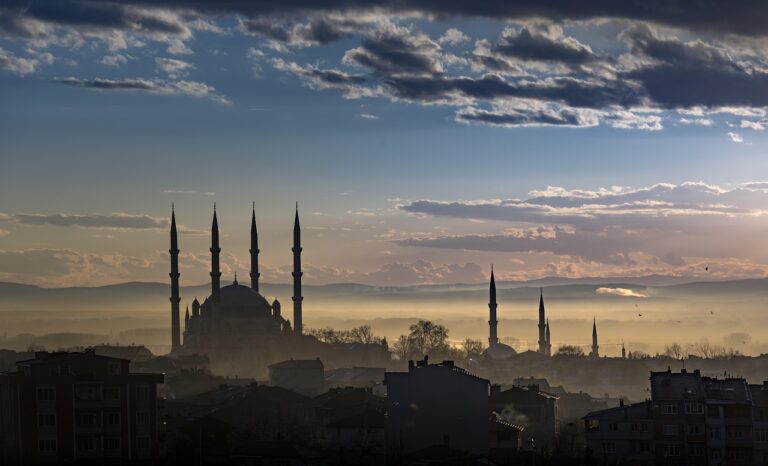
The Complete History of Selimiye Mosque
The Selimiye Mosque in Edirne is the crowning achievement of Ottoman architecture, the building that its own creator, Mimar Sinan, called his…

Best Time to Visit Suleymaniye Mosque to Avoid Crowds
The Suleymaniye Mosque is one of the quietest of Istanbul's great monuments, but that does not mean it is never busy.

The Complete History of Anitkabir
Anıtkabir — the mausoleum of Mustafa Kemal Atatürk, the founder of the Turkish Republic — is the most important monument of modern…