The Basilica Cistern is one of the most popular attractions in Istanbul, and at busy times its walkways are crowded, its railings are lined with photographers, and the queue can stretch down the street. Yet the Sunken Palace rewards those who choose their moment: the cistern is a place of silence and shadow, and its magic is strongest when it is not packed with tour groups. The crowds follow patterns you can learn and use, from the rhythm of the day to the calendar of the cruise season. Here is how to time your visit to experience the Basilica Cistern at its quietest and most atmospheric.
The Daily Rhythm of the Cistern
The Basilica Cistern follows a daily rhythm as regular as the trams that pass overhead. It opens in the morning, fills steadily through the late morning, peaks in the middle of the day, and eases off again in the late afternoon and evening.
The two quiet windows are the ends of the day. In the first hour after opening, the hall is nearly empty, and the columns rise from the water in undisturbed calm; in the late afternoon and evening, the tour groups have moved on, and the cistern returns to its natural stillness.
The middle of the day belongs to the crowds. From late morning through mid-afternoon, the walkways are at their fullest, the queue is at its longest, and the atmosphere of the hall is broken by the press of visitors, so that the silence which defines the place is hard to find.
The Opening Hour Advantage
The single most reliable way to experience the cistern quietly is to be there at opening time. In the first hour, the hall is at its most beautiful, the walkways are clear, and you can stand at the heart of the column forest without another visitor in sight.
The early hour also gives you the best photography. The light inside is constant, but the emptiness of the walkways means you can frame the columns and the reflections cleanly, without waiting for gaps in the crowds or settling for strangers in your shots.
Arriving early requires a little discipline, but the reward is the cistern as it was meant to be experienced: silent, cool, and mysterious. It is the difference between visiting a monument and having a monument to yourself.
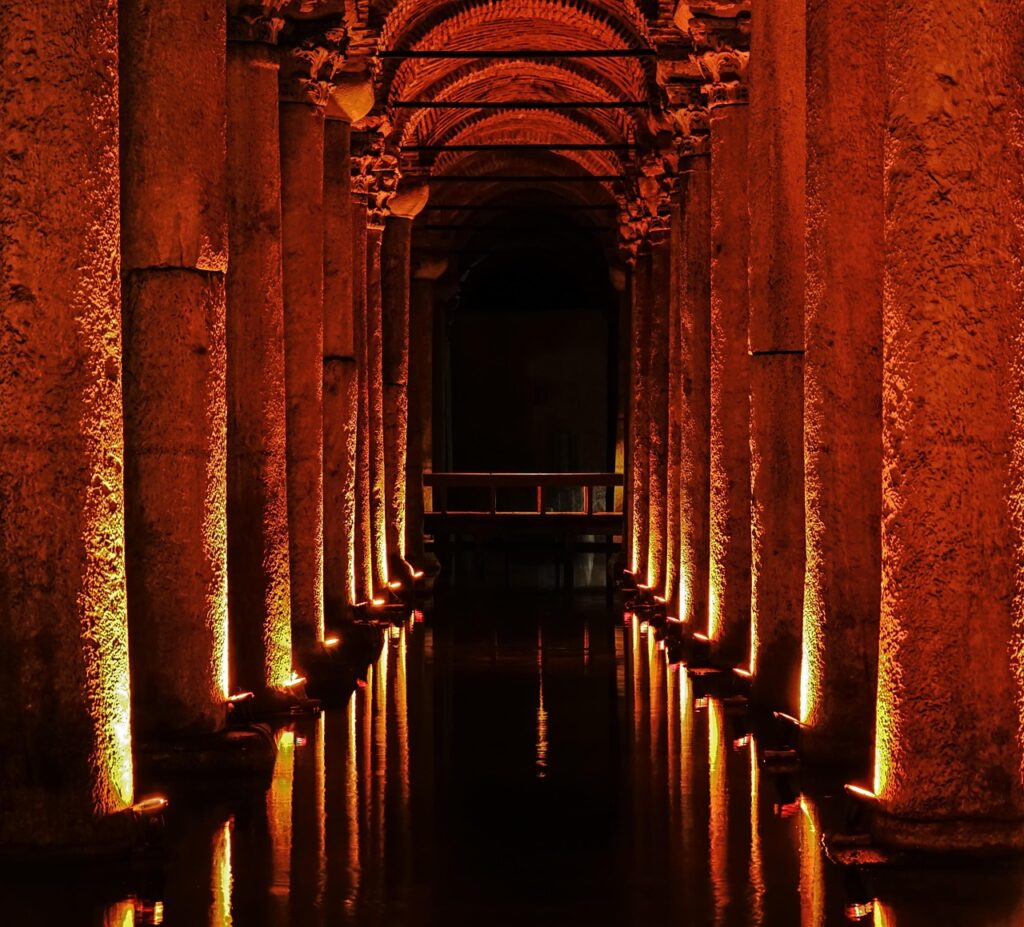
Midday: The Peak of the Crowd
The middle of the day is the busiest time at the Basilica Cistern, and it is worth knowing when the peak hits so you can avoid it. From late morning until mid-afternoon, the tour groups arrive in steady waves, and the queue outside grows with them.
The reasons are familiar. The cistern sits on the classic tourist route of Sultanahmet, between Hagia Sophia and the other great sights, and most itineraries reach it in the late morning or early afternoon, when the other museums are also at their fullest.
If you arrive in the middle of the day, manage your expectations. The queue will move, the walkways will be crowded, and the atmosphere will be muted, but the cistern is still extraordinary, and the crowds are the price of its fame.
Late Afternoon and Evening
The late afternoon brings a second quiet window, and for many visitors it is the best of all. As the day trips wind down, the crowds thin, and the cistern settles into the contemplative mood that suits it so well.
The evening is a special case. The lighting of the cistern is at its most theatrical after dark, the columns glow more warmly against the black water, and the reduced crowds make the experience almost private. A late visit is the secret choice of the experienced traveler.
The practical advantages follow. The queue is shorter in the late afternoon, the walkways are easier to navigate, and the hour is gentler, so that the cistern, which can feel rushed at midday, becomes a place to linger and drift, with the fish gliding undisturbed through the reflections.

Weekdays Versus the Weekend
The weekly rhythm of the Basilica Cistern is as predictable as its daily one. The weekends draw the crowds, with the Saturday and Sunday visitors joining the Istanbul families and the domestic tourists, and the walkways can be as full as any high season day.
The weekdays are calmer, and the middle of the week is the quietest. A Tuesday, Wednesday, or Thursday visit offers the best balance of a lively site and a manageable crowd, and the difference is visible as soon as you descend the stairs.
The timing of holidays adds another layer. The school holidays of Europe and the local festivals fill the cistern in bursts, so it is worth checking the calendar before you plan, and choosing the quiet weeks between the peaks whenever you can.
The Seasons and the Weather
The seasons shape the crowds at the Basilica Cistern as surely as they shape the city above. Spring and autumn, the great travel seasons, bring the largest numbers, with the mild weather and the school holidays filling the Sultanahmet district.
Summer is crowded but different. The heat sends visitors underground in search of the cistern’s famous coolness, so the hall can be packed even on the hottest days, and the queue outside moves slowly under the sun.
Winter is the quiet season, and for the crowd-averse traveler it is the best of all. The cistern’s atmosphere is independent of the weather, its temperature is steady, and its lights glow against the early darkness, so a winter visit offers the magic with a fraction of the crowds.

Cruise Ships and Tour Groups
The invisible engine of the cistern’s crowds is the cruise ship. When the ships are in port, their passengers are routed through Sultanahmet, and the Basilica Cistern is on the standard circuit, so its queue and its walkways swell within hours of the ships docking.
The cruise rhythm follows the morning. The ships arrive early, the shore excursions reach the monuments in the late morning, and the cistern bears the brunt in the middle of the day, so the first hour of opening remains the best defense against the tide.
The cruise season is the summer and the shoulder months, and the winter sees little ship traffic at all. If you can visit outside the cruise season, or simply arrive before the first excursions, you will find the cistern far closer to its natural quiet.
Special Events and Evenings
The Basilica Cistern is not only a museum; it is a venue, and its special events add their own rhythm to the calendar. The hall has hosted exhibitions, concerts, and performances, and these events can draw crowds of their own.
The event evenings are a different experience entirely. The music in the vaulted darkness, the lights on the water, and the column forest as a stage create an atmosphere that the daytime visit cannot match, and the event tickets give you the cistern in its most theatrical form.
If you are planning around the events, book ahead and arrive early. The cistern is a small space, and its event evenings are popular, but the combination of the ancient hall and the live performance is one of the most memorable experiences Istanbul offers.

The Queue and How to Beat It
The queue is the great practical enemy of the cistern visit, and beating it is mostly a matter of timing. The line forms from mid-morning and peaks at midday, so the simplest strategy is to visit at the opening or in the late afternoon.
The queue also responds to the weather. On rainy days, the visitors shelter in the line and it moves slowly; on fine days, the wait is more pleasant but no shorter. Whatever the conditions, the queue at the wrong hour is the longest part of the visit.
Buying tickets in advance, where the option is available, can also save time, and the museum’s official channels are the safe route. With an early arrival or a pre-booked ticket, the queue becomes a detail rather than an ordeal.
A Practical Plan for a Quiet Visit
Put the pieces together and the ideal visit writes itself. Choose a weekday, preferably in the middle of the week, in the quiet season, and arrive for the opening hour, when the cistern is at its most beautiful and least crowded.
Build your visit around the two quiet windows. Use the first hour for the photography and the slow wandering, return in the late afternoon for the second pass if you want more, and if you can manage it, book an event evening for the theatrical version of the hall.
Above all, remember what you are timing for. The Basilica Cistern is a place of silence and shadow, and its magic depends on emptiness, so the effort of an early start or a late visit is repaid a hundredfold in atmosphere. The quiet Sunken Palace, its columns reflected in still water and its echoes undisturbed, is the true one.
Frequently asked questions
What is the quietest time to visit the Basilica Cistern?
The quietest time is the first hour after opening, when the hall is nearly empty and the walkways are clear. The late afternoon and evening are the second best window, with thinner crowds and the most atmospheric lighting.
How can I avoid the queue at the Basilica Cistern?
Arrive at opening time or in the late afternoon, when the queue is shortest, and buy your ticket in advance where the option is available. Avoid the middle of the day, especially during the cruise season, when the line is longest.
Is the Basilica Cistern less crowded in winter?
Yes, winter is the quietest season. The cistern’s atmosphere is unaffected by the weather, its temperature is steady, and its lighting glows against the early darkness, so winter offers the full magic of the Sunken Palace with a fraction of the crowds.

All Over Information
The All Over Information editorial team researches and writes practical English-language guides to Turkey. Facts are checked against official and local sources before publication, prices are published as dated ranges rather than quotes, and guides are revised when things change. We accept no sponsored posts, paid placements or paid links.
More guides like this

Visiting Selimiye Mosque: Tickets, Hours, and Tips
The Selimiye Mosque in Edirne is the masterpiece of Ottoman architecture, the building that the great architect Mimar Sinan called his own…

Why Grand Bazaar Should Be on Your Turkey Bucket List
Some places you visit; others you step into like a different world. The Grand Bazaar belongs firmly to the second category.

Basilica Cistern Through the Centuries
Few buildings can match the Basilica Cistern for the strangeness of its history.

Topkapi Palace Through the Centuries
Topkapi Palace was the home of the Ottoman sultans for nearly four hundred years, and its history tracks the whole arc of…
Best Time to Visit Ishak Pasha Palace to Avoid Crowds
One of the great pleasures of the Ishak Pasha Palace is that it is almost never crowded.

Chora Church Through the Centuries
The Chora Church — the Kariye — has stood through the deepest history of Istanbul, and its story runs from the early…