The Mevlana Museum of Konya — the mausoleum of the great mystic Rumi — is one of the most beloved monuments of Turkey, and its history is the story of the Sufi tradition and the city that honors it. The museum holds the tomb of Mevlana Celaleddin Rumi, the poet and the mystic of the thirteenth century, and the building has served through the centuries as the dervish lodge, the shrine, and the museum of the present. This guide tells the complete history of the Mevlana Museum.
The Life of Mevlana
The story of the museum begins with the life of its subject. Mevlana Celaleddin Rumi was born in 1207 in the region of the east, and his family traveled to Anatolia in the years of the Mongol upheaval, settling in the Seljuk city of Konya. Rumi became the great teacher and the poet of the city: the author of the Mesnevi, the master of the mystical poetry, and the founder of the Sufi tradition of the Mevlevi — the order of the whirling dervishes, whose followers would carry his teaching through the centuries.
The life of Rumi in Konya set the stage for the museum: the teacher and the poet of the city, the founder of the Mevlevi tradition, and the mystic whose tomb the museum would hold.
The Death of the Master
Rumi died in Konya in 1273, and the death of the master began the history of the shrine. The body of Rumi was buried in the garden of the dervish lodge, and the tomb of the master became the place of the pilgrimage: the followers of the Mevlevi and the people of the city coming to the grave of the great mystic. The burial place of Rumi was the seed of the museum — the shrine that would grow through the centuries into the monument of the present.
The death of the master in 1273 set the place of the museum: the tomb in the garden of the lodge, and the shrine that the centuries would build around it.

The Seljuk Centuries
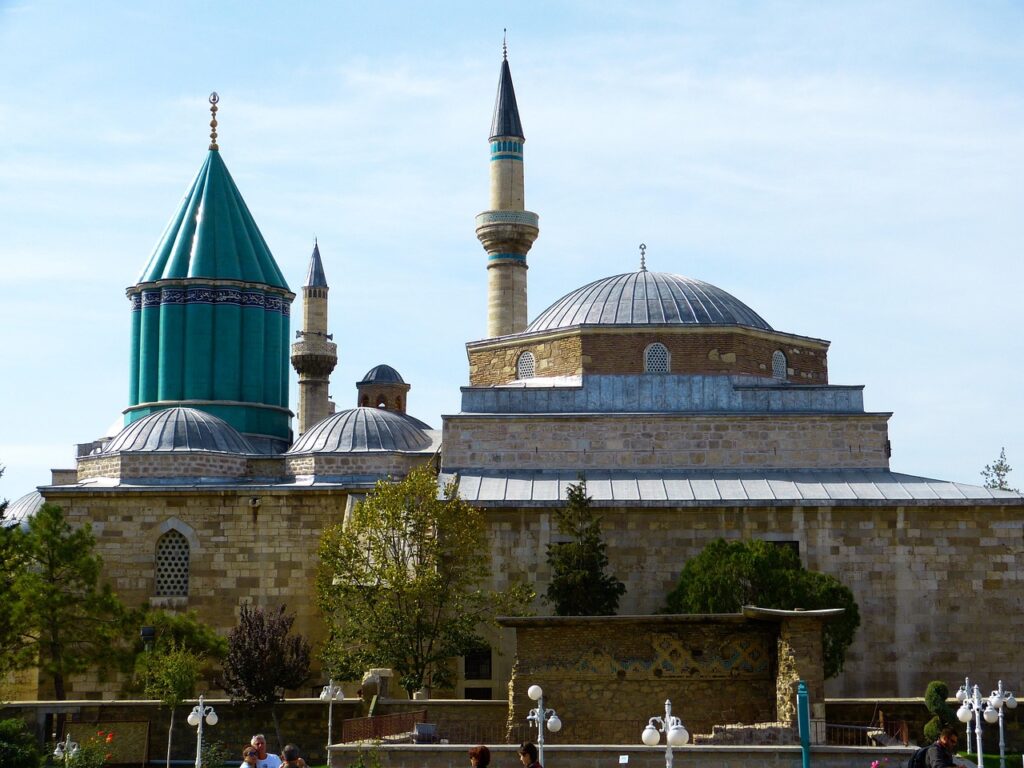
The years after the death of Rumi saw the tomb grow into the shrine. The successors of the master — the leaders of the Mevlevi order — built the mausoleum over the tomb, and the famous green dome of the building rose in the following centuries: the conical dome of the turquoise tiles, the landmark of Konya and the symbol of the museum. The mausoleum of Rumi took its form through the centuries of the Seljuk and the following eras, and the shrine of the master grew around the tomb.
The centuries after the death built the monument: the mausoleum of the green dome, the shrine of the master, and the building that the museum would inherit.
The Ottoman Centuries
The Ottoman centuries brought the Mevlana Museum into the life of the empire. The Ottoman sultans held the Mevlevi in the high regard: the order of Rumi was honored at the Ottoman court, and the shrine of Konya was maintained and enlarged through the centuries. The lodge of the dervishes grew into the great complex: the semahane of the whirling ceremony, the rooms of the dervishes, and the shrine of the master at the heart of the complex. The museum of today holds the buildings of that complex, the Ottoman-era structures around the mausoleum.
The Ottoman centuries were the centuries of the complex: the honored shrine, the working lodge of the Mevlevi, and the buildings that the museum preserves.

The Museum of the Republic
The modern history of the museum began with the Turkish Republic. The dervish lodges of Turkey were closed in the 1920s, in the reforms of the young republic, and the complex of Konya took its new role: the tomb of Rumi was preserved, and the buildings of the lodge were opened as the museum — the Mevlana Museum of the republic, dedicated to the master and the tradition. The museum of the twentieth century preserved the shrine and the artifacts of the Mevlevi: the manuscripts, the musical instruments, and the objects of the dervish life.
The museum of the republic gave the complex its modern form: the tomb of the master, preserved and opened to the world, and the artifacts of the Mevlevi tradition gathered in the museum.
The Museum Today
The Mevlana Museum today is the beloved monument of Konya and one of the most visited museums of Turkey. The visitor enters the complex and walks the rooms of the museum — the manuscripts and the objects of the collection, the semahane of the whirling ceremony, and the chambers of the dervish life — and arrives at the mausoleum of the master: the tomb of Rumi under the green dome, the sarcophagi of the master and his family, and the shrine of the great mystic. The museum is the place of the pilgrimage and the visit, the monument of Rumi and the tradition of the Mevlevi.
The museum today is the goal of the visit: the tomb of the master under the green dome, the rooms of the tradition, and the beloved monument of Konya.

The Message of the Master
There is a deeper meaning to the Mevlana Museum in the story of the tradition: the museum holds the message of the master. The teaching of Rumi — the message of the love and the tolerance, the unity of the human and the divine, and the call of the whirling dance — has carried through the centuries, and the museum of Konya is the place where the visitor meets that message: the tomb of the master, the poetry of the Mesnevi, and the tradition of the whirling dervishes. The museum is not only the monument of a man; it is the house of a teaching, and the message of Rumi lives in its rooms.
The Mevlana Festival
The museum also stands at the heart of the living tradition: the Mevlana Festival of Konya, held in December around the anniversary of the master’s death. The festival brings the whirling dervishes to the city, the ceremonies of the sema fill the halls of Konya, and the museum receives the pilgrims and the visitors of the occasion. The anniversary of the master — the night of the union, as the Mevlevi call the death of Rumi — is the great moment of the tradition, and the museum is its center.
The Experience of the Museum
There is a particular quality to the visit of the Mevlana Museum: the traveler stands in the shrine of the great mystic, under the green dome of Konya. The museum gives the experience of the tradition — the tomb of the master, the rooms of the dervish life, and the message of the poetry — and the visit is the encounter with the deep spiritual heritage of Turkey: the mystic of the thirteenth century, the order of the whirling dervishes, and the beloved monument that holds them.
The Visitors Through the Centuries
The visitors of the shrine have changed with the centuries, and the monument has received them all. In the centuries after the death of Rumi, the pilgrims of the Mevlevi and the people of the region came to the tomb of the master — the shrine of the mystic, visited by the faithful of the tradition. In the Ottoman centuries, the honored visitors of the empire came to the lodge, and the shrine of Konya received the dignitaries and the pilgrims of the age. And in the modern era, the visitors of the world have come to the museum — the travelers and the seekers, drawn by the message of Rumi.
The visitors through the centuries are the measure of the monument’s endurance: the shrine that has received the faithful, the pilgrims, and the visitors of eight hundred years, and that continues to receive them today. The beloved monument of Konya has served the devotion and the curiosity of the ages, and the museum of the present carries that long welcome. And the newest visitors — the travelers of the world who come to Konya for the museum — continue the line of the pilgrims, the seekers, and the curious who have come to the tomb of the master since the thirteenth century.
Frequently asked questions
Who is Mevlana?
Mevlana Celaleddin Rumi was the great poet and mystic of the thirteenth century, who lived in Konya and founded the Sufi tradition of the Mevlevi — the order of the whirling dervishes. His tomb is held in the Mevlana Museum.
What is the green dome?
The green dome is the conical dome of the turquoise tiles that covers the mausoleum of Rumi. The dome is the landmark of Konya and the symbol of the museum.
When is the Mevlana Festival?
The Mevlana Festival of Konya is held in December, around the anniversary of the master’s death — the night of the union, as the Mevlevi call it. The festival brings the whirling dervishes to the city and the pilgrims to the museum.

All Over Information
The All Over Information editorial team researches and writes practical English-language guides to Turkey. Facts are checked against official and local sources before publication, prices are published as dated ranges rather than quotes, and guides are revised when things change. We accept no sponsored posts, paid placements or paid links.
More guides like this

Best Time to Visit Mevlana Museum to Avoid Crowds
The Mevlana Museum of Konya is one of the most visited museums of Turkey, and the crowds of the beloved monument can…

Best Time to Visit Anitkabir to Avoid Crowds
Anıtkabir — the mausoleum of Atatürk — is the most visited monument of Ankara, and the crowds of the national memorial can…
The Architecture of Blue Mosque Explained
The Blue Mosque is the final masterpiece of Ottoman classical architecture, and reading its design is the best education in that tradition…

The Architecture of Rumeli Fortress Explained
The Rumeli Fortress is one of the great military buildings of the medieval world, a castle designed for a new kind of…

The Complete History of Yildiz Palace
On a wooded hill above the Bosphorus, in the Besiktas district of Istanbul, stands the last great palace of the Ottoman Empire.

The Architecture of Hagia Sophia Explained
Hagia Sophia is the most influential building ever raised in Istanbul, and its architecture repays close attention.