Southeastern Anatolia is a region where even the famous sights feel undiscovered, so it comes as no surprise that its true hidden gems are remarkable. Beyond the golden terraces of Mardin and the ancient circles of Gobekli Tepe lie monasteries that have prayed for a thousand years, river valleys where water buffalo graze beneath cliffs, and villages of stone where the welcome has not changed in centuries. The southeast is compact, and its secrets are close to the main roads, waiting for travelers with time and curiosity. This guide opens the door to the region’s quieter treasures, the places that reward a detour and linger in the memory.
The Southeast Beyond the Famous Cities
The famous southeastern itinerary is a short list: Gaziantep, Sanliurfa, Mardin, and the great sites around them. But the region between and behind these cities is dense with places that most travelers never see, and the distances are small enough to make them easy detours.
The countryside here is the hidden layer: plains crossed by ancient trade routes, hills crowned with ruined fortresses, and villages that have stood for a thousand years. A road that looks ordinary on the map can hold an entire lost world of stone and story.
The region’s compactness is its gift. In a single day you can move from a great city to an empty monastery, from a busy bazaar to a silent river valley, and the contrast is the point. The southeast rewards every hour you give it.
Ancient Mounds and Forgotten Ruins
The southeast is covered in tells, the layered mounds of ancient cities that rise from the plain like gentle hills. Most are unexcavated, and some hold stories that go back to the very dawn of settlement, thousands of years before the pyramids.
A handful are marked and accessible, with visible walls, gates, and inscriptions waiting on their slopes. Others are simply hills where pottery shards surface after rain, and the sense of standing on ten thousand years of human life is extraordinary.
Gobekli Tepe has taught the world how old this land is, and the unexcavated mounds are its silent cousins. With a good map and a willingness to ask directions, you can spend days among the region’s oldest places, almost always alone.
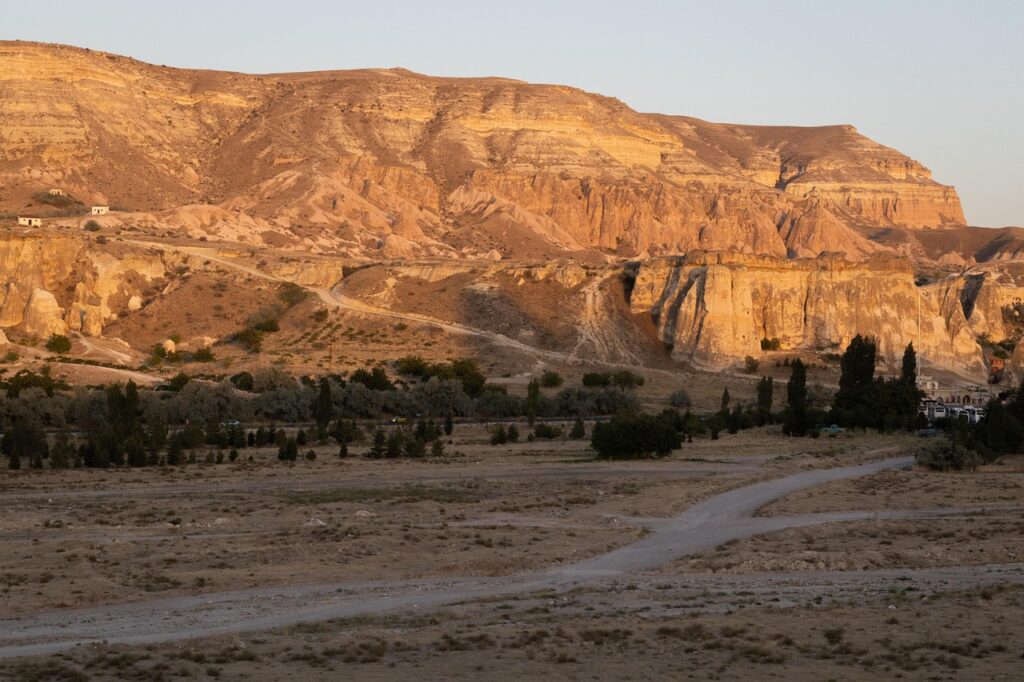
Monasteries of the Tur Abdin
The Tur Abdin, the mountain country between Mardin and Midyat, is the ancient homeland of the Syriac Christian tradition, and it holds some of the oldest monasteries in continuous use anywhere in the world. The greatest of them, Deyrulzafaran, is well known; the others are the region’s true secret.
Monasteries like the ones at the head of the valley are reached by quiet roads, and they open their courtyards and churches to visitors with remarkable generosity. The atmosphere is ancient, peaceful, and deeply moving, and the monks and caretakers are glad to talk.
These monasteries are living places, not museums, and that is their power. To hear the liturgy in a church older than most countries, in a setting unchanged for centuries, is one of the great quiet experiences of travel in Turkey.
River Valleys and Water Buffalo Country
The rivers of the southeast, the Euphrates and the Tigris, define the region, and their valleys hold a pastoral world that travelers rarely enter. The water buffalo that graze the riverbanks, the reed beds, and the villages of the floodplain are the region’s traditional life.
The Tigris valley, in particular, is a world of its own: cliffs, river gardens, and the great ruins of cities that guarded the crossing for millennia. The sight of buffalo wading in the shallows, with a cliff fortress above, is a scene that has not changed in a thousand years.
The valleys are best seen slowly, from the small roads that follow the rivers and from the villages along the banks. They are among the most beautiful and least visited landscapes in Turkey, and they ask only for time.

The Tigris Towns
The towns of the Tigris have a frontier character that the rest of the region lacks, and the most remarkable of them is Hasankeyf, an ancient city of caves and cliffs that has been inhabited for more than ten thousand years. Its citadel, its stone bridge ruins, and its cave dwellings are extraordinary.
The modern dam has flooded part of the valley, and the waters now lap at the edges of the old city, adding a layer of melancholy to an already haunting place. The journey along the river, from the town to the gorge, is one of the region’s great drives.
These towns are quiet, rural, and welcoming, and they show a face of the southeast that the famous cities never reveal. For travelers who want the region raw and unpolished, the Tigris country is the place.
Hidden Villages and Stone Houses
The villages of the region are its living treasure, and the finest of them are built from the same golden stone as the great cities, with courtyards, terraces, and churches or mosques at their hearts. Many have stood for centuries, and their beauty is quiet and real.
Some of these villages are almost empty, as families have moved to the cities, and the silence of the stone houses is poignant. Others are full of life, with children in the lanes, bread baking in the courtyards, and the hospitality of the region offered without reservation.
A village visited without agenda, with time for tea and conversation, is the truest introduction to the southeast. The people are the region’s greatest resource, and their welcome is one of the great constants of travel here.

Bazaars and Craft Traditions
The bazaars of the southeast are among the great markets of the Middle East, and beyond the famous ones, every town has its market with its own character. The crafts of the region, from the copper work of Gaziantep to the silver of Midyat, are still made by hand.
Watching the craftsmen at work is half the pleasure: the coppersmiths hammering in their workshops, the silversmiths engraving their filigree, and the weavers, tailors, and saddlers who keep older trades alive. The markets are living workshops, not souvenir stalls.
Buying directly from the maker is the region’s great souvenir opportunity, and the bargaining is part of the culture. The bazaars reward slow wandering, a little conversation, and the willingness to follow the sound of hammering down a side lane.
Food Finds Beyond the Famous Dishes
The southeast’s famous dishes, from baklava to the kebabs of the region, are only the beginning of its food story. The villages and small towns hold a deeper layer of cooking: the daily dishes of the countryside, made from what the fields and flocks provide.
The region’s breakfasts, its stuffed vegetables, its soups, and its sweets vary from town to town, and the best versions are often served in the least decorated places. The markets are the guide: what is in season, what is local, and what the people are buying is what you should eat.
Eating well here is a matter of following the rhythm of the day: the morning bread, the midday meal in a village, the evening tea in a courtyard. The southeast is the best-eating region in Turkey, and its quietest tables are among its best.

The Border Landscapes
The southern edge of the region, along the border with Syria, is a landscape of wide plains and frontier towns that few travelers explore. The border itself, with its checkpoints and watchtowers, gives the country here a raw, dramatic charge.
The roads along the border country are quiet and the views are enormous, and the towns have a daily rhythm shaped by trade and movement. The people are welcoming, and the sense of standing at the edge of the region’s history is powerful.
Travelers should approach the border with the same common sense they would use anywhere at a frontier, and the reward is one of the most atmospheric parts of the southeast. For those who go, the border country is unforgettable.
How to Discover Your Own Gems
The southeast reveals its hidden layer to travelers who leave the main road, follow the rivers, and accept detours. The region is small enough that a wrong turn is never wasted, and the best days often come from the places that appear on no list.
Ask everywhere you go. The people of the region know their country intimately, and a question about the road ahead, the local church, or the best table in town produces generous answers. Conversation is the region’s most reliable guide.
Finally, give the southeast the time it deserves, and return when you can. The region rewards repeat visits with deeper layers, and the traveler who has once tasted its hospitality will find reasons to come back. It is the most generous region in Turkey.
Frequently asked questions
Are the hidden gems of the southeast easy to reach?
Mostly yes, which is one of the region’s great advantages. The distances between cities are short, and many hidden sites lie just off the main roads, reachable with a car and a bit of map reading. A few, like the remotest monasteries and river ruins, need a rougher road or a walk, but nothing is far away.
What is the most underrated place in the region?
Hasankeyf, the ancient cave city on the Tigris, is the strongest candidate. It has been inhabited for over ten thousand years, its citadel and caves are extraordinary, and the story of the dam that has flooded part of the valley makes it deeply moving. It sees far fewer visitors than it deserves.
Is it safe to explore the countryside and border areas?
Yes, for normal travelers. The region is peaceful and the people are welcoming, and the tourist trail through the main cities is well established. As anywhere, travel in daylight on rural roads, respect local customs, and follow the usual frontier formalities near the border, and the countryside is safe and rewarding.

All Over Information
The All Over Information editorial team researches and writes practical English-language guides to Turkey. Facts are checked against official and local sources before publication, prices are published as dated ranges rather than quotes, and guides are revised when things change. We accept no sponsored posts, paid placements or paid links.
More guides like this

Best Cities and Towns in the Southeastern Anatolia Region
Southeastern Anatolia is a region of extraordinary cities, each with a character so strong that it feels like a different world from…
Exploring the Mediterranean Region: A Complete Travel Guide
The Mediterranean Region of Turkey is the country's riviera, a coastline of turquoise water, pine-covered mountains, and ancient cities that stretches for…

Climate and Best Time to Visit the Black Sea Region
The Black Sea region is the rainiest corner of Turkey, and that single fact shapes everything about traveling there.

Best Cities and Towns in the Aegean Region
The Aegean Region of Turkey offers some of the country's most beloved destinations, from the great port city of Izmir to whitewashed…

Hidden Gems of the Marmara Region
Beyond the famous skyline of Istanbul and the grand mosques of Bursa, the Marmara Region hides a quieter world: lakeside towns, thermal…

Hidden Gems of the Mediterranean Region
The Mediterranean coast of Turkey is one of the most visited stretches of shoreline in the country, yet most travelers never leave…