Sultanahmet packs more history per square kilometer than almost any district in Europe. The list below is not the complete catalog — that would run to a hundred entries — but the ten experiences that reward your time, in the order you should think about them.
1. Hagia Sophia
Nothing prepares you for the interior. Justinian’s sixth-century church, with its impossibly wide dome and its gold-leaf mosaics, held the title of the world’s largest building for almost a thousand years. Today it is a working mosque, free to enter, and the queues move quickly. Stand in the center of the nave and look up; the dome appears to hover on light. The Deesis mosaic in the upper gallery, a Byzantine masterpiece of Christ flanked by Mary and John the Baptist, is worth the stairs.
Practical notes: arrive before 9:30 a.m. to beat the tour groups, cover shoulders and knees, and expect to remove your shoes. The building is a place of worship first and a monument second, so the atmosphere shifts with the prayer calendar. Allow an hour, and let yourself stand still in the nave for at least a minute — that minute is what the tickets to lesser buildings are really selling.
2. The Blue Mosque
Across the park, Sultan Ahmed’s mosque (1609–1616) answers Hagia Sophia with six minarets and an interior of more than twenty thousand hand-painted Iznik tiles in shades of blue. Enter barefoot, and time your visit between the five daily prayers, when the mosque closes to visitors. The courtyard, framed by the cascading domes, is the best free picture in Istanbul.

3. Topkapi Palace
Four centuries of Ottoman sultans ruled their empire from this walled compound above the water. The Harem, the Treasury with its jeweled Topkapi Dagger, the porcelain in the old kitchens, and the terrace view over the Bosphorus together fill a proper half-day. Buy the combined ticket in advance and get the Harem add-on — it is the most evocative part of the palace, all tiled courtyards and quiet corridors.
4. The Basilica Cistern
A few steps from Hagia Sophia, a staircase drops you into a sixth-century reservoir the size of a cathedral nave. Three hundred and thirty-six columns rise from shallow water, lit amber, and the two Medusa heads carved into the column bases at the back have puzzled visitors for centuries. Cool, dark, and atmospheric — especially on a July afternoon when the city above is baking.
It is also mercifully short: most people spend thirty to forty minutes below ground, so it slots neatly between two big monuments rather than demanding a half-day. Book ahead in summer, when the narrow walkways turn into a queue. And walk slowly past the column bases near the exit — the Medusa heads, one sideways and one upside down, are the kind of detail that makes the place worth revisiting.

5. The Hippodrome
This open square between the two great mosques was a Roman chariot-racing stadium for 100,000 spectators. The Egyptian Obelisk, hauled from Luxor in the fourth century, still stands on its original spot, flanked by the coiled Serpent Column from Delphi and the crumbling Walled Obelisk. It takes fifteen minutes, costs nothing, and quietly connects all the history you’ve been walking through.
6. The Grand Bazaar
The covered market opened in 1461, making it one of the oldest in the world. Its vaulted lanes hold roughly four thousand shops selling carpets, lamps, ceramics, jewelry, leather, and tea sets. Treat it as a museum with price tags: browse, haggle, drink the offered tea, and buy only what you genuinely want. The side lanes are where the actual craftspeople work.
Two practical habits turn a bazaar visit from overwhelming to enjoyable. First, enter through one of the quieter gates (Beyazit or Nuruosmaniye) rather than the grand entrance, so you surface in the middle of the maze instead of its tourist-choked heart. Second, set a limit before you walk in and convert it to lira in your head — the bargaining is theater, but it is theater with real stakes. Ceramics, copper, and handmade lamps survive the flight home best.

7. The Spice Bazaar
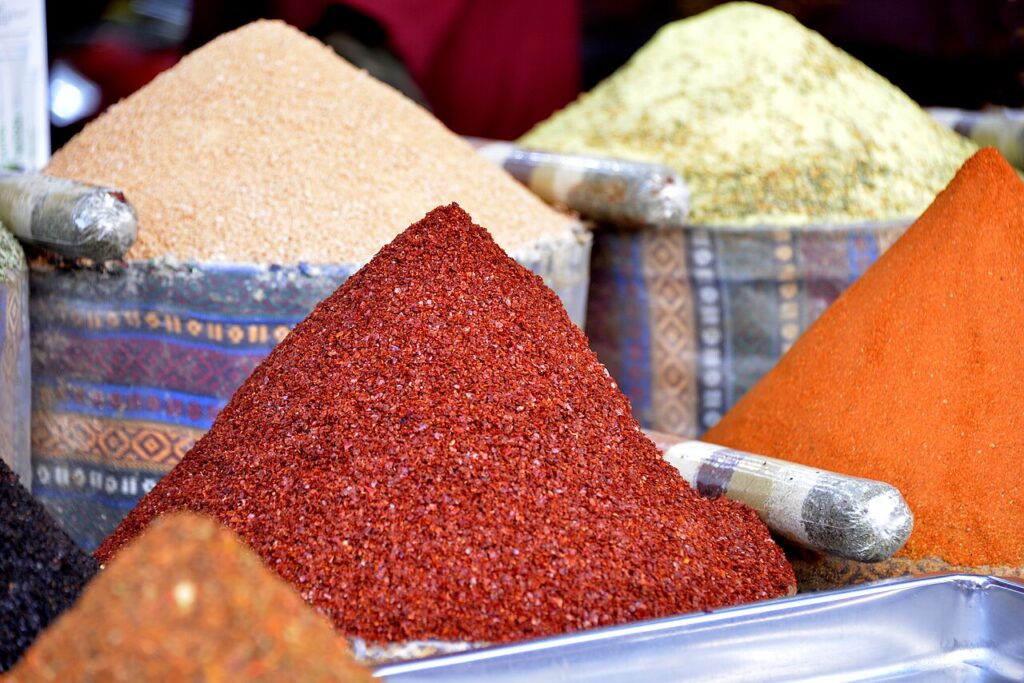
Smaller, smellier, and friendlier than the Grand Bazaar, the Spice Bazaar (Misir Carsisi) sits by the Eminonu waterfront and overflows with saffron, sumac, rose water, lokum, dried fruit, and more apple tea than you will ever drink. Buy a few small things to take home, then step outside for a fish sandwich from the boats at the harbor — the classic waterfront lunch.
The Spice Bazaar is also the perfect first bazaar if you’re nervous about the Grand Bazaar’s scale: the lanes are few, the shopkeepers are easier going, and the smells do half the selling for them. Ask to taste the lokum and the dried apricots before you buy; the sellers expect it, and it is the fastest way to learn what you actually like.
8. The Sunset Ferry
The best view in Sultanahmet is not from a rooftop; it is from the water. Walk to the Eminonu docks in the early evening, board the commuter ferry to Kadikoy or Uskudar on the Asian side, and watch the minarets and domes of the old city slide past in golden light. It costs a few lira and it is the single most memorable thing on this list.
Do it twice if you can — once at sunset, once at night, when the minarets light up and the water turns to black glass. On the return leg, ride the upper deck and stay until the last stop; the ferry is the only place in Istanbul where you can see the whole city, both continents, at once.
9. Suleymaniye Mosque
Ten minutes by tram and a short uphill walk brings you to Mimar Sinan’s greatest mosque, built in the 1550s for Suleyman the Magnificent. It is larger and calmer than the Blue Mosque, and its hilltop courtyard overlooks the Golden Horn in one of the best views in the city. Go late afternoon, when the light is warm and the tour groups have moved on.
10. A Slow Turkish Breakfast
Sultanahmet’s tenth great experience involves no monument at all. Order the full Turkish breakfast — menemen, simit, olives, white cheese, honey and kaymak, endless tulip glasses of cay — and let it take an hour and a half. The best versions are on Akbiyik Street and in the lanes around the Basilica Cistern. It is the most civilized way to start a day of walking.
The ritual matters as much as the food: the table arrives covered in small plates, the cay keeps coming until you physically wave it off, and the meal officially has no end time. Sit outside if you can, order menemen — eggs scrambled with tomatoes and peppers — as the centerpiece, and save room for the simit. Breakfasts like this are why Istanbul days start late and end happy.
What You Can Skip (And Why)
Every neighborhood has its overrated corners, and Sultanahmet’s are worth naming so you don’t feel obliged to clear them:
- The whirling dervish shows near the square. The real ceremony is at the Mevlana lodge in Konya; the Sultanahmet version is a forty-minute performance for tourists. Interesting once, but skip if time is short.
- The “Ottoman” restaurants with the photos. If the menu has fifty dishes and laminated pictures, walk on. The real kitchens are the ones with three things on the board.
- Paid Bosphorus “cruises” from the docks. The commuter ferry covers the same water for a fraction of the price; the only difference is the recorded commentary.
- The carpet shops’ hospitality ritual. Free tea and a “no obligation” look at the workshop is fine, but it reliably eats an hour and ends with a sales pitch. Go in only if you genuinely want a carpet.
When to Do Which
If you have one day, hit 1, 2, 4, and 6 in that order, then steal the sunset ferry. With two days, add Topkapi, the Spice Bazaar, and Suleymaniye, and save the breakfast for the second morning. In summer, start everything at 8 a.m. and retreat to the cistern in the hottest hours; in winter, start later and let the indoor sights — cistern, bazaar, museums — carry the rainy afternoons.
The Takeaway
Ten entries, one small neighborhood. Sultanahmet rewards visitors who go early, ride the water, eat slowly, and treat the bazaars as free theater. Do these ten and you have seen the old city the way it deserves to be seen — and you’ll have the photos to prove it.
Two days covers the list at a civilized pace; three lets you add the museums and the slow breakfasts without rushing. However long you have, the formula stays the same: the monuments in the morning, the water at sunset, and the tea gardens whenever the walking wears you down. That rhythm is Sultanahmet at its best, and it has been the best way to see this neighborhood since the first guidebooks were written.
Frequently asked questions
What is the best thing to do in Sultanahmet?
Hagia Sophia. It is free, iconic, and genuinely moving in a way that photographs never quite capture.
How many days do you need to see Sultanahmet’s top sights?
Two days covers everything on this list comfortably; one day covers the essentials.
Are the mosques free to enter?
Yes — Hagia Sophia, the Blue Mosque, and Suleymaniye are all free. Donations are appreciated; the Harem at Topkapi and the Basilica Cistern require paid tickets.
Is the Grand Bazaar worth visiting if you don’t plan to buy?
Absolutely. The architecture, the light, and the theater of the haggling are the attraction. Say “just looking” and nobody will pressure you.
What time is the sunset ferry from Eminonu?
Ferry schedules change seasonally; the last golden-hour crossings in summer run from around 5:30 to 8:30 p.m. Check the current timetable at the dock.

All Over Information
The All Over Information editorial team researches and writes practical English-language guides to Turkey. Facts are checked against official and local sources before publication, prices are published as dated ranges rather than quotes, and guides are revised when things change. We accept no sponsored posts, paid placements or paid links.
More guides like this

Where to Stay in Sultanahmet: Neighborhood Guide
Sultanahmet is the classic first-night choice in Istanbul, and with good reason: the neighborhood puts you in the middle of everything, on…

Family-Friendly Activities in Sultanahmet
Sultanahmet is a surprisingly excellent family destination.
Sultanahmet in Winter: What to Expect
Winter is Istanbul's secret season, and Sultanahmet is its best-kept secret.

A First-Timer’s Guide to Sultanahmet
Most first trips to Istanbul start in Sultanahmet, and most of them should.

A Foodie’s Guide to Sultanahmet
Istanbul is one of the world's great food cities, and the good news for visitors is that its most historic neighborhood is…

Best Local Restaurants in Sultanahmet
The restaurant scene in Sultanahmet has a bad reputation, and most of it is earned — but not by the places you'll…