Sultanahmet is the classic first-night choice in Istanbul, and with good reason: the neighborhood puts you in the middle of everything, on foot, with the Bosphorus and the Golden Horn at either edge. But the district is not one single block. “Sultanahmet” covers several distinct pockets — the tram-side hotels on Divanyolu, the boutique guesthouses of Akbiyik, the wooden-house lanes of Cankurtaran, the bazaar-adjacent zone near the Grand Bazaar — and each one gives you a different trip.
This guide maps the neighborhood block by block, tells you what each pocket is good for, and covers the practical realities of sleeping in the old city, from noise to elevators to the price of a room with a terrace.
The Neighborhood in Brief
Sultanahmet sits on the eastern tip of the old city, inside the Byzantine walls, with three kinds of accommodation scattered through it:
- Divanyolu and the tram line. The main drag, busy, convenient, and home to the big hotels.
- Akbiyik Street. The boutique street: restored Ottoman mansions, guesthouses, and the restaurants everyone recommends.
- Cankurtaran. The residential lanes sloping down toward the Marmara shore, dotted with family-run pensions and quieter courtyards.
- Around the Grand Bazaar and Sirkeci. Cheaper, more chaotic, and closer to transport; better for budget travelers and day-trippers.
The whole area is walkable, so the “wrong” pocket is rarely a disaster — the differences are about noise, atmosphere, and the view from your window.
Divanyolu and the Tram Corridor: Best for First-Timers and Convenience
Divanyolu is the historic main street that once led from the imperial palaces toward the city walls, and today the T1 tram runs its entire length. Staying here means you are one minute from the tram stop, five minutes from Hagia Sophia, and ten from the Grand Bazaar.
What you get. Mid-range and large hotels, easy luggage access, shops and pharmacies on your doorstep, and the reassurance of a well-lit main street at night.
What you trade. Street noise — the trams run from early morning until around midnight — and the touristy restaurant strip right outside your door.
Good for. First-timers, anyone arriving late and leaving early, and travelers who want everything within a two-minute walk.
Akbiyik Street: Best for Boutique Charm
Akbiyik is the postcard version of Sultanahmet: cobbles, restored nineteenth-century mansions with wooden facades, wisteria over the doorways, and some of the neighborhood’s best small hotels and restaurants. It runs a few hundred meters from the tram line toward the Marmara shore, parallel to the palace walls.
What you get. Atmosphere, character, rooftop terraces with sea views, and the chance to stay in a building that has real history. Breakfast here tends to be excellent, often served on a terrace overlooking the Bosphorus.
What you trade. No direct tram access — you walk five to ten minutes to the stop — and prices run at the top of the neighborhood range. Cobblestones also mean dragging a suitcase by hand.
Good for. Couples, honeymooners, anyone who wants the old city to feel romantic rather than functional.
Cankurtaran: Best for Quiet and Local Flavor
Cankurtaran is the old fishing and service neighborhood that slopes down from Akbiyik toward the sea walls. It is the most residential pocket of Sultanahmet: laundry lines, corner bakeries, children playing in the lanes, and a sprinkling of small family pensions tucked into the side streets.
What you get. The neighborhood most visitors never see, at prices below Akbiyik, with the sea walls and the promenade at the bottom of the hill. It is also the closest pocket to Topkapi Palace and the Arasta Bazaar.
What you trade. A serious hill on the way back from the tram, and the pensions here range from charming to shabby, so read recent reviews before booking.
Good for. Repeat visitors, budget travelers who don’t want the hostel circuit, and anyone who wants to wake up to the call to prayer rather than a tour bus.

Around the Grand Bazaar and Sirkeci: Best for Budgets and Connections
The zone stretching from the Grand Bazaar up toward Sirkeci station is the cheap and busy end of the old city. Sirkeci itself is the terminus of the Marmaray rail line and a short hop from the Eminonu ferries, which makes it the single best-connected spot for getting around Istanbul.
What you get. The lowest hotel prices in the district, and transport options the rest of Sultanahmet can’t match: Marmaray to the Asian side, ferries from Eminonu, and the tram line passing through.
What you trade. More noise, more traffic, and less charm. The streets here are workaday, and the bazaar end can feel intense after dark.
Good for. Budget travelers, train enthusiasts, and anyone whose next stop is the Asian side or the airport.
What to Check Before You Book
Four things matter more than the star rating in this neighborhood:
- Soundproofing and windows. Old stone buildings are beautiful and noisy. If you are a light sleeper, look for a room on a courtyard rather than the street, and check recent reviews for the word “noise.”
- Elevators and stairs. Many restored mansions have no elevator, and floors are steep. “Room on the fourth floor with no lift” is a common booking regret.
- Air conditioning. July in the old city is hot, and old buildings don’t always cope. Filter for rooms with AC if you’re visiting in summer.
- Breakfast. Turkish breakfast is one of the neighborhood’s pleasures, and the quality varies wildly. A hotel with a good terrace breakfast can be worth an extra twenty euros.

Price Realities
Roughly, per night: hostel dorm beds from about 300 TL; budget double rooms in Sirkeci or Cankurtaran from 1,200 to 2,000 TL; mid-range Divanyolu hotels from 2,500 to 4,500 TL; boutique Akbiyik guesthouses from 4,000 TL upward, with the famous terraces costing more. Peak summer and the October shoulder push prices up; January is the bargain month. Prices move quickly in Istanbul, so treat these as a compass, not a contract.
The Daily Rhythm of the Neighborhood
Knowing Sultanahmet’s daily clock makes any stay smoother. The day starts with the dawn call to prayer around 5–6 a.m. in summer — loudspeakers, minutes long, and a genuine wonder for most visitors the first morning and a reason to pack earplugs for the second. The monuments open around 8:30–9 a.m., and the tour groups peak between 10 a.m. and 2 p.m., so the neighborhood is at its calmest before ten. Bazaars open around 9, close for Friday prayers, and wind down by early evening. Everything that isn’t a restaurant closes by 8 p.m.; by 10 p.m. the old city is essentially asleep, and the floodlit monuments take over the streets.
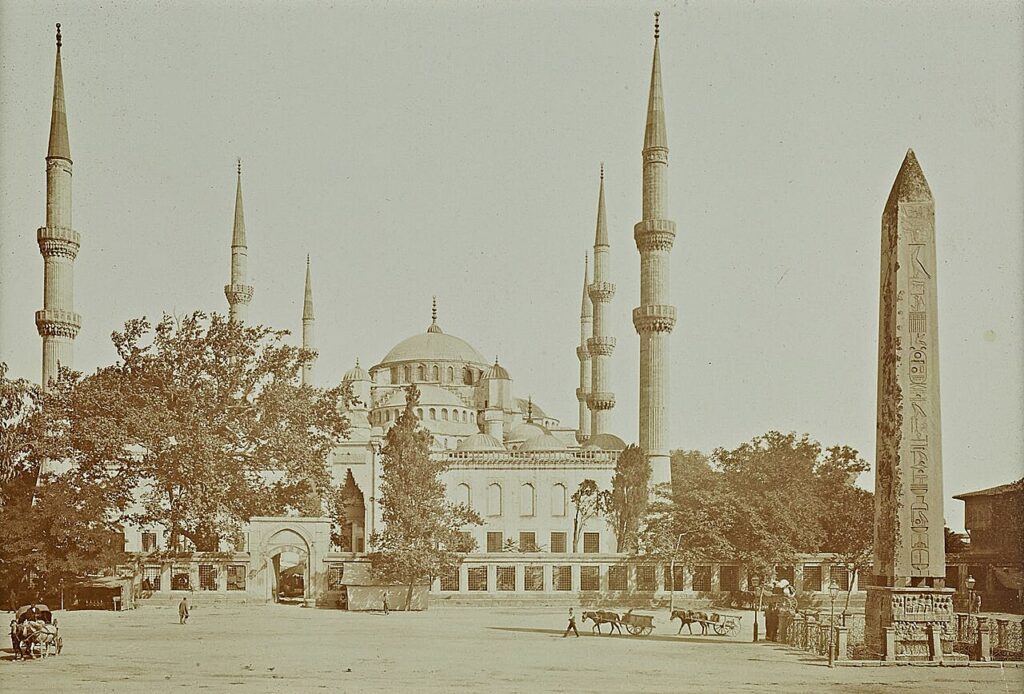
That early quiet is the single biggest argument for choosing a room with a terrace. The dawn light on the Blue Mosque, the empty cobbles, the first cay of the day — it is the neighborhood’s best hour, and it belongs to whoever is already awake in it.

The Verdict: Which Should You Pick?
- First trip, two nights, want zero friction: Divanyolu, near the tram.
- Romantic trip or honeymoon: Akbiyik, with the terrace and the wisteria.
- Tight budget: Sirkeci or the Cankurtaran pensions.
- Return visitor who wants the real neighborhood: Cankurtaran, with a courtyard room.
- Big luggage, early flight: Divanyolu again — flat ground and a ten-minute taxi to the Marmaray.
The Takeaway
The right room in Sultanahmet is less about the hotel than the pocket: tram-side convenience, cobbled romance, residential calm, or budget-and-transport pragmatism. Decide which of those you want, check the noise reviews, confirm the AC and the elevator, and you’ve already won half the battle of visiting Istanbul.
One more honest tip: don’t overthink it. The pocket differences matter, but the neighborhood itself is the attraction, and every pocket here is within a ten-minute walk of the tram and the monuments. Pick a hotel with a terrace and a good breakfast, book it for two or three nights, and let the old city do the rest. If you want, base yourself here for the first leg of a longer Turkey trip — then move on to Cappadocia or the coast with your Istanbul groundwork already done.
Frequently asked questions
Is it better to stay in Sultanahmet or Taksim?
How many nights should you stay in Sultanahmet?
Two to three nights is the sweet spot for first-timers. Longer, and you’ll want a base on the other side of the water too.
Is Sultanahmet safe at night?
Yes. It is quiet, well-policed, and tourist-oriented. Stay on the lit main streets when walking back late.
Do hotels in Sultanahmet offer airport pickup?
Many do, for a fee. It is worth taking on a late arrival — it removes the single biggest hassle of the trip.
Can you walk from Sultanahmet to the Grand Bazaar?
Easily — ten minutes along Divanyolu. The Spice Bazaar and the Eminonu ferries are another ten minutes downhill.

All Over Information
The All Over Information editorial team researches and writes practical English-language guides to Turkey. Facts are checked against official and local sources before publication, prices are published as dated ranges rather than quotes, and guides are revised when things change. We accept no sponsored posts, paid placements or paid links.
More guides like this
Photography Spots in Sultanahmet You Can’t Miss
Sultanahmet is a photographer's dream that does half the work for you.

How to Get to Sultanahmet from Istanbul
Sultanahmet sits in the middle of a transit network that connects the whole of Istanbul, which is good news: reaching it from…

Shopping Guide: What to Buy in Sultanahmet
Sultanahmet is a shopping district disguised as a historic neighborhood, and for good reason: the Grand Bazaar has been trading here since…

A First-Timer’s Guide to Sultanahmet
Most first trips to Istanbul start in Sultanahmet, and most of them should.

Sultanahmet Airport and Transport Guide
Sultanahmet's transport situation is a gift to travelers: the neighborhood sits at the junction of the city's tram line, the Marmaray rail…

Top 10 Things to Do in Sultanahmet
Sultanahmet packs more history per square kilometer than almost any district in Europe.