Fatih is the district that contains the soul of Istanbul — the historic peninsula itself, the land between the Golden Horn and the Marmara where the city was founded, conquered, and built. It holds the Hagia Sophia and the Blue Mosque, the Topkapi Palace and the Grand Bazaar, the Süleymaniye and the ancient walls; and beyond the monuments it holds the working, traditional neighborhoods — the markets, the mosques, the old quarters — where the city’s daily life has run for centuries. For a first-time visitor, Fatih is not a neighborhood to see: it is the city to begin with. This guide covers what you need to know.
Where Fatih Sits in the City
Fatih occupies the entire historic peninsula of Istanbul — the triangular landmass bounded by the Golden Horn on the north, the Marmara Sea on the south, and the land walls on the west. Its center is the district’s own heart: the Sultanahmet area, with the Hagia Sophia and the Blue Mosque facing each other across the old hippodrome; the Grand Bazaar and the Spice Bazaar inland; the Süleymaniye Mosque on the hill above; and beyond the tourist core, the working districts of the peninsula — the Fatih mosque quarter, the old quarters of Balat and Fener, the market streets, the neighborhoods that predate the modern city. The district’s name comes from Fatih Sultan Mehmed — the Conqueror — whose mosque and tomb rise over the quarter that bears his name, and whose conquest of 1453 is the hinge of the district’s history.
Getting There
Reaching Fatih is easy from anywhere in the city, and the approaches are part of the experience. From the airports: Istanbul Airport (IST) connects via the M11 metro and the M7 to the Marmaray or the tram network, about an hour; Sabiha Gökçen (SAW) via the M4 to the Marmaray, then the tunnel to the old city, about an hour as well. Within the city, the tram line T1 runs through the heart of the district — Sultanahmet, the Grand Bazaar, Eminönü — and the ferries land at Eminönü from the Asian side, the Marmaray stops at Sirkeci, and the buses thread the peninsula. The Istanbulkart transit card works on all of it. The key fact for the first-timer: the monuments are dense, and the district rewards the walker.

The First-Timer’s Walk
The classic introduction to Fatih is the walk of the old city’s heart, and it takes a full day at a good pace. Start at the Sultanahmet square: the Hagia Sophia, the great church that became a mosque, its dome the symbol of the city for fifteen centuries; facing it, the Blue Mosque, the six-minareted masterpiece of the Ottoman age. Walk the square’s edges — the obelisks of the ancient hippodrome, the Million stone — then follow the tram line downhill to the Grand Bazaar, the great covered market of the Ottoman world, and beyond it the Spice Bazaar on the Golden Horn shore. The day continues inland: the Süleymaniye Mosque, the masterpiece of the architect Sinan, on its hill above the bazaars, with the city and the water spreading from its courtyard. It is a day of the district’s greatest sights, and the beginning of the city’s story.
The Monuments, Beyond the Icons
The icons are only the first layer. Fatih holds the deeper monuments that the crowds skip: the Topkapi Palace, the seat of the Ottoman sultans for four centuries, with its harems, its courtyards, and its treasures; the Basilica Cistern, the ancient underground reservoir with its forest of columns; the Church of St. Savior in Chora, the Kariye, with the finest Byzantine mosaics and frescoes in the city; the Fatih Mosque itself, the Conqueror’s great foundation; and the Theodosian land walls, the ancient fortifications that held the city for a thousand years. Each is a world, and together they are the district’s depth — the layers of the city from the Byzantine age through the Ottoman to the present.

The Traditional Neighborhoods
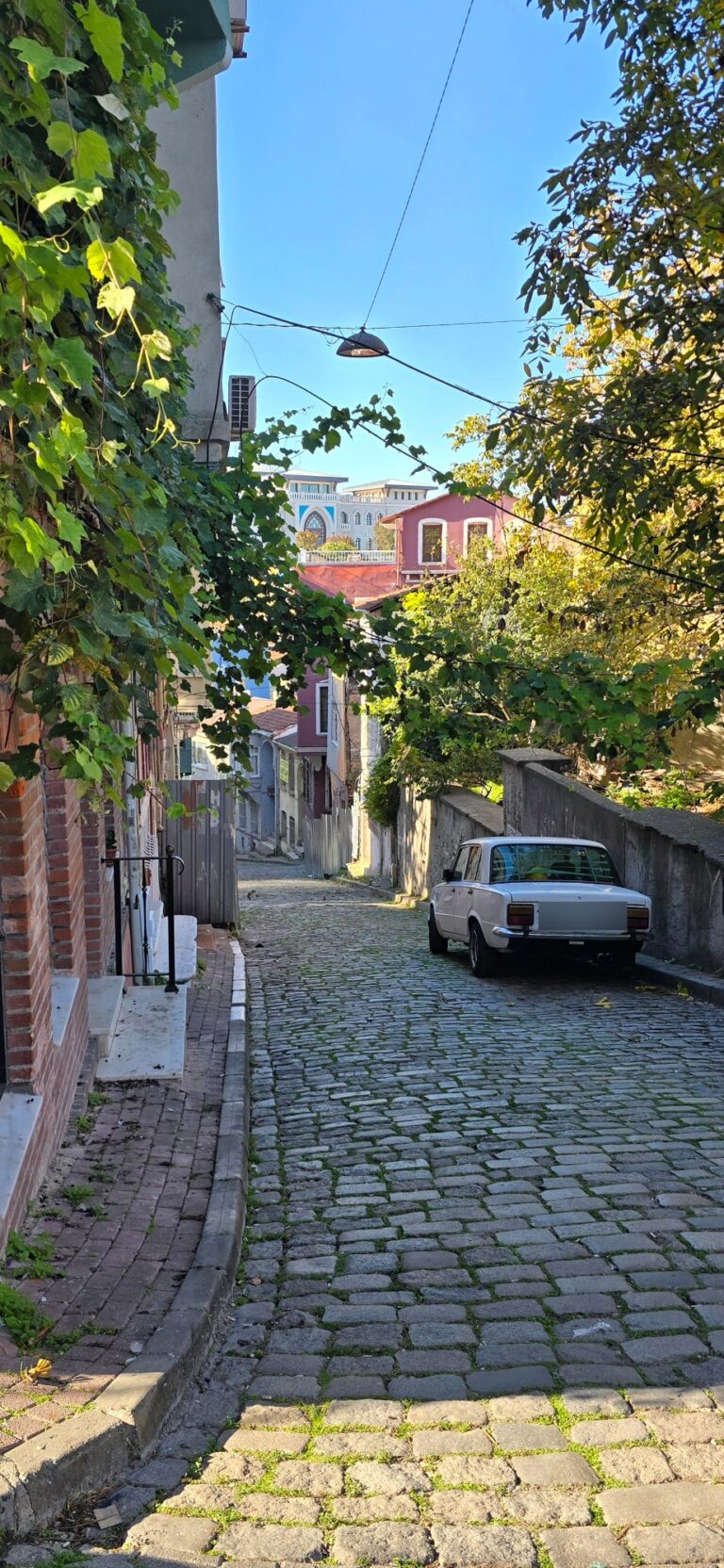
Beyond the monuments lies the Fatih that the day-trippers never reach: the working, traditional districts of the peninsula. Balat and Fener, the old Jewish and Greek quarters, are the most atmospheric streets in the city — the crooked lanes of pastel houses, the churches and the synagogues within steps of each other, the skyline of domes that has not changed in centuries. The Fatih mosque quarter holds the daily life of the district’s name — the markets, the mosques, the teahouses. The bazaar streets of the peninsula, the working markets beyond the tourist bazaars, are where the residents shop. The district is the old city lived daily — the traditional Istanbul of the peninsula, and the layer that makes Fatih more than its monuments.
The Food Scene
Fatih eats the traditional way, and the first-timer should eat that way. The bazaars hold the street-food layer: the balık ekmek at Eminönü, the simit, the kumpir, the midye dolma. The district’s restaurants serve the classics — the kebab houses, the köfte shops, the lokantas of the working streets — and the breakfast culture of the old city, the spread of cheeses, olives, menemen, and honey and kaymak, is the morning tradition. The pudding shops and the baklava houses complete the picture. The rule of the district: follow the queues, eat where the locals eat — which in Fatih is the working food of the peninsula, priced for the residents, often better than the tourist tables.

Where to Stay
Fatih is the classic base for a first visit — the monuments on the doorstep, the old city as the neighborhood. The accommodation runs the range: the hotels of Sultanahmet with their rooftop views over the mosques, the boutique guesthouses of the old houses, the pensions of the backstreets, the budget beds of the tourist quarter. The honest trade-offs: the tourist core is busy and pricier, and the evenings are quieter than the modern districts across the water; but for the first-time visitor whose itinerary is the monuments, the convenience is unbeatable — the Hagia Sophia at sunrise, the bazaars at opening, the old city at your feet.
The Practical Notes
A few things make the first visit smooth. The tram is the spine: the T1 runs through the district, and the monuments and the bazaars are strung along it — learn the stops and the walking between them is the day. The museums close early: the palace and the monuments have their hours, and the timed tickets of the high season need booking — plan the big sights for the mornings. The crowds are real: Fatih is the most visited district in the city, and the high-season queues are the famous ones — the early starts and the weekdays are the workarounds. The mosques welcome all: dress respectfully, visit quietly, and the great mosques are free and open. And the card: the Istanbulkart is the only ticket you need for the tram, the ferries, and the buses.

The Takeaway
Fatih is the district where the city’s story is written — the Byzantine church that became the Ottoman mosque, the palace of the sultans, the bazaars of the empire, the walls that held for a thousand years, and the working neighborhoods where the old city is still lived daily. It is the Istanbul of the first-timer’s imagination, and the district where every traveler to the city should begin. Walk the monuments, get lost in the bazaars, sit in the mosque courtyards, and you will have begun the city properly — with the district that contains its whole history.
The District’s History in Brief
The story that the monuments tell is worth knowing before the walking begins. The peninsula was the site of Byzantium, the Greek colony, then of Constantinople, the capital of the Byzantine Empire — the city that held the strait for a thousand years behind the Theodosian walls. In 1453, the Ottoman Sultan Mehmed the Conqueror — Fatih Sultan Mehmed — breached those walls, and the city became Istanbul, the capital of the Ottoman Empire for nearly five centuries. The district’s monuments trace that story: the Hagia Sophia, the Byzantine church that became the Ottoman mosque; the Topkapi, the palace of the sultans; the Süleymaniye, the masterpiece of the empire’s golden age; the bazaars, the trading heart of the Ottoman world. The name of the district itself — Fatih, the Conqueror — carries the story, and the mosque and the tomb that bear it mark the place of the conquest. The visitor who walks the district walks the hinge of the city’s history.
Frequently asked questions
How do I get to Fatih from the airport?
From Istanbul Airport, the M11 metro and the M7 to the Marmaray or the tram — about an hour; from Sabiha Gökçen, the M4 to the Marmaray tunnel — about an hour as well.
How many days does Fatih need?
The icons — the Hagia Sophia, the Blue Mosque, the bazaars — fit a day; the full district, with the palace, the cistern, the Chora, and the walls, rewards two or three.
Is Fatih safe?
Yes — the district is busy, well-policed, and safe at all hours by any standard, though the tourist crowds around the monuments are the place for the usual pickpocket awareness.
Are the mosques open to visitors?
Yes — the great mosques are working places of worship, open to all, free, and welcoming. Dress respectfully, visit quietly, and the interiors are among the wonders of the world.
What should I not miss?
The Hagia Sophia and the Blue Mosque for the icons, the Grand Bazaar and the Süleymaniye for the depth, and Balat and the walls for the layer beyond the tourist maps.

All Over Information
The All Over Information editorial team researches and writes practical English-language guides to Turkey. Facts are checked against official and local sources before publication, prices are published as dated ranges rather than quotes, and guides are revised when things change. We accept no sponsored posts, paid placements or paid links.
More guides like this

Fatih in Summer: A Complete Travel Guide
Summer is when Fatih shows the city's heart at its most crowded and its most alive.

History and Culture of Fatih
Fatih is the district where the history of Istanbul is written — the historic peninsula where the city was founded, conquered, and…

Family-Friendly Activities in Fatih
Fatih is the district where families meet the city's greatest wonders — and where the old city, for all its crowds, gives…
Best Local Restaurants in Fatih
Fatih is the district where the city's food traditions live — the historic peninsula where the bazaars feed the streets, the lokantas…

How to Get to Fatih from Istanbul
Fatih is the historic heart of Istanbul — the old city on the peninsula — and reaching it is easy from anywhere…
Fatih on a Budget: Money-Saving Travel Tips
Fatih is the district of the city's greatest monuments — and one of the easiest parts of Istanbul to visit on a…